书单
百科
这个词条暂时没有中文维基百科条目,下面是英文维基百科的内容(英文原文):
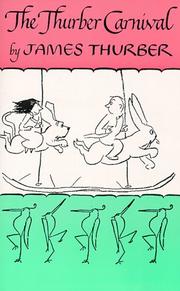
A Thurber Carnival is a revue by James Thurber, adapted by the author from his stories, cartoons and casuals (humorous short pieces), nearly all of which originally appeared in The New Yorker. It was directed by Burgess Meredith with James Starbuck serving as associate director. Following a six city tryout, during which Thurber continued to rewrite the show, it premiered on Broadway on February 26, 1960, and ran for 223 performances, with a break from June 25 to September 5. It closed on November 26, 1960. The title is similar to that of The Thurber Carnival (1945), Thurber's most successful collection of stories and drawings.
Cast and format
The nine member cast played roles generically designated as First Man, First Woman, etc., as listed in the published script. Each of these roles included portrayals of numerous characters within the revue's 16 sketches. The opening night cast was as follows:
These were supported by the jazz music of the Don Elliott Quartet (Jack Six, Jimmy Raney, Ronnie Bedford and Don Elliott).
James Thurber played himself in 88 performances, dictating letters in the sketch "File and Forget".
ACT 1
The sketches in Act One of the revue are as follows:
Word Dance (Part 1)
Word Dance (Part 1) is a series of punchlines, delivered during breaks in the music as the characters dance, similar to the "Cocktail Party" sketches that later appeared in the television series Laugh-In. The scene was staged by James Starbuck, with music from the Don Elliott Quartet. The characters were credited only by the generic names (and as "performer" in the Internet Broadway Database). The punchlines were primarily derived from the captions of Thurber cartoons, including "Where did you get those big brown eyes and that tiny mind?" Part 2 of the sketch appears at the end of Act 2.
The Night the Bed Fell
The Night the Bed Fell consists of First Man sitting at the edge of the stage, telling the story of a particular night from his (Thurber's) childhood, when a collapsing bed provoked remarkable reactions from members of his eccentric extended family. The fictionalized reminiscence first appeared in The New Yorker on July 8, 1933, and was reprinted in the book My Life and Hard Times (1933).
Fables (Part 1)
Fables (Part 1) is a set of three of Thurber's Fables for Our Time, originally staged by James Starbuck. In each fable, the nominally animal characters dress and behave as humans. It includes the following:
"The Wolf at the Door" - narrated by Second Woman. Characters include the Daughter (Third Woman), the Mother (First Woman), the Father (Second Man) and the Wolf (Fifth Man). The Sheep family argues over whether the visitor at the door is the Wolf or the Fuller Brush Man. The fable originally appeared in The New Yorker on July 28, 1956, and was collected in the book Further Fables for Our Time (1956).
"The Unicorn in the Garden" - narrated by Fourth Man. The characters are Man (First Man), She (Second Woman), Psychiatrist (Third Man) and Policeman (Fifth Man). Based on Thurber's most famous fable, it is about a man who sees a unicorn, and subsequently turns the tables on the hostile wife who does not believe him when he tells her about the incident. The unicorn is not seen on stage. The story first appeared in The New Yorker on October 31, 1939; and was first collected in his book Fables for Our Time & Famous Poems Illustrated (Harper and Brothers, 1940).
"The Little Girl and the Wolf " - narrated by First Woman. The characters are Wolf (Second Man) and Little Girl (Third Woman). Based on the story of Little Red Riding Hood, it ends with the girl shooting the wolf, who delivers the fable's moral. The fable first appeared in The New Yorker on January 21, 1939, and was collected in Fables for Our Time and Famous Poems Illustrated (1940).
If Grant Had Been Drinking at Appomattox
"If Grant Had Been Drinking at Appomattox" - narrated by Fourth Man. The characters are Corporal Shultz of the Sixty-fifth Ohio Volunteer Infantry, aide to Grant (Fifth Man), Grant (First Man), Lee (Second Man), Lee's Staff Man (Third Man) and Officer (Fourth Man). Thurber's "what if" story about Grant and Lee at the Appomattox surrender first appeared in The New Yorker on December 6, 1930; and was first collected in his book The Middle-Aged Man on the Flying Trapeze (Harper and Brothers, 1935).
Casuals of the Keys
"Casuals of the Keys" features two characters, Visitor (Third Man) and Darrel Darke (Second Man). It consists of Captain Darke telling his visitor unlikely stories of the people he has met. The story first appeared in The New Yorker on May 7, 1932, and was reprinted in The Middle Aged Man on the Flying Trapeze.
The Macbeth Murder Mystery
"The Macbeth Murder Mystery" lists its two characters as He (First Man) and She (First Woman). When a murder mystery aficionado finds herself with nothing to read but Macbeth, she concludes that Macbeth was not the killer, and gives her acquaintance a very different way of looking at William Shakespeare's works. The story appeared in The New Yorker on October 2, 1937, and was reprinted in My World—and Welcome to It (1942).
Gentlemen Shoppers
"Gentlemen Shoppers" - narrated by Fourth Man. Characters include Salesgirl (Second Woman), Westwater (Third Man), Bargirl (Third Woman), Anderson (First Man), and Bailey (Second Man). This story of drunken shoppers was specially written for A Thurber Carnival. It did not appear in The New Yorker, and has never been published in prose form.
The Last Flower
"The Last Flower" - The First Man narrates this slide show of Thurber's cartoon series about the aftermath of World War XII, which first appeared as a book, The Last Flower: A Parable in Pictures (Harper and Brothers, 1939). An animated version of it was later featured in the Thurber-inspired film The War Between Men and Women.
ACT 2
The sketches in Act Two of the revue are as follows:
以上文字摘自英文维基百科「A Thurber Carnival」(有删节,去掉了参考文献等尾部小节),按 CC BY-SA 4.0 使用,作者为维基百科的各位编者。
资料卡
- 原作语言
- 英语
- 作品形式
- 剧作
资料卡来自 Wikidata Q4660125(CC0),众包数据,个别字段可能不全。