书单
百科
这个词条暂时没有中文维基百科条目,下面是英文维基百科的内容(英文原文):
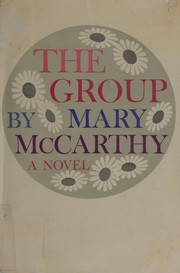
The Group is the best-known novel of American writer Mary McCarthy. It made New York Times Best Seller list in 1963 and remained there for almost two years. In 1966, United Artists released a film adaptation of the book.
The novel touched on controversial topics for its time, such as free love, contraception, abortion, lesbianism, and mental illness. It was banned in Australia, Italy, and Ireland.
Plot
The book describes the lives of eight female friends following their graduation in 1933 from Vassar College, beginning with the marriage of one of them, Kay Strong, and ending with her funeral in 1940. Each character struggles with different issues, including sexism in the work place, child-rearing, financial difficulties, family crises, and sexual relationships. Nearly all the women's issues involve the men in their lives: fathers, employers, lovers, or husbands. As highly educated women from affluent backgrounds, they must strive for autonomy and independence in a time when a woman's role is still largely restricted to marriage and childbirth. The plot is influenced by the political and economic atmosphere of the time. Throughout the book, the reader is exposed to the women's views on contraception, love, sex, socialism, and psychoanalysis.
Characters
Kay Strong: Marries Harald Petersen, who is involved in theater management and stage directing. Kay calls him a "Yale man", even though he did only graduate work there; this mildly offends the analytical Lakey. Harald writes plays that are not produced and is frequently unemployed. Kay has "a ruthless hatred of poor people", and is frustrated by their financial situation. She supports them by working at Macy's and cares greatly about her material surroundings. Her husband has multiple extramarital affairs. Their fights and his drinking escalate; finally he hits her until she threatens him with a bread knife. The next morning, he commits her to a psychiatric hospital, where Polly is working as a nurse. Kay is released from the hospital; she divorces Harald. Her death at the end of the book is mysterious; no one knows whether she fell from the window on the twentieth floor of the Vassar Club, while airplane spotting, or whether she jumped. Her friends reunite at the end of the novel at her funeral, where they shun Harald.
Mary Prothero, "Pokey": The wealthiest of the Group. Described as a "fat, cheerful New York society girl", "very rich and lazy". Pokey says she made it through Vassar only with the help of Priss, a Phi Beta Kappa. Pokey's father gives her a plane so she is able to commute to Cornell Agricultural School; her mother, upon learning that Harald was arrested at a labor demonstration, is devastated that a "jailbird" once dined at the Prothero home. Pokey eventually marries. Her family has an earnest, eccentric, and observant butler named Hatton, who comes to Kay's funeral.
Dottie Renfrew: From a Boston family, she plans to be a welfare worker after Vassar. She goes home from Kay's wedding with Dick Brown, a poor artist, and she encourages him to take her virginity. Afterwards, he treats her abruptly and warns her not to fall in love with him. He tells her that "things" (i.e., sex) can be a lot better between them if she would go see a "lady doctor" (so that he wouldn't have to use withdrawal, which he did use in this instance, or condoms, in order to prevent a pregnancy). He explains that he prefers diaphragms for upper-class women, such as Dottie, or condoms for lower-class women. She is fitted for a diaphragm by a female Manhattan gynecologist who is willing to fit unmarried as well as married women (birth control then being illegal in Massachusetts, Dottie's home state, and many other states). Dick has not called her or returned her calls. She returns to Dick's apartment, but he is not there. She waits for him for hours in Washington Square Park; eventually she discards her birth-control kit under a park bench and returns to Boston. Dottie eventually marries Brook Latham from Arizona. Before her wedding, she admits to her perceptive mother that she has slept with Dick and is still in love with him. Her mother suggests that she postpone her wedding, and to see Dick and explore her feelings for him, and in any case to obtain birth control, but Dottie rejects those ideas and marries Brook on schedule, and soon thereafter is pregnant with her husband's child.
Elinor Eastlake, "Lakey": From Lake Forest, Illinois. She is the most beautiful and, after Pokey, the wealthiest of the group; she is cool and aristocratic, a "dark beauty", with pale skin, black hair, and large green eyes. She spends most of the book in Europe, where she goes to study art history and get a doctorate. At the end of the book, she returns to America, having fled the war in Europe. The Group assembles at the pier to greet her arrival, where they find Lakey accompanied by the Baroness, who, it transpires, is her lesbian lover. The group notes that the Baroness is not terribly bright; they are conflicted over Lakey's sexual orientation.
Polly Andrews: Her family suffers financial losses due to the Depression. She is pretty, with "almost flaxen hair", "milk-white skin" and "big blue eyes". She lives in a building where most of her neighbors are socialists, and she works as a technician in a local hospital. She has an affair with Gus LeRoy, a married publisher, who is going through psychoanalysis at the request of his wife. Polly does not understand why he needs analysis, and after reading Freud, she decides that she herself needs analysis. Gus eventually leaves Polly and goes back to his wife. Polly's father, who has just gotten divorced from Polly's mother and has bipolar disorder, comes to live with Polly. Her father converts to Trotskyism. In the manic phase of his disorder, he overspends their budget, forcing Polly to sell her blood at the hospital. Polly marries Dr. Jim Ridgeley, a psychiatrist, who offers her financial and moral support.
以上文字摘自英文维基百科「The Group (novel)」(有删节,去掉了参考文献等尾部小节),按 CC BY-SA 4.0 使用,作者为维基百科的各位编者。
资料卡
- 原题
- The Group
- 原作语言
- 英语
- 首次出版
- 1963 年
- 作品形式
- 长篇小说
- 首版出版社
- 哈科特
资料卡来自 Wikidata Q1211885(CC0),众包数据,个别字段可能不全。