书单
百科
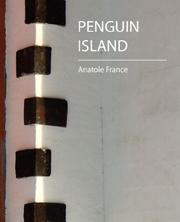
《企鹅岛》(法语:L'Île des Pingouins)是法国作家阿纳托尔·法朗士的一部讽刺小说,发表于1908年。
情节
《企鹅岛》描写一个虚构的岛屿,位于欧洲北部海岸外,岛上住着企鸟。历史开始于一名基督教传教士来到岛上,把动物误认为是人,所以为它们施洗。于是,企鹅的历史开始了,从那里可以看到法国(甚至西欧)的历史镜子。
以上文字摘自维基百科「企鹅岛 (法朗士)」(去掉了参考文献等尾部小节),按 CC BY-SA 4.0 使用,作者为维基百科的各位编者。
中文维基百科的条目比较短,下面附上英文维基百科的内容(英文原文):
Penguin Island (1908; French: L'Île des Pingouins) is a satirical fictional history by French author Anatole France.
Plot
Penguin Island is written in the style of a sprawling 18th- and 19th-century history book, concerned with grand metanarratives, mythologizing heroes, hagiography and romantic nationalism. It is about a fictitious island, inhabited by great auks, that existed off the northern coast of Europe. The history begins when a wayward Christian missionary monk lands on the island and perceives the upright, unafraid auks as a sort of pre-Christian society of noble pagans. Mostly blind from reflections from the polar ice and somewhat deaf from the roar of the sea, having mistaken the animals for humans, he baptizes them. This causes a problem for The Lord, who normally only allows humans to be baptized. After consulting with saints and theologians in Heaven, He resolves the dilemma by converting the baptized birds to humans with only a few physical traces of their ornithological origin, and giving them each a soul.
Thus begins the history of Penguinia, and from there forward the history mirrors that of France (and more generally of Western Europe, including German-speaking areas and the British Isles). The narrative spans from the Migration Period ("Dark Ages"), when the Germanic tribes fought incessantly among themselves for territory; to the heroic Early Middle Ages with the rise of Charlemagne ("Draco the Great") and conflicts with Viking raiders ("porpoises"); through the Renaissance (Erasmus); and up to the modern era with motor cars; and even into a future time in which a thriving high-tech civilization is destroyed by a campaign of terrorist bombings, and everything begins again in an endless cycle.
Analysis
The longest-running plot thread, and probably the best known, satirizes the Dreyfus affair, though both brief and complex satires of European history, politics, philosophy and theology are present throughout the novel. At various points, real historical figures such as Columba and Saint Augustine are part of the story, as well as fictionalized characters who represent historical people. Penguin Island is a satire on society and human nature in which morals, customs, and the origin of religion and laws are lampooned. For example, the origin of private property is presented as starting with the brutal and shameless murder of a farmer, and the seizure of his land, by a physically larger and stronger neighbour.
Girdler B. Fitch has postulated the influence of illustrations by Grandville (Jean-Ignace-Isidore Gérard) on France's conception of Penguin Island.
以上文字摘自英文维基百科「Penguin Island (novel)」(去掉了参考文献等尾部小节),按 CC BY-SA 4.0 使用,作者为维基百科的各位编者。
资料卡
- 原题
- L'Île des Pingouins
- 原作语言
- 法语
- 作品形式
- 长篇小说
资料卡来自 Wikidata Q1213641(CC0),众包数据,个别字段可能不全。