书单
百科
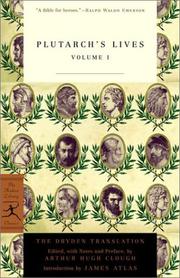
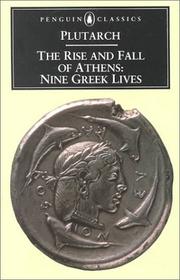
《希腊罗马名人传》(希腊语:Βίοι Παράλληλοι,拉丁语:Vitae parallelae,英语:Parallel Lives;直译:“比较列传”),又译《希腊罗马英豪列传》,是一本由古罗马历史学家普鲁塔克撰写的纪传体史书。书中记载了包括凯撒、安东尼、梭伦等约50位古希腊和古罗马的著名军事、政治人物。此书既是架构松散的古代史,又是人物传记,对后世西方历史学研究及文学创作产生一定影响。
中文译作
吴奚真译《希腊罗马名人传》,台湾中华书局出版(1963年初版)。
黄宏煦主编,陆永庭、吴彭鹏等译《希腊罗马名人传-上册》商务印书馆出版(大陆版,1990年初版),中下册未见出版。
席代岳译 《希腊罗马英豪列传》,联经出版事业公司出版(台湾版,2009年初版);吉林出版集团(大陆版,2009年。以《希腊罗马名人传》出版),安徽人民出版社(大陆版,2012年初版,沿用席代岳翻译书名)。
以上文字摘自维基百科「希腊罗马名人传」(去掉了参考文献等尾部小节),按 CC BY-SA 4.0 使用,作者为维基百科的各位编者。
中文维基百科的条目比较短,下面附上英文维基百科的内容(英文原文):
The Parallel Lives (Ancient Greek: Βίοι Παράλληλοι, Bíoi Parállēloi; Latin: Vītae Parallēlae) is a series of 48 biographies of famous men written in Greek by the Greco-Roman philosopher, historian, and Apollonian priest Plutarch, probably at the beginning of the second century. The lives are arranged in pairs to illuminate the common moral virtues or failings of their subjects.
The surviving Parallel Lives consists of 23 pairs of biographies, each pair consisting of one Greek and one Roman whose lives Plutarch viewed as similar, such as Alexander the Great and Julius Caesar, or Demosthenes and Cicero. There are also four singular Lives, recounting the stories of Artaxerxes, Aratus, Galba, and Otho. Traces of other biographies point to an additional twelve single Lives that are now missing.
It is a work of considerable importance, not only as a source of information about the individuals described, but also about the times in which they lived.
Motivation
Parallel Lives was Plutarch's second set of biographical works, following the Lives of the Roman Emperors from Augustus to Vitellius. Of these, only the Lives of Galba and Otho survive.
As he explains in the first paragraph of his Life of Alexander, Plutarch's interest was primarily ethical rather than historical ("For it is not Histories that I am writing, but Lives"). He was concerned with exploring the influence of character, good or bad, on the lives and destinies of famous men. He wished to shed light on the actions and achievements of the Greek men of the distant past through his comparisons with the more recent past of Rome. George Wyndham's introduction in the 1895 publication of the Lives writes of:[Plutarch's] desire, as a man, to draw the noble Grecians, long since dead, a little nearer to the noonday of the living...By placing them side by side, he gave back to the Greeks that touch which they had lost with the living in the death of Greece, and to the Romans that distinction from everyday life which they were fast beginning to lose.Because the men he wrote about had been dead nearly 300 years before Plutarch's time, his writing was largely based on manuscripts of uncertain accuracy. Plutarch himself had little faith in the historic truth found in resources from the past. In his life of Pericles, he states:It is so hard to find out the truth of anything by looking at the record of the past. The process of time obscures the truth of former times, and even contemporaneous writers disguise and twist the truth out of malice or flattery.
Translations
The Lives were circulated enough throughout Rome after their original production that they survived the Early Middle Ages. However, many of the Lives which appear in a list of his writings have not been found. Among these are his biography of Hercules and his comparison of Epaminondas of Greece and Scipio Africanus of Rome.
The first printed edition of his Parallel Lives appeared in Rome around 1470, translated into Latin from the original Greek. Several more translations would appear through the end of the fifteenth century, with an Italian translation in 1482 then in Spanish in 1491. A German translation was produced in 1541.
The Lives would gain massive popularity after the 1559 French translation by Amyot, the Abbot of Bellozane. This reproduction of the work was an immediate success. Six authorized editions were published by the Parisian house of Vascosan by the end of 1579, and it was largely pirated.
Amyot's translation served as a direct source for Thomas North's 1579 English translation, which phrase for phrase follows Amyot's French version. This rendition would become an important source-material for Shakespeare's Coriolanus, Julius Caesar, and Antony and Cleopatra.
以上文字摘自英文维基百科「Parallel Lives」(有删节,去掉了参考文献等尾部小节),按 CC BY-SA 4.0 使用,作者为维基百科的各位编者。
资料卡
- 原题
- Βίοι Παράλληλοι 等 2 项
- 原作语言
- 古希腊语
- 首次出版
- 110 年代
资料卡来自 Wikidata Q842337(CC0),众包数据,个别字段可能不全。
改编作品
取材于它的书2
名单来自 Wikidata(CC0):只列条目里写明「改编自 / 取材于」这本书的作品,不按名字猜;众包数据,可能不全。