书单
百科
X论文(英语:X Article)正式标题为“苏联行为的根源”,也称做“长电报”(Long Telegram),是美国外交家乔治·凯南化名为X先生撰写的一篇文章,1947年7月发表于外交杂志。乔治·凯南于1944年至1946年间担任美国驻苏联外交使团副团长,他在文章中倡导遏制苏联和强烈的反共主义政策。
背景
1945年7月乔治·凯南重新加入美国驻莫斯科大使馆,担任代办一职。尽管他本人对苏联体制持批评态度,但当时美国国务院内部对苏联却是友好态度,因为苏联在反对纳粹德国的战争中是极为重要的盟友。
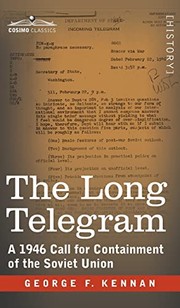
1946年2月,美国财政部询问美国驻莫斯科大使馆,为何苏联不支持新近成立的世界银行和国际货币基金组织。作为回复,凯南撰写了长电报,概述了他对苏联的看法。凯南认为,苏联对世界的看法源自传统的“俄罗斯的不安全感”,文章于1946年2月22日到达华盛顿,其中最著名的一段为:尽管苏联不受理性逻辑的影响,但对武力逻辑高度敏感。
克利福德-埃尔西报告
1946年7月,美国总统杜鲁门邀请他的高级顾问克拉克·克利福德准备一份关于苏联关系的报告,该报告将详细说明苏联漠视战后协议的情况。在乔治·埃尔西的协助下,克拉克·克利福德开始着手撰写报告,将长电报的内容进行分析并转化为具体政策建议,并于1946年9月24日将《美国与苏联的关系》报告提交给总统。
克利福德-埃尔西报告首次提出了限制和遏制苏联影响的建议。
X论文来源
苏联行为的根源始于1947年1月为国防部长詹姆斯·福里斯特尔准备的一份私人报告,并未打算将其作为公共文档。然而,在外交杂志编辑的催促下,凯南在获得福里斯特尔许可后,化名“X先生”发表该文章。这篇文章在发表时,并非是表达政府官方对苏联的看法,但当作者为乔治·凯南的身份被披露后,文章就与官方政策产生了联系,包括国务卿乔治·卡特莱特·马歇尔等人对批准文章出版产生了质疑。
以上文字摘自维基百科「X论文」(去掉了参考文献等尾部小节),按 CC BY-SA 4.0 使用,作者为维基百科的各位编者。
中文维基百科的条目比较短,下面附上英文维基百科的内容(英文原文):
"The Sources of Soviet Conduct", commonly "X Article", is an article written by George F. Kennan and published under the pseudonym "X" in the July 1947 issue of Foreign Affairs magazine. It introduced the term "containment" to widespread use and advocated the strategic use of that concept against the Soviet Union. It expanded on ideas expressed by Kennan in a confidential February 1946 telegram, formally identified by Kennan's State Department number, "511", but informally dubbed the "long telegram" for its size.
Kennan composed the long telegram in response to inquiries about the implications of a February 1946 speech by Joseph Stalin. Though the speech was in line with previous statements by Stalin, it provoked fear in the American press and public; Time magazine called it "the most warlike pronouncement uttered by any top-rank statesman since V-J Day". The long telegram explained Soviet motivations by recounting the history of Russian rulers as well as the ideology of Marxism–Leninism. It argued that the Soviet leaders used the ideology to characterize the external world as hostile, allowing them to justify their continued hold on power despite a lack of popular support. Washington bureaucrats quickly read the confidential message and accepted it as the best explanation of Soviet behavior. The reception elevated Kennan's reputation within the State Department as one of the government's foremost Soviet experts.
After hearing Kennan speak about Soviet foreign relations at the Council on Foreign Relations in January 1947, international banker R. Gordon Wasson suggested that he share his views in an article for Foreign Affairs. Kennan revised a piece he had submitted to Secretary of the Navy James Forrestal in late January 1947, but his role in government precluded him from publishing under his name. His superiors granted him approval to publish the piece provided it was released anonymously; Foreign Affairs attributed the article only to "X". Expressing similar sentiments to that of the long telegram, the piece was strong in its anti-communism, introducing and outlining a basic theory of containment. The article was widely read; though it does not mention the Truman Doctrine, having mostly been written before Truman's speech, it quickly became seen as an expression of the doctrine's policy. Retrospective commentators dispute the impact of the article, although Henry Kissinger referred to it as "the diplomatic doctrine of the era".
Background
Joseph Stalin, General Secretary and de facto leader of the Soviet Union, spoke at the Bolshoi Theatre on February 9, 1946, the night before the symbolic 1946 Supreme Soviet election. The speech did not discuss foreign policy, but instead made pledges to expand industry. He justified the expansion by pointing to Marxist–Leninist theory, warning that capitalism possessed a predisposition towards conflict.
Stalin's speech provoked fear in the American press and public, with Time magazine calling it "the most warlike pronouncement uttered by any top-rank statesman since V-J Day." George F. Kennan, then working for the US State Department as chargé d'affaires in Moscow, found the speech routine and reflective of previous statements from Stalin. With this in mind, he issued only a quick summary of the speech for the State Department. Despite the familiar statements from Stalin, the context in which they were made – including the Soviet Union's recent rejection of Bretton Woods and evidence of atomic espionage in the United States and Canada – alarmed officials in Washington. In a 1982 interview, former diplomat Elbridge Durbrow expressed that Stalin's speech had in effect said, "to hell with the rest of the world." US President Harry Truman was confused by the Soviet's policies, at times appearing belligerent and at others exercising self-restraint. Leaders were increasingly coming to the conclusion that the existing quid pro quo strategy was ineffective against the Soviets, but had no replacement strategy.
以上文字摘自英文维基百科「X Article」(有删节,去掉了参考文献等尾部小节),按 CC BY-SA 4.0 使用,作者为维基百科的各位编者。
资料卡
- 原题
- The Sources of Soviet Conduct
- 原作语言
- 英语
- 首次出版
- 1947 年
- 体裁
- 文字作品
- 首发于
- 外交杂志
- 改编自 / 取材于
- 长电报
- 主题
- 遏制政策、美苏关系
资料卡来自 Wikidata Q980029(CC0),众包数据,个别字段可能不全。