 书单
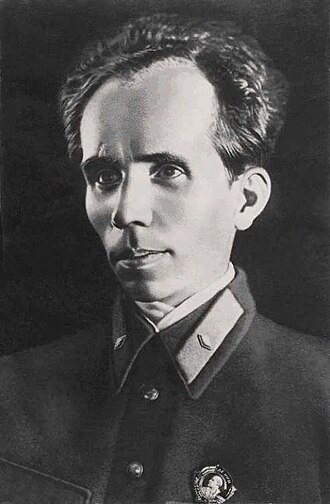
尼古拉·奥斯特洛夫斯基
- 生卒
- 1904 – 1936
- 国籍
- 俄罗斯帝国、俄罗斯共和国
- 外文名
- Nikolai Ostrovsky
照片:作者不详,公有领域,来自维基共享资源「N Ostrovskiy.jpg」(经缩小)。
生平与创作
尼古拉·阿列克谢耶维奇·奥斯特洛夫斯基(俄语:Николай Алексеевич Островский;乌克兰语:Микола Олексійович Остро́вський;1904年9月29日—1936年12月22日),苏联乌克兰裔社会主义现实主义作家,共产主义革命者、苏联红军战士。其最出名的作品是描写俄国内战的《钢铁是怎样炼成的》。
生平
奥斯特洛夫斯基出生在俄罗斯帝国沃利尼亚省维利亚村一个退伍军人家庭,父亲阿列克谢·伊万诺维奇·奥斯特洛夫斯基(1854年—1936年)作为沙皇俄国士兵参与过日俄战争,母亲奥尔加·奥西普纳·奥斯特洛夫斯卡娅(1875年—1947年)为捷克移民之女。9岁之前在一所教区学校上学,是一位荣誉学生,11岁时举家迁徙到舍佩蒂夫卡,并开始在当地火车站工作,1919年加入共青团,参加俄国内战和乌苏战争,担任过红军训练营政委和地方共青团书记。1920年秋天在战斗中负重伤,23岁时全身瘫痪,24岁时双目失明、脊椎硬化。由他口述,妻子整理,在1933年写成以“保尔·柯察金”为主人公的半自传小说《钢铁是怎样炼成的》,这本书在共产主义世界引起巨大反响。1932年成为无产阶级作家协会成员,1934年成为苏联作家协会会员。1935年10月1日,苏联政府授予他列宁勋章。
奥斯特洛夫斯基于1936年12月22日逝世,得年32岁。其第二本描写乌苏战争的小说《暴风雨所诞生的》被迫中止。
1940年位于索契的奥斯特洛夫斯基的故居改建成为国家博物馆。
以上文字摘自维基百科「尼古拉·奥斯特洛夫斯基」(去掉了参考文献等尾部小节),按 CC BY-SA 4.0 使用,作者为维基百科的各位编者。
中文维基百科的条目比较短,下面附上英文维基百科的内容(英文原文):
Nikolai Alekseyevich Ostrovsky (Russian: Николай Алексеевич Островский; Ukrainian: Микола Олексійович Островський, romanized: Mykola Oleksiiovych Ostrovskyi; 29 September 1904 – 22 December 1936) was a Soviet socialist realist writer. He is best known for his novel How the Steel Was Tempered.
Life
Ostrovsky was born in the village of Viliya (today a village in Rivne Raion (until 2020 it was situated in Ostroh Raion), Rivne Oblast) in the Volhynian Governorate (Volhynia), then part of the Russian Empire, into a Ukrainian working-class family. He attended a parochial school until he was nine and was an honor student. In 1914, his family moved to the railroad town of Shepetivka (today in Khmelnytskyi Oblast) where Ostrovsky started working in the kitchens at the railroad station, a timber yard, then becoming a stoker's mate and then an electrician at the local power station. In 1917, at the age of thirteen he became a Bolshevik party activist. At the same period he developed ankylosing spondylitis, which would later blind and paralyze him.
According to the official biography, when the Germans occupied the town in the spring of 1918, Ostrovsky ran errands for the local Bolshevik underground. In July 1918 he joined the Komsomol and the Red Army in August. He served in the Kotovsky cavalry brigade. In 1920 he was reportedly wounded near Lviv and contracted typhus. He returned to the army only to be wounded again and was demobilized on medical grounds.
In 1921, he began working in railway workshops of Kiev as an electrician and as the secretary of the local Komsomol.
Having rheumatism and typhus, in August 1922 he was sent to Berdyansk, a resort on the Sea of Azov, for treatment. In October 1922 he was officially declared an invalid; however he continued working. In 1923 he was appointed Commissar of the Red Army's Second Training Battalion and Komsomol secretary for Berezdiv in western Ukraine. In January 1924 he went to Iziaslav as the head of Komsomol district committee and in August 1924 he joined the Communist Party. In 1925, with his health rapidly declining, he went to Kharkiv for medical treatment and in May 1926 he went to a sanatorium in the Crimea. By December 1926 polyarthritis deprived him of almost all mobility and he became virtually bedridden. In December 1927 Ostrovsky began a correspondence course at the Sverdlov Communist University in Moscow that he completed in June 1929. In August, he lost his vision.
Undaunted by his immobility and blindness, in 1930, he began work on his first novel, How the Steel Was Tempered, which became renowned and influential in the Communist world. He also wrote articles for newspapers and journals and spoke often on the radio. In April 1932 he became a member of the Moscow branch of the Association of Proletarian Writers and in June 1934 he joined the Union of Soviet Writers. On 1 October 1935, he was awarded the Order of Lenin.
After living for years with paralysis, illness and blindness due to congenital ankylosing spondylitis as well as complications from typhus, Ostrovsky died on 22 December 1936, aged 32. Because of his early death, he was unable to complete his second novel, Born of the Storm, on the Russian Civil War.
Legacy
His novel How the Steel Was Tempered is considered one of the most influential works of Communist literature. Even though it is considered relatively weak in terms of its artistic merit, the work influenced millions of readers in virtue of its passion for socialist worldview. In Moscow during the Communist period the Ostrovsky Museum and the Ostrovsky Humanitarian centre were built. They preserve his study and bedroom, while other exhibits include showcases of the achievements of disabled people like Nikolai Fenomenov and Ludmilla Rogova.
There also was established by the Central Committee of Komsomol of Ukraine the Ostrovsky Republican Prize.
以上文字摘自英文维基百科「Nikolai Ostrovsky」(有删节,去掉了参考文献等尾部小节),按 CC BY-SA 4.0 使用,作者为维基百科的各位编者。
资料卡
- 母语名
- Микола Олексійович Островський
- 出生
- 1904 年 9 月 16 日
- 出生地
- 维利亚
- 逝世
- 1936 年 12 月 22 日
- 逝世地
- 莫斯科
- 职业
- 作家
- 使用语言
- 俄语、乌克兰语
- 写作语言
- 俄语
- 就读学校
- 斯维尔德洛夫共产主义大学(1927)
- 创作体裁
- 散文
- 所属团体
- 苏联列宁共产主义青年团(1919)
- 代表作
- 钢铁是怎样炼成的
- 获奖
- 列宁勋章(1935)、列宁共青团奖
资料卡来自 Wikidata Q271853(CC0),众包数据,个别字段可能不全。
本站收录的作品(1)
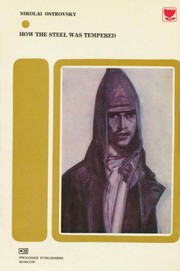
作品年表(1 本)
本站书库里署名尼古拉·奥斯特洛夫斯基的书(Open Library 上至少 10 人加过书架的才收),按首版年份排(有本站书页的用 Wikidata 记的首版年,其余用 Open Library 的);年份偶尔记成后来的版本或译本,以原书为准。全部作品见 Open Library。
- 1932钢铁是怎样炼成的Как закалялась сталь书架 16