 书单
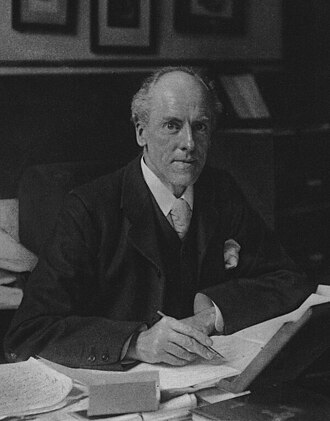
卡尔·皮尔逊
- 生卒
- 1857 – 1936
- 国籍
- 英国
- 外文名
- Karl Pearson
照片:作者不详,公有领域,来自维基共享资源「Karl Pearson.jpg」(经缩小)。
生平与创作
卡尔·皮尔逊(Karl Pearson,1857年3月27日—1936年4月27日),英国数学家和自由思想家。
生平
1857年出生于英国伦敦;1879年毕业于剑桥大学,获数学学士学位;后往德国海德堡大学进修德语及人文学科;后去林肯法学院学习法律获大律师资格;数年后于剑桥大学获数学哲学博士学位;1884年~1911年任伦敦大学应用数学和力学的教授,1911年~1933年任高尔顿实验室主任,又任应用统计系教授。
1896年选为英国皇家学会会员,他还是爱尔堡皇家学会会员、苏联人类学会会员。
贡献
卡尔·皮尔逊继弗朗西斯·高尔顿之后,发展了回归与相关的理论,得到总体的概念,并认为统计研究不是样本本身,而是根据样本对总体的推断。由此导出了拟合优度检验:即作为样本取出的若干个体是否拟合从理论上所确定的总体分布问题。
1894年,他提出了矩估计法,并在此后发展了这一方法。
1900年,他创立和发展了卡方检验的理论,在理论分布完全给定的情况下,给出了拟合优度检验的卡方统计量的极限定理。
他考察一些生物学方面数据后,发现不少分布与正态分布呈明显偏倚,创立了概率密度函数族,可用一微分方程描述:
他是从数学上对生物统计研究的第一人,1901年他与高尔顿、韦尔登一起,创办了《生物统计学》杂志,使生物统计学有了自己的一席之地。
以上文字摘自维基百科「卡尔·皮尔逊」(去掉了参考文献等尾部小节),按 CC BY-SA 4.0 使用,作者为维基百科的各位编者。
中文维基百科的条目比较短,下面附上英文维基百科的内容(英文原文):
Karl Pearson (27 March 1857 – 27 April 1936) was an English biostatistician and mathematician. He has been credited with establishing the discipline of mathematical statistics. He founded the world's first university statistics department at University College London in 1911, and contributed significantly to the field of biometrics. Pearson was also a proponent of Social Darwinism and eugenics, and his thought is an example of what is today described as scientific racism. Pearson was a protégé and biographer of Sir Francis Galton. He edited and completed both William Kingdon Clifford's Common Sense of the Exact Sciences (1885) and Isaac Todhunter's History of the Theory of Elasticity, Vol. 1 (1886–1893) and Vol. 2 (1893), following their deaths.
Early life and education
Pearson was born in Islington, London, into a Quaker family. His father was William Pearson QC of the Inner Temple, and his mother Fanny (née Smith), and he had two siblings, Arthur and Amy. Pearson attended University College School, followed by King's College, Cambridge, in 1876 to study mathematics, graduating in 1879 as Third Wrangler in the Mathematical Tripos. He then travelled to Germany to study physics at the University of Heidelberg under G. H. Quincke and metaphysics under Kuno Fischer. He next visited the University of Berlin, where he attended the lectures of the physiologist Emil du Bois-Reymond on Darwinism (Emil was a brother of Paul du Bois-Reymond, the mathematician). Pearson also studied Roman Law, taught by Bruns and Mommsen, medieval and 16th century German Literature, and Socialism. He became an accomplished historian and Germanist and spent much of the 1880s in Berlin, Heidelberg, Vienna, Saig bei Lenzkirch, and Brixlegg. He wrote on Passion plays, religion, Goethe, Werther, as well as sex-related themes, and was a founder of the Men and Women's Club.
Pearson was offered a Germanics post at King's College, Cambridge. Comparing Cambridge students to those he knew from Germany, Karl found German students inathletic and weak. He wrote to his mother, "I used to think athletics and sport was overestimated at Cambridge, but now I think it cannot be too highly valued."
On returning to England in 1880, Pearson first went to Cambridge:
Back in Cambridge, I worked in the engineering shops, but drew up the schedule in Mittel- and Althochdeutsch for the Medieval Languages Tripos.
In his first book, The New Werther, Pearson gives a clear indication of why he studied so many diverse subjects:
I rush from science to philosophy, and from philosophy to our old friends the poets; and then, over-wearied by too much idealism, I fancy I become practical in returning to science. Have you ever attempted to conceive all there is in the world worth knowing—that not one subject in the universe is unworthy of study? The giants of literature, the mysteries of many-dimensional space, the attempts of Boltzmann and Crookes to penetrate Nature's very laboratory, the Kantian theory of the universe, and the latest discoveries in embryology, with their wonderful tales of the development of life—what an immensity beyond our grasp! [...] Mankind seems on the verge of a new and glorious discovery. What Newton did to simplify the planetary motions must now be done to unite in one whole the various isolated theories of mathematical physics.
Pearson then returned to London to study law, emulating his father. Quoting Pearson's own account:
Coming to London, I read in chambers in Lincoln's Inn, drew up bills of sale, and was called to the Bar, but varied legal studies by lecturing on heat at Barnes, on Martin Luther at Hampstead, and on Lassalle and Marx on Sundays at revolutionary clubs around Soho.
以上文字摘自英文维基百科「Karl Pearson」(有删节,去掉了参考文献等尾部小节),按 CC BY-SA 4.0 使用,作者为维基百科的各位编者。
资料卡
- 母语名
- Karl Pearson
- 本名
- Carl Pearson
- 出生
- 1857 年 3 月 27 日
- 出生地
- 伦敦
- 逝世
- 1936 年 4 月 27 日
- 逝世地
- Coldharbour
- 职业
- 数学家、数学史学家、统计学家、历史学家、哲学家、传记作家、心理学家
- 使用语言
- 英语
- 写作语言
- 英语
- 就读学校
- 剑桥大学国王学院(1875)、伦敦大学学院、伦敦国王学院、海德堡大学、剑桥大学 等 6 项
- 领域
- 数理统计学、统计学、生物学、优生学
- 所属团体
- 英国皇家学会、美国文理科学院(1928)
- 配偶
- Maria Sharpe
- 获奖
- 英国皇家学会院士(1896)、赫胥黎纪念奖章(1903)、达尔文奖章(1898)、韦尔登纪念奖(1912)
资料卡来自 Wikidata Q310794(CC0),众包数据,个别字段可能不全。
本站收录的作品(1)
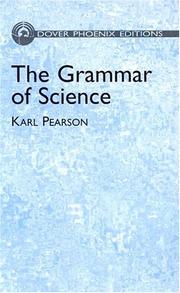
作品年表(1 本)
本站书库里署名卡尔·皮尔逊的书(Open Library 上至少 10 人加过书架的才收),按首版年份排(有本站书页的用 Wikidata 记的首版年,其余用 Open Library 的);年份偶尔记成后来的版本或译本,以原书为准。全部作品见 Open Library。
- 1892科学的规范The Grammar of Science书架 19