 书单
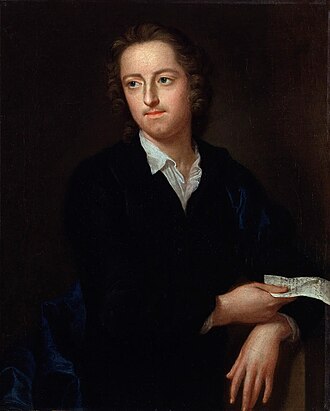
托马斯·格雷
- 生卒
- 1716 – 1771
- 国籍
- 大不列颠王国
- 外文名
- Thomas Gray
照片:John Giles Eccardt,公有领域,来自维基共享资源「PortraitThomasGrayByJohnGilesEccart1747to1748.jpg」(经缩小)。
生平与创作
托马斯·格雷(英语:Thomas Gray,1716年12月26日—1771年7月30日),是18世纪的一名英格兰诗人、古典学家,曾任剑桥大学教授。他一生只出版过13首诗,代表作为《墓园哀歌》(Elegy Written in a Country Churchyard,1751),1757年获封桂冠诗人。
生平
他出生于英格兰伦敦康希尔,在家中12个孩子里排名第5,但却是唯一一个长大成年的孩子。他的父亲菲利普是一名公证人,母亲多萝西是一名女帽商。他的父亲精神有问题,后来其母带他离家出走。
他曾就读于伊顿公学,在那里结识了好友贺拉斯·沃波尔(首相罗伯特·沃波尔之子)等。1734年,他入读剑桥大学彼得学院,1738年和贺拉斯一起前往欧洲壮游。
他在1742年开始正式从事诗歌写作,后来先后成为剑桥大学彼得学院和剑桥大学彭布罗克学院成员。
1762年,剑桥大学现代史钦定讲座教授特纳(Shallet Turner)去世,格雷的朋友们想游说政府将该职位给予格雷,但最终他还是输给了劳伦斯·布伦克特。格雷在1768年布伦克特去世后才当上现代史钦定讲座教授。
他在1771年于剑桥去世,之后葬在斯托克波吉斯母亲的墓旁。
以上文字摘自维基百科「托馬斯·格雷」(去掉了参考文献等尾部小节),按 CC BY-SA 4.0 使用,作者为维基百科的各位编者。
中文维基百科的条目比较短,下面附上英文维基百科的内容(英文原文):
Thomas Gray (26 December 1716 – 30 July 1771) was an English poet, letter-writer, and classical scholar at Cambridge University, being a fellow first of Peterhouse then of Pembroke College. He is widely known for his Elegy Written in a Country Churchyard, published in 1751. Gray was a self-critical writer who published only 13 poems in his lifetime, despite being very popular. He was even offered the position of Poet Laureate in 1757 after the death of Colley Cibber, though he declined.
Early life and education
Thomas Gray was born in Cornhill, London. His father, Philip Gray, was a scrivener and his mother, Dorothy Antrobus, was a milliner. He was the fifth of twelve children, and the only one to survive infancy. An 1803 newspaper article including a biography of Gray suggests that Gray almost died in infancy due to suffocation from a fullness of blood. However, his mother "ventured to open a vein with her own hand, which instantly removed the paroxysm", saving his life. He lived with his mother after she left his abusive and mentally unwell father.
Gray's mother paid for him to go to Eton College, where his uncles Robert and William Antrobus worked. Robert became Gray's first teacher and helped inspire in Gray a love for botany and observational science. Gray's other uncle, William, became his tutor. He recalled his schooldays as a time of great happiness, as is evident in his "Ode on a Distant Prospect of Eton College". Gray was a delicate and scholarly boy who spent his time reading and avoiding athletics. He lived in his uncle's household rather than at college. He made three close friends at Eton: Horace Walpole, son of the Prime Minister Robert Walpole; Thomas Ashton; and Richard West, son of another Richard West (who was briefly Lord Chancellor of Ireland). The four prided themselves on their sense of style, sense of humour, and appreciation of beauty. They were called the "quadruple alliance". Gray's nickname in the “Quadruple Alliance” was Orozmades, “the Zoroastrian divinity, who is mentioned in Lee’s The Rival Queens as a ‘dreadful god’ who from his cave issues groans and shrieks to predict the fall of Babylon.”
In 1734, Gray went up to Peterhouse, Cambridge. He found the curriculum dull. He wrote letters to friends listing all the things he disliked: the masters ("mad with Pride") and the Fellows ("sleepy, drunken, dull, illiterate Things"). Intended by his family for the law, he spent most of his time as an undergraduate reading classical and modern literature, and playing Vivaldi and Scarlatti on the harpsichord for relaxation.
In 1738, Gray accompanied his old school friend Walpole on his Grand Tour of Europe, possibly at Walpole's expense. The two fell out and parted in Tuscany because Walpole wanted to attend fashionable parties and Gray wanted to visit all the antiquities. They were reconciled a few years later. It was Walpole who later helped publish Gray's poetry. When Gray sent his most famous poem, "Elegy", to Walpole, Walpole sent off the poem as a manuscript and it appeared in different magazines. Gray then published the poem himself and received the credit he was due.
Writing and academia
Gray began seriously writing poems in 1742, mainly after the death of his close friend Richard West, which inspired "Sonnet on the Death of Richard West". He moved to Cambridge and began a self-directed programme of literary study, becoming one of the most learned men of his time. He became a Fellow first of Peterhouse, and later of Pembroke College, Cambridge. According to college tradition, he left Peterhouse for Pembroke College after being the victim of a practical joke played by undergraduates. Gray is supposed to have been afraid of fire, and had attached a bar outside his window to which a rope could be tied. After being woken by undergraduates with a fire made of shavings, Gray climbed down the rope but landed in a tub of water which had been placed below his window.
以上文字摘自英文维基百科「Thomas Gray」(有删节,去掉了参考文献等尾部小节),按 CC BY-SA 4.0 使用,作者为维基百科的各位编者。
资料卡
- 出生
- 1716 年 12 月 26 日
- 出生地
- 伦敦
- 逝世
- 1771 年 7 月 30 日
- 逝世地
- 剑桥
- 职业
- 诗人、文学评论家、作家、历史学家
- 使用语言
- 英语
- 写作语言
- 英语
- 就读学校
- 剑桥大学彼得学院、伊顿公学
资料卡来自 Wikidata Q315516(CC0),众包数据,个别字段可能不全。
同时代的大不列颠王国作家
Open Library 上的全部作品
正在读取…