 书单
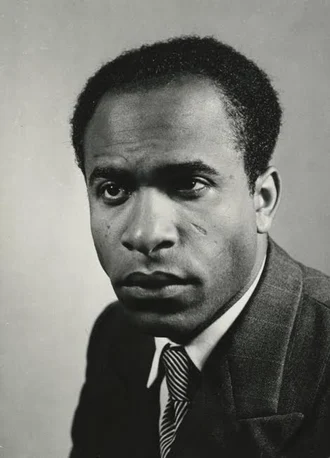
弗朗茨·法农
- 生卒
- 1925 – 1961
- 外文名
- Frantz Fanon
照片:作者不详,公有领域,来自维基共享资源「Photograph of Frantz Fanon from Black Skin White Masks (1967) dust jacket.webp」(经缩小)。
生平与创作
易卜拉欣·弗朗茨·奥马尔·法农(法语:Ibrahim Frantz Omar Fanon;1925年7月20日—1961年12月6日),作家、散文家、心理分析学家、革命家,出生于法国殖民地马提尼克的首府法兰西堡。他是20世纪研究非殖民化和殖民主义的精神病理学较有影响的思想家之一,超过40年来,他的作品启发了不少反帝国主义解放运动。1961年12月6日,他因白血病在美国病逝。
概要
法农也是近代最重要的黑人文化批评家之一,以黑人的角度探索黑色非洲,并使得非洲研究真正受到西方学界重视。在法国完成医学学位后,于法国及阿尔及利亚两地行医。在法期间,法农完成了《黑皮肤、白面具》,书中道尽身为黑人知识分子在法国的境遇。在阿尔及利亚则完成了《全世界受苦的人》,深度探讨阿尔及利亚人被法国殖民的痛苦。
主要著作
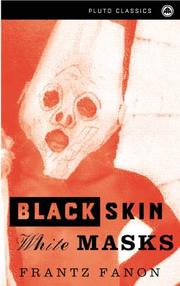
《黑皮肤、白面具》,心灵工坊出版(Peau Noire, Masques Blancs, 1952)
《阿尔及利亚革命的第五年》(L'An V de la Révolution Algérienne, 1959)
《全世界受苦的人》,心灵工坊出版)(Les Damnés de la Terre, 1961)
〈论暴力〉
〈自发性的伟大和弱点〉
〈国族意识之厄运〉
〈论国族文化〉
〈殖民战争与心理失调〉
《为了非洲革命》(Pour la Revolution Africaine, 1964)
以上文字摘自维基百科「弗朗茨·法农」(去掉了参考文献等尾部小节),按 CC BY-SA 4.0 使用,作者为维基百科的各位编者。
中文维基百科的条目比较短,下面附上英文维基百科的内容(英文原文):
Frantz Omar Fanon (US: ; French: [fʁɑ̃ts fanɔ̃]; 20 July 1925 – 6 December 1961) was a French psychiatrist and political philosopher, who made critical contributions to the fields of post-colonial studies and critical theory. As well as an intellectual, Fanon was a political radical and Pan-Africanist, concerned with the psychopathology of colonization and the human, social, and cultural consequences of decolonization.
In the course of his work as a physician and psychiatrist, Fanon supported the Algerian War of independence (1954–1962) from France and joined the Algerian National Liberation Front. Jansen and Osterhammel characterise Fanon as "the most influential anticolonial thinker of his time". For more than five decades, the life and works of Fanon have inspired national liberation movements and other freedom and political movements in Sri Lanka, South Africa, and the United States.
Fanon formulated a model for community psychology, believing that many mental health patients would have an improved prognosis if they were integrated into their family and community instead of being treated with institutionalized care. He also helped found the field of institutional psychotherapy while working at Saint-Alban under François Tosquelles and Jean Oury.
Life and career
Early life
Frantz Omar Fanon was born on 20 July 1925 in Fort-de-France, Martinique, which was then part of the French colonial empire, into a middle class family. His father, Félix Casimir Fanon, worked as a customs officer. Fanon's mother, Eléanore Médélice, who was of Afro-Caribbean and Alsatian descent, was a shopkeeper.
Fanon was the third of four sons in a family of eight children. Two of his siblings died young, including Fanon's sister Gabrielle, with whom he was very close. The young Frantz Fanon was an avid football player, and played the sport in Martinique, later organizing football matches for patients and staff while working at the Blida-Joinville psychiatric hospital in Algeria.
World War II
In June 1940, the German victory in the Battle of France resulted in the French Third Republic capitulating to Nazi Germany. Martinique came under the control of French Navy elements under Admiral Georges Robert, who were loyal to the collaborationist Vichy regime in France. The war disrupted imports from Metropolitan France to Martinique, leading to major shortages on the island, while Robert's authoritarian regime repressed Martinican Allied sympathizers, hundreds of whom escaped to nearby Caribbean islands. Fanon later described the pro-Vichy regime in Martinique as taking off their masks and behaving like "authentic racists". In January 1943, he fled Martinique during the wedding of one of his brothers, and travelled to the British colony of Dominica in order to link up with other Allied sympathizers.
Robert's regime was overthrown by a local uprising in June 1943, which Fanon would later acclaim as "the birth of the [Martinican] proletariat" as a revolutionary force. Following the uprising, Fanon "enthusiastically" returned to Martinique, where the pro-Allied Free French leader Charles de Gaulle had appointed Henri Tourtet as the colony's new governor. Tourtet raised the 5th Antillean Marching Battalion to serve in Free French Forces (FFL), and Fanon quickly enlisted in the unit at Fort-de-France.
He underwent basic training before boarding a troopship bound for Morocco in March 1944. After Fanon arrived in Casablanca, he was shocked to discover the extent of racial discrimination in the FFL. Fanon was transferred to a Free French military base in Béjaïa, Algeria, where he witnessed firsthand the antisemitism and Islamophobia of the pieds-noirs, many of whom had supported racist laws promulgated by the Vichy regime.
以上文字摘自英文维基百科「Frantz Fanon」(有删节,去掉了参考文献等尾部小节),按 CC BY-SA 4.0 使用,作者为维基百科的各位编者。
资料卡
- 母语名
- Frantz Fanon
- 出生
- 1925 年 7 月 20 日
- 出生地
- 法兰西堡
- 逝世
- 1961 年 12 月 6 日
- 逝世地
- 贝塞斯达
- 职业
- 作家、哲学家、精神科医师、散文家、社会学家、政治人物、医生
- 使用语言
- 法语
- 写作语言
- 法语
- 就读学校
- 里昂大学
- 领域
- 哲学、精神医学
- 配偶
- Josie Fanon
- 受谁影响
- 让-保罗·萨特、艾梅·塞泽尔
- 代表作
- The Wretched of the Earth、L'An V de la révolution algérienne、黑皮肤白面具
资料卡来自 Wikidata Q193670(CC0),众包数据,个别字段可能不全。
本站收录的作品(2)
作品年表(4 本)
本站书库里署名弗朗茨·法农的书(Open Library 上至少 10 人加过书架的才收),其中 1 本记的年份比作者去世晚 50 年以上或者早于他出生(多半是后世的版本、译本或占位年份),不列年份,按首版年份排(有本站书页的用 Wikidata 记的首版年,其余用 Open Library 的);年份偶尔记成后来的版本或译本,以原书为准。全部作品见 Open Library。
- 1952黑皮肤白面具Peau Noire, Masques Blancs书架 198
- 1959An v de la révolution algérienne书架 31
- 1961Damnés de la terre书架 324
- 年份不详Pour la révolution africaine书架 22