 书单
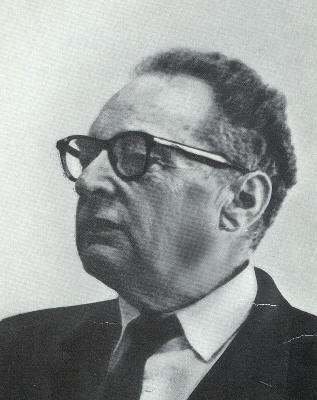
罗曼·雅各布森
- 生卒
- 1896 – 1982
- 国籍
- 俄罗斯帝国、苏维埃俄国
- 外文名
- Roman Jakobson
照片:Philweb Bibliographical Archive,CC BY 3.0,来自维基共享资源「Roman Jakobson.jpg」(经缩小)。
生平与创作
罗曼·雅各布森(俄语:Рома́н О́сипович Якобсон,1896年10月10日(俄历1896年9月28日)—1982年7月18日)是一名俄罗斯语言学家和文学理论家。雅各布森是20世纪前期语言学的主流语言结构分析的先驱。分别受到了到索绪尔和特鲁别茨柯伊的影响,雅各布森是20世纪最有影响力的语言学家之一。1918年毕业于莫斯科大学,两年后任莫斯科戏剧学院俄语教授。1933年任教于捷克普基涅大学。第二次世界大战时雅各布森定居美国,先后任教于哥伦比亚大学和哈佛大学。1982年雅各布森在波士顿逝世。在美国时与乔姆斯基结识,他对乔姆斯基的语言学产生一定影响。
他拓展了分析语言语音系统的技巧,因而开创了西方音位学学门。雅各布森将同样的技巧运用在句法学跟构词学上,此外他也认为这些技巧能套用在语意学上,而这产生了一些争议性。雅各布森对斯拉夫语言学有许多的贡献,最有名的是关于俄罗斯语格位的两份研究以及俄罗斯语动词类别的分析。
著作
Jakobson R., Child Language, Aphasia and Phonological Universals, 1941
Jakobson R., On Linguistic Aspects of Translation, essay, 1959
Jakobson R., Selected Writings (ed. Stephen Rudy). The Hague, Paris, Mouton, in six volumes (1971–1985):
Jakobson R., Questions de poetique, 1973
Jakobson R., Six Lectures of Sound and Meaning, 1978
以上文字摘自维基百科「罗曼·雅各布森」(去掉了参考文献等尾部小节),按 CC BY-SA 4.0 使用,作者为维基百科的各位编者。
中文维基百科的条目比较短,下面附上英文维基百科的内容(英文原文):
Roman Osipovich Jakobson (born Roman Iosel-Berovich Yakobson; 10 October [O.S. 28 September] 1896 – 18 July 1982) was a Russian linguist and literary theorist. A pioneer of structural linguistics, Jakobson was one of the most celebrated and influential linguists of the twentieth century. With Nikolai Trubetzkoy, he developed revolutionary new techniques for the analysis of linguistic sound systems, in effect founding the modern discipline of phonology. Jakobson went on to extend similar principles and techniques to the study of other aspects of language such as syntax, morphology and semantics. He made numerous contributions to Slavic linguistics, most notably two studies of Russian case and an analysis of the categories of the Russian verb. Drawing on insights from C. S. Peirce's semiotics, as well as from communication theory and cybernetics, he proposed methods for the investigation of poetry, music, and the visual arts including cinema.
Through his decisive influence on Claude Lévi-Strauss and Roland Barthes, among others, Jakobson became a pivotal figure in the adaptation of structural analysis to disciplines beyond linguistics, including philosophy, anthropology and literary theory; his development of the approach pioneered by Ferdinand de Saussure, known as "structuralism", became a major post-war intellectual movement in Europe and the United States. Meanwhile, though the influence of structuralism declined during the 1970s, Jakobson's work has continued to receive attention in linguistic anthropology, especially through the ethnography of communication developed by Dell Hymes and the semiotics of culture developed by Jakobson's former student Michael Silverstein. Jakobson's concept of underlying linguistic universals, particularly his celebrated theory of distinctive features, decisively influenced the early thinking of Noam Chomsky, who became the dominant figure in theoretical linguistics during the second half of the twentieth century.
Life and work
Roman Iosel-Berovich Yakobson was born in Moscow on 10 October [O.S. 28 September] 1896 to well-to-do parents of Jewish descent, the industrialist Osip Jakobson and chemist Anna Volpert Jakobson, and he developed a fascination with language at a very young age. He studied at the Lazarev Institute of Oriental Languages and then at the Historical-Philological Faculty of Moscow University. As a student he was a leading figure of the Moscow linguistic circle and took part in Moscow's active world of avant-garde art and poetry; he was especially interested in Russian Futurism, the Russian incarnation of Italian Futurism. Under the pseudonym 'Aliagrov', he published books of zaum poetry and befriended the Futurists Vladimir Mayakovsky, Kazimir Malevich, Aleksei Kruchyonykh and others. It was the poetry of his contemporaries that partly inspired him to become a linguist.
The linguistics of the time was overwhelmingly neogrammarian and insisted that the only scientific study of language was to study the history and development of words across time (the diachronic approach, in Saussure's terms). Jakobson, on the other hand, had come into contact with the work of Ferdinand de Saussure, and developed an approach focused on the way in which language's structure served its basic function (synchronic approach) – to communicate information between speakers. Jakobson was also well known for his critique of the emergence of sound in film. Jakobson received a master's degree from Moscow University in 1918.
以上文字摘自英文维基百科「Roman Jakobson」(有删节,去掉了参考文献等尾部小节),按 CC BY-SA 4.0 使用,作者为维基百科的各位编者。
资料卡
- 出生
- 1896 年 9 月 28 日
- 出生地
- 莫斯科
- 逝世
- 1982 年 7 月 18 日
- 逝世地
- 剑桥 等 2 项
- 职业
- 语言学家、文学学者、教育学家、历史学家、作家、评论家、教师、语文学家 等 11 项
- 使用语言
- 英语、俄语、瑞典语、挪威语 等 5 项
- 就读学校
- 莫斯科大学历史与语言学院、philosophy faculty of the German university of Prague
- 领域
- 语言学、结构主义、诗论、构词学、俄国文学 等 7 项
- 所属团体
- 塞尔维亚科学与艺术学院、美国文理科学院、波兰科学院
- 配偶
- Soňa Haasová
- 获奖
- 古根海姆学者奖(1946)、法国荣誉军团骑士勋章(1947)、费尔特里内利奖(1980);另有 5 项只有外文名
资料卡来自 Wikidata Q156201(CC0),众包数据,个别字段可能不全。
作品年表(1 本)
本站书库里署名罗曼·雅各布森的书(Open Library 上至少 10 人加过书架的才收),按首版年份排(有本站书页的用 Wikidata 记的首版年,其余用 Open Library 的);年份偶尔记成后来的版本或译本,以原书为准。全部作品见 Open Library。
- 1963Essais de linguistique générale书架 10