 书单
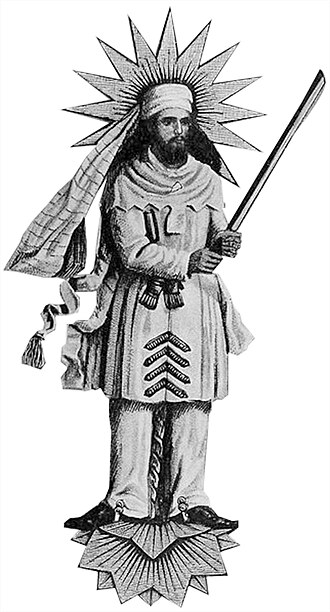
琐罗亚斯德
- 外文名
- Zoroaster
照片:Photo is extracted from "Persia by a Persian: being personal experiences 等,公有领域,来自维基共享资源「Zartosht 30salegee.jpg」(经缩小)。
生平与创作
琐罗亚斯德(希腊语:Ζωροάστρης;生存年代争议较大,一说约前628年—约前551年),原名查拉图斯特拉(阿维斯陀语:Zaraθuštra,意为“拥有骆驼者”),古波斯先知,琐罗亚斯德教(又称祆教、拜火教)创始人。琐罗亚斯德宣称阿胡拉·马兹达是创造一切的神,因此他后来成为琐罗亚斯德教的最高神。该教延续了二千五百年,至今仍有信徒。他还是琐罗亚斯德教经典《阿维斯塔》(即“波斯古经”)中《伽萨》的作者。另传其生卒更早。该教古经中自称“阿胡拉教”、“马兹达教”,因其信奉至高善神阿胡拉·马兹达故。
生平
琐罗亚斯德出身于米底王国(今伊朗北方)的一个贵族骑士家庭,母亲是处女,父不详。
琐罗亚斯德20岁时弃家隐居,30岁时自称受到神的启示,改革传统的多神教,创立琐罗亚斯德教(一神论模式),但受到传统的祭司迫害,直到42岁时,他娶了阿契美尼德帝国宰相的女儿为妻后,被引见给维斯塔巴国王,这国王成了他的朋友及保护人,琐罗亚斯德教才在波斯迅速传播。
琐罗亚斯德大概活了77岁,在图兰与波斯帝国战争中,他在神庙被杀身亡。
以上文字摘自维基百科「琐罗亚斯德」(去掉了参考文献等尾部小节),按 CC BY-SA 4.0 使用,作者为维基百科的各位编者。
中文维基百科的条目比较短,下面附上英文维基百科的内容(英文原文):
Zarathushtra Spitama, more commonly known as Zoroaster or Zarathustra, was an Iranian religious reformer who challenged the tenets of the contemporary Ancient Iranian religion, becoming the spiritual founder of Zoroastrianism. In the oldest Zoroastrian scriptures, the Gathas, which he is traditionally believed to have authored, he is described as a preacher and a poet-prophet. Some have claimed, with much scholarly controversy, to find his influence in Heraclitus, Plato, Pythagoras, and, perhaps less controversially, in the Abrahamic religions, including Judaism, Christianity, and Islam, particularly through concepts of cosmic dualism and personal morality.
Zarathustra spoke Avestan, an old Iranian language which scholars lent its name to after the Avesta, the corpus of Zoroastrian religious texts written in the language. Based on this, it is tentative to place his homeland somewhere in the eastern regions of the Greater Iran (possibly Bactra, now in modern-day Afghanistan). His life is traditionally dated to some time around the 7th and 6th centuries BC; though most scholars, using linguistic and socio-cultural evidence, suggest a dating even further back to the end of the 2nd and the beginning of the 1st millennium BC.
Zoroastrianism eventually became Greater Iran's most prominent religion from around the 6th century BC, enjoying official sanction during the time of the Sassanid Empire, until the 7th century AD, when the religion was persecuted following the Arab-Muslim conquest of Iran. Zoroaster is credited with authorship of the Gathas as well as the Yasna Haptanghaiti, a series of hymns composed in Old Avestan that cover core Zoroastrian beliefs. Little is known about Zoroaster; most of his life is known only from these scant texts. By modern standards of historiography, no evidence can place him into a fixed period and the historicization surrounding him may be a part of a trend from before the 10th century AD that historicizes legends and myths.
His name likely means "he who manages camels", though its etymology has multiple interpretations, and the Greek form "Zoroaster" stems from later transliterations. According to Zoroastrian tradition, Zoroaster was trained as a priest from a young age and, around age 30, experienced a divine revelation which introduced him to Ahura Mazda, the Wise Lord, and the dualism of truth (asha) versus deception (druj). He is said to have gained royal patronage under King Vishtaspa, spread his teachings, and founded a community, marrying three times and having six children. Zoroastrian texts portray his philosophy as emphasizing free will, ethical responsibility, and aligning with asha through good thoughts, words, and deeds.
Name and etymology
Zoroaster's name in his native language, Avestan, was probably Zaraθuštra. His translated name, "Zoroaster", derives from a later (5th century BC) Greek adaptation, Zōroastrēs (Ζωροάστρης), as used in Xanthus's Lydiaca (Fragment 32) and in Plato's First Alcibiades (122a1). This form appears subsequently in the Latin Zōroastrēs, and, in later Greek orthographies, as Ζωροάστρις, Zōroastris. The Greek form of the name appears to be based on a phonetic adaptation or semantic substitution of Avestan zaraθ- with the Greek ζωρός, zōros (literally 'undiluted') and the BMAC substrate -uštra with ἄστρον, astron, 'star'.
In Avestan, Zaraθuštra is generally accepted to derive from an Old Iranian *Zaratuštra-. The second component of the name (-uštra-) is thought to be the Indo-Iranian root for 'camel', with the entire name meaning 'he who can manage camels'. Reconstructions from later Iranian languages—particularly from the Middle Persian (300 BC) Zardusht, which is the form that the name took in the 9th- to 12th-century Zoroastrian texts—suggest that *Zaratuštra- might be a zero-grade form of *Zarantuštra-. Subject then to whether Zaraθuštra derives from *Zarantuštra- or from *Zaratuštra-, several interpretations have been proposed.
以上文字摘自英文维基百科「Zoroaster」(有删节,去掉了参考文献等尾部小节),按 CC BY-SA 4.0 使用,作者为维基百科的各位编者。
资料卡
- 职业
- 先知、教主、诗人、作家
- 使用语言
- 阿维斯陀语
- 配偶
- Hvōvita
资料卡来自 Wikidata Q35811(CC0),众包数据,个别字段可能不全。
本站收录的作品(1)
受 Ta 影响的作家
Open Library 上的全部作品
正在读取…