 书单
卡洛斯·卜娄杉
- 生卒
- 1913 – 1956
- 国籍
- 美国、菲律宾
- 外文名
- Carlos Bulosan
生平与创作
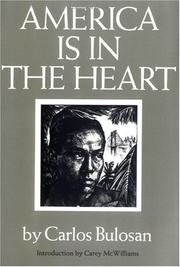
卡洛斯·桑帕扬·布洛桑(英语:Carlos Sampayan Bulosan,1913年11月24日—1956年9月11日)是一位使用英语进行写作的菲律宾小说家与诗人。他大半人生都在美国度过。第一位在《纽约客》(The New Yorker)杂志长期刊登文章的菲律宾作家。布洛桑透过幽默风趣的文笔,向全世界读者展示菲律宾农村文化的丰富内涵,其代表作为《美国在心中》。
自许为“文字工人”的布洛桑,自幼生长在贫困的农村,看尽农民受到有权势者压迫的辛酸血泪,也因此“为受压迫者发声”成了其毕生创作核心。他的作品具有浓厚自传色彩,笔触敦厚带着童真,跨越种族与文化边际,道尽残酷世界的荒谬无理,也细腻地记录每一个为了生活流汗耕耘的小人物,在这漫长的人生里所能紧紧抓住的幸福片刻。
流传今日最著名的著作是他的半自传性质的作品《美国在心中》,但让他知名度大增的成名作是其1943年的文章〈免于匮乏的自由〉,其他代表作品《老爸的笑声》等,皆为亚美文学重要作品。
出版品
《老爸的笑声》,台湾,逗点文创结社,2013年7月。
以上文字摘自维基百科「卡洛斯·卜婁杉」(去掉了参考文献等尾部小节),按 CC BY-SA 4.0 使用,作者为维基百科的各位编者。
中文维基百科的条目比较短,下面附上英文维基百科的内容(英文原文):
Carlos Sampayan Bulosan (November 24, 1913 – September 11, 1956) was a Filipino-American novelist and poet who immigrated to the United States on July 22, 1930. He never returned to the Philippines and he spent most of his life in the United States. His best-known work today is the semi-autobiographical America Is in the Heart, but he first gained fame for his 1943 essay on The Freedom from Want.
Early life and immigration
Bulosan was born to Ilocano parents in the Philippines in Binalonan, Pangasinan. There is considerable debate around his actual birth date, as he himself used several dates. 1911 is generally considered to be the most reliable answer, based on his baptismal records, but according to the Lorenzo Duyanen Sampayan, his childhood playmate and nephew, Bulosan was born on November 2, 1913. Most of his youth was spent in the countryside as a farmer. It is during his youth that he and his family were economically impoverished by the rich and political elite, which would become one of the main themes of his writing. His home town is also the starting point of his semi-autobiographical novel, America is in the Heart.
Following the pattern of many Filipinos during the American colonial period, he left for America on July 22, 1930, at age 17, in the hope of finding salvation from the economic depression of his home. He never again saw his Philippine homeland. Upon arriving in Seattle, he was met with racism and was forced to work low paying jobs. He worked as a farmworker, harvesting grapes and asparagus, while also working other forms of hard labor in the fields of California. He also worked as a dishwasher with his brother Lorenzo in the famous Madonna Inn in San Luis Obispo which opened in 1958 or almost three years after Bulosan had died.
In 1936, Bulosan suffered from tuberculosis and was taken to the Los Angeles County Hospital. There, he underwent three operations and stayed two years, mostly in the convalescent ward. During his long stay in the hospital, Bulosan spent his time constantly reading and writing.
Labor movement work
Bulosan contributed to the labor movement and progressive causes through his editorial and literary work. He was associated with the United Cannery, Agricultural, Packing, and Allied Workers of America (UCAPAWA) and the International Longshore and Warehouse Union (ILWU) a predominantly Filipino American cannery trade union based in Seattle. In 1934 he helped edit The New Tide, a short-lived Filipino workers’ literary magazine that connected him with other left-leaning writers, including Richard Wright and Sanora Babb. Through The New Tide, Bulosan promoted themes of social justice, anti-colonial struggle, and solidarity among working-class communities. There he was hired to edit the 1952 Yearbook for International Longshore and Warehouse Union Local 37.
During the 1940s and 1950s, Bulosan expanded his activism as a journalist for the ILWU. His articles and reports in union publications addressed Filipino migrant labor conditions and supported multiracial worker solidarity along the Pacific Coast. His visibility as a union writer led to FBI surveillance during the early Cold War years, when he was considered a “dangerous subversive.” Despite these pressures, Bulosan continued to use newsletters, magazines, and union yearbooks to articulate the struggles and aspirations of Filipino and other marginalized workers in the United States.
Writing
There is some controversy surrounding the accuracy of events recorded within America Is in the Heart. He is celebrated for giving a post-colonial, Asian immigrant perspective to the labor movement in America and for telling the experience of Filipinos working in the U.S. during the 1930s and '40s. In the 1970s, with a resurgence in Asian/Pacific Islander American activism, his unpublished writings were discovered in a library in the University of Washington leading to posthumous releases of several unfinished works and anthologies of his poetry.
以上文字摘自英文维基百科「Carlos Bulosan」(有删节,去掉了参考文献等尾部小节),按 CC BY-SA 4.0 使用,作者为维基百科的各位编者。
资料卡
- 出生
- 1913 年 11 月 24 日
- 出生地
- 邦阿西楠省
- 逝世
- 1956 年 9 月 11 日
- 逝世地
- 西雅图
- 职业
- 诗人、小说家、工人、社运人士、作家
- 使用语言
- 英语
- 领域
- 亚裔美国文学
- 代表作
- Carlos Bulosan Papers、美国在心中
资料卡来自 Wikidata Q5041871(CC0),众包数据,个别字段可能不全。
本站收录的作品(1)
作品年表(2 本)
本站书库里署名卡洛斯·卜娄杉的书(Open Library 上至少 10 人加过书架的才收),其中 1 本记的年份比作者去世晚 50 年以上或者早于他出生(多半是后世的版本、译本或占位年份),不列年份,按首版年份排(有本站书页的用 Wikidata 记的首版年,其余用 Open Library 的);年份偶尔记成后来的版本或译本,以原书为准。全部作品见 Open Library。
- 1946美国在心中America is in the heart书架 54
- 年份不详America is in the heart书架 12