书单
百科
这个词条暂时没有中文维基百科条目,下面是英文维基百科的内容(英文原文):
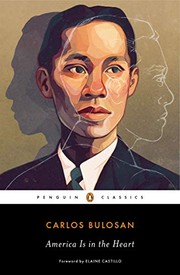
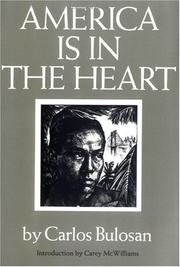
America Is in the Heart, sometimes subtitled A Personal History, is a 1946 semi-autobiographical novel written by Filipino American immigrant poet, fiction writer, short story teller, and activist, Carlos Bulosan. The novel was one of the earliest published books that presented the experiences of the immigrant and working class based on an Asian American point of view and has been regarded as "[t]he premier text of the Filipino-American experience." In his introduction, journalist Carey McWilliams, who wrote a 1939 study about migrant farm labor in California (Factories in the Field), described America Is in the Heart as a “social classic” that reflected on the experiences of Filipino immigrants in America who were searching for the “promises of a better life”.
Plot
Born in 1913, Bulosan recounts his boyhood in the Philippines. The early chapters describe his life as a Filipino farmer "plowing with a carabao". Bulosan was the fourth oldest son of the family. As a young Filipino, he once lived on the farm tended by his father, while his mother was separately living in a barrio in Binalonan, Pangasinan, together with Bulosan's brother and sister. Their hardships included pawning their land and having to sell items in order to finish the schooling of his brother Macario. He had another brother named Leon, a soldier who came back after fighting in Europe.
Bulosan's narration about his life in the Philippines was followed by his journey to the United States. He recounted how he immigrated to America in 1930. He retells the struggles, prejudice, and injustice he and other Filipinos had endured in the United States, first while in the Northwestern fisheries then later in California. These included his experiences as a migrant and laborer in the rural West.
Themes
Bulosan's America Is in the Heart is one of the few books that detail the migrant workers' struggles in the United States during the 1930s through the 1940s, a time when signs like "Dogs and Filipinos not allowed" were common. The struggles included "beatings, threats, and ill health". In this book, Bulosan also narrated his attempts to establish a labor union. Bulosan's book had been compared to The Grapes of Wrath except that the main and real characters were brown-skinned. Despite the bitterness however, Bulosan reveals in the final pages of the book that because he loved America no one could ever destroy his faith in his new country. In this personal literature, Bulosan argued that despite the suffering and abuses he experienced, America was an unfinished "ideal in which everyone must invest (...) time and energy, (...) this outlook leaves us with a feeling of hope for the future instead of bitter defeat." According to Carlos P. Romulo when he was interviewed by The New York Times, Bulosan wrote America Is in the Heart with "bitterness" in his heart and blood yet with the purpose of contributing "something toward the final fulfillment of America".
Publication history
After the 1946 printing, America Is in the Heart was republished by the University of Washington Press in 1973. Because of its subtitle "A Personal History", America Is in the Heart is regarded as an autobiography. However, according to P.C. Morantte, a friend of Bulosan, the work had to be "fictionalized", incorporating real characters in the story and adding fictional details. Thus, it was described by Morantte as "30% autobiography, 40% case history of Pinoy life in America, and 30% fiction". A Filipino translation of the book, Nasa Puso ang Amerika, was published in 1993.
Historical context
Great Depression
As can be evidenced by Carlos Bulosan’s America Is in the Heart, the life of a Filipino migrant worker during the Great Depression was anything but easy. In reality, the life of any Filipino in the United States during this time period was “lonely” and “damned,” as Bulosan described in a letter to a friend. When he and his friend José arrived in California in 1930, “the lives of Filipinos were cheaper than those of dogs.” As the Filipino population grew and the Great Depression worsened, the anti-Filipino movement flourished. This attitude towards Bulosan and his people was led by the same forces that previously condemned the Chinese and the Japanese, and in 1928, the American Federation of Labor encouraged an “exclusion” of the race, which was warmly received in Congress. Despite the fact that most of these immigrants were modernized and able to speak more than one European language, there was a persistent tendency to portray them not only as primitive savages but also sexual threats against white women.
The anti-Filipino sentiment that plagued the American mindset during this time period can be observed in a few separate events. The most violent and well-known incident occurred in California in 1930: four hundred white vigilantes attacked a Filipino night club, injuring dozens and killing one. In 1933, California and twelve other state legislatures restricted Filipino-white marriages. Lastly, in 1935 the Welch Bill offered a fixed sum of cash to pay for the fare of Filipinos who would voluntarily go back to the Philippines. Events such as these prove the anti-Filipino sentiment that afflicted Carlos Bulosan and the rest of the Filipino population.
以上文字摘自英文维基百科「America Is in the Heart」(有删节,去掉了参考文献等尾部小节),按 CC BY-SA 4.0 使用,作者为维基百科的各位编者。
资料卡
- 原题
- America Is in the Heart
- 原作语言
- 英语
- 首次出版
- 1946 年
- 作品形式
- 长篇小说
- 体裁
- 自传
- 故事发生地
- 加利福尼亚州
资料卡来自 Wikidata Q4742771(CC0),众包数据,个别字段可能不全。