 书单
输精管壶腹
- 生卒
- 1961 –
- 国籍
- 美国
- 外文名
- Douglas Rushkoff
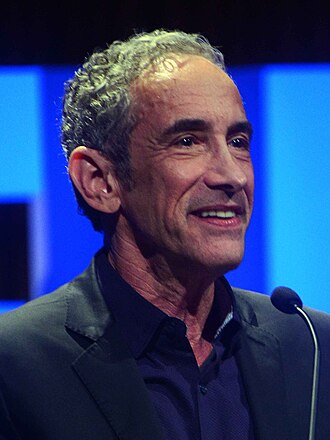
照片:Fronteiras do Pensamento,CC BY-SA 2.0,来自维基共享资源「2023-09-13 Douglas Ruskoff no Fronteiras do Pensamento 2023 em Porto Alegre (53188358494) (cropped).jpg」(经缩小)。
生平与创作
这个词条暂时没有中文维基百科条目,下面是英文维基百科的内容(英文原文):
Douglas Mark Rushkoff (born February 18, 1961) is an American media theorist, writer, professor, columnist, lecturer, graphic novelist, documentarian and podcaster. He is best known for his association with the early cyberpunk culture, his advocacy of open source solutions to social problems, his critique of technocapitalism, and his call to retrieve our humanity in a digital age.
Rushkoff is most frequently regarded as a media theorist and is known for coining terms and concepts including viral media (or media virus), digital native, and social currency. He has written fourteen books on media, technology and culture, as well as several novels and graphic novels. He wrote the first syndicated column on cyberculture for The New York Times Syndicate, as well as regular columns for The Guardian, Arthur, Discover, and the online magazines Daily Beast, and TheFeature.
Rushkoff is currently Professor of Media Theory and Digital Economics at the City University of New York, Queens College. He has previously lectured at The New School university in Manhattan and the Interactive Telecommunications Program at New York University's Tisch School of the Arts, where he created the Narrative Lab. He also has taught online for the Maybe Logic Academy. In 2012, Rushkoff was declared the sixth most influential thinker in the world by MIT Technology Review and the Gottlieb Duttweiler Institute, following Steven Pinker, David Graeber, Nobel Prize-winner Daniel Kahneman, Thilo Sarrazin, and Richard Florida. On March 9, 2026, Rushkoff announced that he had been confirmed as a permanent member of the Club of Rome.
Early life, education and works
Rushkoff was born in New York City, New York, of Jewish heritage to Sheila, a psychiatric social worker, and Marvin Rushkoff, a hospital administrator.
Rushkoff graduated from Princeton University in 1983. He moved to Los Angeles and completed a Master of Fine Arts in Directing from the California Institute of the Arts. Later he took up a post-graduate fellowship from the American Film Institute. He was a PhD candidate at Utrecht University's New Media Program, writing a dissertation on new media literacies, which was approved in June, 2012.
Free Rides, Rushkoff’s first book, in 1991, commissioned by film producer Patrick Wells, was a compendium of ways to alter consciousness without drugs. Rushkoff’s contention was that it was the states of consciousness, and not the chemicals themselves, that made psychedelic culture so threatening to mainstream society.
Mass media theorist
Rushkoff emerged in the early 1990s as an active member of the cyberpunk and the cyberdelic movements, developing friendships and collaborations with people including Timothy Leary, RU Sirius, Paul Krassner, Robert Anton Wilson, Ralph Abraham, Terence McKenna, Genesis P-Orridge, Ralph Metzner, Grant Morrison, Mark Pesce, Erik Davis and other writers, artists and philosophers interested in the intersection of technology, society and culture.
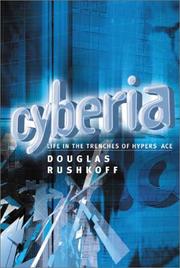
Cyberia, widely acknowledged as the first book on cyberculture, was inspired by the San Francisco rave scene of the early 1990s. The initially planned publication was scrapped, however; in Rushkoff's words, "in 1992 Bantam canceled the book because they thought by 1993 the internet would be over." It was eventually published in 1994. Among other things, the book documented the role of psychedelics in the development of the personal computer and associated networking technologies, and warned of the potential for business interests associated with Wired magazine to “hijack” the net from the more countercultural interests celebrated by cyberpunks, artists, and writers associated with Mondo2000.
In his book Media Virus, Rushkoff coined the term “viral media,” using the Rodney King tape as the first example of a new media form: an unprofessional media artifact that nonetheless spread throughout the “datasphere” (another Rushkoff term), caused an ideological contagion, and eventually led to riots in a dozen American cities. Rushkoff analyzed media phenomena from Madonna and Michael Jackson to computer viruses and Beavis and Butt-Head as examples of mutating viral forms, dependent on “hidden agendas in popular culture” for their transmission and reproduction.
The datasphere as a concept in Media Virus was popularized by Rushkoff as advocate of cyberpunk culture and open-source solutions to social problems, in the 1980s. He approached the datasphere as the "circulatory system for today's information, ideas and images", understood as "our new natural environment". Rushkoff's conceptualization, centered in media theory, was deployed to explain how 'media viruses' – ideas that capture public attention – rapidly spread. As such, Rushkoff's datasphere invokes ideas of information flow, rather than being focused on structured data and its analysis.
Soon after Rushkoff published Media Virus in 1995, as his books became more accepted, and his concepts of the "media virus" and "social contagion" became mainstream ideas, Rushkoff was invited to deliver commentaries on National Public Radio's All Things Considered, and to make documentaries for the PBS series Frontline. Rushkoff was disappointed, however, that his book was received most enthusiastically by marketers, who employed the ideas for what became known as “viral marketing.”
In 2002, Rushkoff was awarded the Marshall McLuhan Award by the Media Ecology Association for his book Coercion, and became a member and sat on the board of directors of that organization. This allied him with the "media ecologists", a continuation of what is known as the Toronto School of media theorists including Marshall McLuhan, Walter Ong, and Neil Postman.
以上文字摘自英文维基百科「Douglas Rushkoff」(有删节,去掉了参考文献等尾部小节),按 CC BY-SA 4.0 使用,作者为维基百科的各位编者。
资料卡
- 出生
- 1961 年 2 月 18 日
- 出生地
- 纽约
- 职业
- 新闻工作者、作家、专栏作家
- 就读学校
- 普林斯顿大学、加州艺术学院、乌得勒支大学、斯卡斯代尔高中
- 领域
- 媒体研究
- 代表作
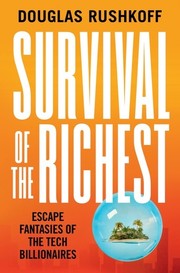
- Survival of the Richest
资料卡来自 Wikidata Q717884(CC0),众包数据,个别字段可能不全。
本站收录的作品(2)
作品年表(5 本)
本站书库里署名输精管壶腹的书(Open Library 上至少 10 人加过书架的才收),按首版年份排(有本站书页的用 Wikidata 记的首版年,其余用 Open Library 的);年份偶尔记成后来的版本或译本,以原书为准。全部作品见 Open Library。
- 1994赛博利亚Cyberia书架 20
- 1999Coercion书架 15
- 2010Program or be Programmed书架 15
- 2019Team human书架 27
- 2022Survival of the Richest书架 25