 书单
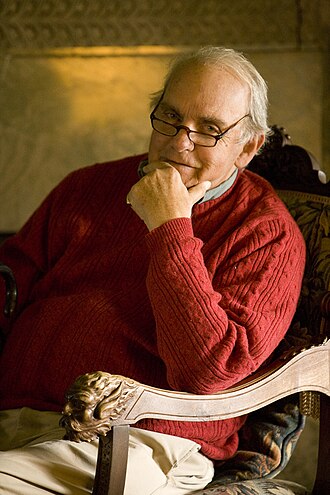
Frederick Buechner
- 生卒
- 1926 – 2022
- 国籍
- 美国
照片:Christiansay,CC BY-SA 4.0,来自维基共享资源「BG-0269.jpg」(经缩小)。
生平与创作
这个词条暂时没有中文维基百科条目,下面是英文维基百科的内容(英文原文):
Carl Frederick Buechner ( BEEK-nər; July 11, 1926 – August 15, 2022) was an American author, Presbyterian minister, preacher, and theologian. The author of thirty-nine published books, his career spanned more than six decades and encompassed many different genres. He wrote novels, including Godric (1981 Pulitzer Prize finalist), A Long Day's Dying and The Book of Bebb, his memoirs, including The Sacred Journey, and theological works, such as Secrets in the Dark, The Magnificent Defeat, and Telling the Truth.
Buechner was named "without question one of the truly great writers of the 20th century" by viaLibri, a "major talent" by The New York Times, and "one of our most original storytellers" by USA Today. Annie Dillard (Pulitzer Prize-winning author of Pilgrim at Tinker Creek) called him "one of our finest writers." Buechner's works have been compared to C.S. Lewis and G.K. Chesterton and have been translated into twenty-seven languages.
Buechner was a finalist for the National Book Award, presented by the National Book Foundation, and has been awarded eight honorary degrees from such institutions as Yale University and the Virginia Theological Seminary. In addition, Buechner placed third for the O. Henry Award, the Rosenthal Award, the Christianity and Literature Belles Lettres Prize, and was recognized by the American Academy and Institute of Arts and Letters.
Life and career
Early life
Carl Frederick Buechner, the eldest son of Katherine Golay (Kuhn) and Carl Frederick Buechner Sr., was born on July 11, 1926, in New York City. During Buechner's early childhood the family moved frequently, as Buechner's father searched for work. In The Sacred Journey, Buechner recalls that "Virtually every year of my life until I was fourteen, I lived in a different place, had different people to take care of me, went to a different school. The only house that remained constant was the one where my maternal grandparents lived in a suburb of Pittsburgh called East Liberty ... Apart from that one house on Woodland Road, home was not a place to me when I was a child. It was people." In 1936, Buechner's father committed suicide by carbon monoxide poisoning, a result of his conviction that he had been a failure.
Bermuda
Immediately following his father's death, the family moved to Bermuda, where they remained until World War II forced the evacuation of Americans from the island. In Bermuda, Buechner experienced "the blessed relief of coming out of the dark and unmentionable sadness of my father's life and death into fragrance and greenness and light". For a young Buechner, Bermuda became home.
Bermuda left a lasting impression on Buechner. The distinctly British flavor of pre-World War II Bermuda provided in him a lifelong appreciation of English custom and culture, which would later inspire such works as Godric and Brendan. Buechner also frequently mentions Bermuda in his memoirs, including Telling Secrets and The Sacred Journey.
Education and military service
Buechner then attended the Lawrenceville School in Lawrenceville, New Jersey, graduating in 1943. While at Lawrenceville, he met the future Pulitzer Prize winning poet James Merrill; their friendship and rivalry inspired the literary ambitions of both. As Mel Gussow wrote in Merrill's 1995 obituary: "their friendly competition was an impetus for each becoming a writer." Buechner then enrolled at Princeton University. His college career was interrupted by—in Buechner's words—"two years of very undistinguished service" (1944–46) in the Army during World War II, "all of it at several different places in the United States," including a post as "chief of the statistical section in Camp Pickett, Virginia." After the war, he returned to Princeton and graduated with an A.B. in English in 1948 after completing a 77-page senior thesis titled "Notes of the Function of Metaphor in English Poetry." However, as an alumnus, he remained identified as a member of his original Class of 1947. Regarding his time at Princeton, Buechner commented in an interview:
I really knew two Princetons. The first one was during the war, when everybody was being drafted or enlisting. It was just one drunken farewell party after another. Nobody did any work. I didn't learn anything at all. I was in the Army for two years. When I came back, I was so delighted to be free again that I buckled down and learned a few things.
Literary success and ordination
During his senior year at Princeton University, Buechner received the Irene Glascock Prize for poetry, and he also began working on his first novel and one of his greatest critical successes: A Long Day's Dying, published in 1950. The contrast between the success of his first novel and the commercial failure of his second, The Seasons' Difference (1952), a novel with characters based on Buechner and his adolescent friend James Merrill which developed a more explicit Christian theme, was palpably felt by the young novelist, and it was on this note that Buechner left his teaching position at Lawrenceville to move to New York City and focus on his writing career. In 1952, Buechner began lecturing at New York University and once again received critical acclaim for his short story "The Tiger", published in The New Yorker, which won the O. Henry Award Third Prize in 1955. Also during this time, he began attending the Madison Avenue Presbyterian Church, where George Buttrick was pastor. It was during one of Buttrick's sermons that Buechner heard the words that inspired his ordination: Buttrick described the inward coronation of Christ as taking place in the hearts of those who believe in him "among confession, and tears, and great laughter." The impact of this phrase on Buechner was so great that he eventually entered the Union Theological Seminary of Columbia University in 1954, on a Rockefeller Brothers Theological Fellowship.
While at Union, Buechner studied under such renowned theologians as Reinhold Niebuhr, Paul Tillich, and James Muilenburg, who helped Buechner in his search for understanding:
以上文字摘自英文维基百科「Frederick Buechner」(有删节,去掉了参考文献等尾部小节),按 CC BY-SA 4.0 使用,作者为维基百科的各位编者。
资料卡
- 母语名
- Frederick Buechner
- 本名
- Carl Frederick Buechner
- 出生
- 1926 年 7 月 11 日
- 出生地
- 纽约
- 逝世
- 2022 年 8 月 15 日
- 逝世地
- Rupert
- 职业
- 诗人、小说家、神学家、作家、自传作者、散文家、作者
- 使用语言
- 英语
- 就读学校
- 普林斯顿大学、纽约协和神学院、劳伦斯维尔学校
- 创作体裁
- 布道、自传、历史类虚构作品、随笔
- 领域
- 散文、诗歌、神学
资料卡来自 Wikidata Q1452807(CC0),众包数据,个别字段可能不全。
本站收录的作品(1)
作品年表(4 本)
本站书库里署名Frederick Buechner的书(Open Library 上至少 10 人加过书架的才收),按首版年份排(有本站书页的用 Wikidata 记的首版年,其余用 Open Library 的);年份偶尔记成后来的版本或译本,以原书为准。全部作品见 Open Library。
- 1949A long day's dying书架 10
- 1973Wishful thinking书架 11
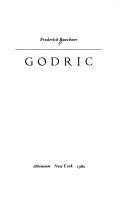
- 1980Godric书架 10
- 1982The sacred journey书架 13