书单
百科
这个词条暂时没有中文维基百科条目,下面是英文维基百科的内容(英文原文):
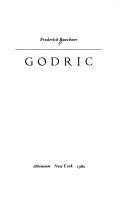
Godric is the tenth novel by the American author and theologian, Frederick Buechner. Set in the eleventh and twelfth centuries, the novel tells the semi-fictionalised life story of the medieval Roman Catholic saint Godric of Finchale. It was first published in 1980 by Atheneum, and was a finalist for the 1981 Pulitzer Prize.
Plot summary
Godric of Finchale is joined at his hermitage on the banks of the River Wear by Reginald, a monk sent by the abbot of Rievaulx Abbey with instructions to record the aging saint’s biography. The arrival of the enthusiastic young monk plunges Godric back into his past, and he unflinchingly narrates the ribald tale of his own history, which is carefully edited by Reginald and set down in restrained and laudatory prose more befitting of the life of a saint.
Having survived a near drowning in the sea at a young age, Godric leaves home for a life of petty crime – selling counterfeit relics and the ostensibly holy hair of nuns. Following a dreamlike encounter on the Island of Farne with an apparition who identifies himself as Saint Cuthbert, Godric appears set to spend his life seeking God. His meeting with the roguish Roger Mouse, however, puts paid to any notion of quests for personal holiness. The two embark upon a life of crime and villainy aboard their boat, the Saint Espirit, where they hatch a series of schemes to defraud pilgrims journeying to the Holy Land and commit acts of piracy, all the while hoarding their growing stockpile of treasure.
While attempting to bury his ill-gotten gains, Godric encounters once more the apparition of Saint Cuthbert, a sobering and chastening experience for the prodigal. On returning home following his misadventures Godric discovers that his father has died in his absence. Determined to fulfil his last wish, the bereaved young man begins a pilgrimage to Rome, only to find the Holy City a disappointment: "a corpse without a shroud".
It is on the journey home, however, that Godric encounters God, following a transformative encounter with a wise maiden, Gillian, which convicts him of his past offences. Committing himself to a life of penitence and seclusion, Godric begins a second pilgrimage, this time to the ancient Holy City, Jerusalem. Upon reaching the River Jordan he rushes into its waters and is baptised. After a number of years spent in the service of Ranulph Flambard, Bishop of Durham, Godric espies a likely spot for a hermitage on the banks of the River Wear. No longer a young man, the hermit determines to spend the rest of his days humbly in this rural spot.
The following fifty years are marked by the arrival of notable guests, pilgrims, and acts of penance. Reginald’s optimistic exploration of the life of the saint of Finchdale uncovers more than he anticipated — the aging hermit reveals that his miracles, wisdom, and good deeds are tempered by the harsh realities of sin, murder, and incest.
Main characters
Godric: Based on the historical figure of Godric of Finchale, a twelfth-century monk and mystic, Buechner’s aging saint is beset by his past, a past that is crowded by miracles and misdeeds, beatific visions and vices, healings and incest. In his autobiographical work, Now and Then (1983), Buechner offers the following assessment of Godric’s life and character:He had been a peddler before he turned hermit, and master of a merchant ship. He had tried his hand at piracy for a while. He had rescued Baldwin the First, King of Jerusalem, at the time of the First Crusade. He had not considered himself a saint at all and for that reason balked at giving his blessing to the excessively reverent biography that a contemporary monk called Reginald of Durham was writing about him.Hidden away in his secluded hermitage, Godric suffers the visitations of admiring pilgrims and the devotions of his biographer, Reginald. God, his pet snakes Fairweather and Tune, and the River Wear are his constant companions in conversation as he reminisces, at times darkly and at times wistfully, about humanity, his life, and the life to come, coming to the conclusion that: ‘nothing human’s not a broth of false and true’.
Reginald: an enthusiastic young monk, Reginald of Durham is given the daunting task of documenting the life of Godric for church history and posterity. The biographer studiously ignores both the shadier elements of Godric’s story and the saint’s darker reflections on life and the nature of sainthood, while also rebuffing his attempts to thwart the process of documentation. He blithely creates an optimistic depiction of Godric’s life, and secures the old man’s reputation as a saintly servant of the church, the quest for holiness, and God.
Burcwen: vivacious and irrepressible, Burcwen is Godric’s younger sister. Following their separation when Godric went off to sea and, subsequently, became a hermit, the two yearn for one another’s company. In their loneliness, pain, and confusion, they fall victim to their passions and vulnerability and commit incest together. Heartbroken by her fall from grace, Burcwen commits herself to a life as a nun, and is only seen once more by Godric, though from a distance.
Rodger Mouse: Godric’s companion at sea, Rodger Mouse is the protagonist of their misadventures. From their boat, the Saint Espirit, the two commit acts of kidnap, piracy, looting, and rape, taking advantage of pilgrims headed to the Holy Land. Despite his corrupting influence upon Godric, the aged saint retains a great deal of affection for his old companion, praying for him regularly, and reflecting on the life lessons he imparted during their time at sea.
以上文字摘自英文维基百科「Godric (novel)」(有删节,去掉了参考文献等尾部小节),按 CC BY-SA 4.0 使用,作者为维基百科的各位编者。
资料卡
- 原题
- Godric
- 原作语言
- 英语
- 首次出版
- 1980 年
- 作品形式
- 长篇小说
- 体裁
- 基督教小说、历史类虚构作品
- 首版出版社
- Atheneum Books
- 前作
- The Book of Bebb
资料卡来自 Wikidata Q5576820(CC0),众包数据,个别字段可能不全。