 书单
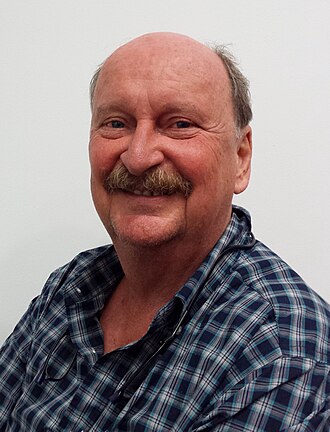
埃查德·恩斯特
- 生卒
- 1948 –
- 国籍
- 德国、英国
- 外文名
- Edzard Ernst
照片:Nederlandse Leeuw,CC BY-SA 4.0,来自维基共享资源「Edzard Ernst EuroSkepCon2015.jpg」(经缩小)。
生平与创作
这个词条暂时没有中文维基百科条目,下面是英文维基百科的内容(英文原文):
Edzard Ernst (born 30 January 1948) is a retired British-German academic physician and researcher specialising in the critical study of complementary and alternative medicine. He was Professor of Complementary Medicine at the University of Exeter, the world's first such academic position in complementary and alternative medicine.
Ernst served as chairman of Physical Medicine and Rehabilitation (PMR) at the University of Vienna, but left this position in 1993 to set up the department of Complementary Medicine at the University of Exeter in England. He became director of complementary medicine of the Peninsula Medical School (PMS) in 2002. Ernst was the first occupant of the Laing chair in Complementary Medicine, retiring in 2011. He was born and trained in Germany, where he began his medical career at a homoeopathic hospital in Munich, and since 1999 has been a British citizen.
Ernst is the founder of two medical journals: Focus on Alternative and Complementary Therapies (of which he was editor-in-chief until it was discontinued in 2016) and Perfusion. Ernst's writing appeared in a regular column in The Guardian, where he reviewed news stories about complementary medicine from an evidence-based medicine perspective. Since his research began on alternative modalities, Ernst has been seen as "the scourge of alternative medicine" for publishing critical research that exposes methods that lack documentation of efficacy. In 2015 he was awarded the John Maddox Prize, sponsored jointly by Sense about Science and Nature, for courage in standing up for science.
Early life
Ernst was born in Wiesbaden, Germany, in 1948. As a child, his family doctor was a homeopath, and at the time he saw it as part of medicine. His father and grandfather were both physicians, and his mother was a laboratory assistant. Ernst originally wanted to be a musician, but his mother persuaded him that medicine might be a good "sideline" career for him to pursue.
Training and early career
Ernst qualified as a doctor in Germany in 1978 where he also completed his M.D. and Ph.D. theses. He has received training in acupuncture, autogenic training, herbalism, homoeopathy, massage therapy and spinal manipulation. He learned homeopathy, acupuncture and other modalities whilst at a homeopathic hospital in Munich, when he began his medical career. In 1988, he became Professor in Physical Medicine and Rehabilitation (PMR) at Hannover Medical School and in 1990 Head of the PMR Department at the University of Vienna.
Work in complementary medicine
The world's first professor of complementary medicine, Ernst researches complementary medicine with an emphasis on efficacy and safety. His research mainly surveys systematic reviews and meta-analyses of clinical trials; the institute has not performed a clinical trial for some time due to budget constraints. He has over 700 papers published in scientific journals. He has said that about five per cent of alternative medicine is backed by evidence, with the remainder being either insufficiently studied or backed by evidence showing lack of efficacy.
Ernst's department at Exeter defined complementary medicine as "diagnosis, treatment and/or prevention which complements mainstream medicine by contributing to a common whole, by satisfying a demand not met by orthodoxy or by diversifying the conceptual frameworks of medicine."
Ernst asserts that complementary techniques are mostly practised by qualified physicians in Germany and Austria whereas they are mainly practised by others in the UK. He also argues that the term "complementary and alternative medicine" (CAM) is an almost nonsensical umbrella term and that distinctions between its modalities must be made.
Since his research began on alternative modalities, Ernst has been seen as "the scourge of alternative medicine" for publishing critical research. In a 2008 publication in the British Journal of General Practice, he listed treatments that "demonstrably generate more good than harm", identifying only acupuncture for nausea and osteoarthritis; aromatherapy as a palliative treatment for cancer; hypnosis for labour pain; massage, music therapy, relaxation therapy for anxiety and insomnia; and some plant extracts such as St John's wort for depression; hawthorn for congestive heart failure; and guar gum for diabetes.
In our book More Good Than Harm? ... ethicist Kevin Smith and I discuss the many ethical issues around alternative medicine and essentially conclude that it is not possible to practice alternative medicine ethically.
Ernst presented at the first Global Congress on Scientific Thinking and Action, which took place on 17–20 March 2021. He spoke about the risks and dangers of alternative medicine, pointing to homoeopathy and chiropractic as the most problematic areas within alternative medicine at the time.
Smallwood Report
In 2005, a report by the economist Christopher Smallwood, personally commissioned by Prince Charles, claimed that complementary and alternative medicine was cost-effective and should be available in the National Health Service (NHS). Ernst was initially enlisted as a collaborator on the report, but asked for his name to be removed after a sight of the draft report convinced him that Smallwood had "written the conclusions before looking at the evidence". The report did not address whether CAM treatments were actually effective and Ernst described it as "complete misleading rubbish".
Ernst was, in turn, criticised by The Lancet editor Richard Horton for disclosing contents of the report while it was still in draft form. In a 29 August 2005 letter to The Times Horton wrote: "Professor Ernst seems to have broken every professional code of scientific behaviour by disclosing correspondence referring to a document that is in the process of being reviewed and revised prior to publication. This breach of confidence is to be deplored."
以上文字摘自英文维基百科「Edzard Ernst」(有删节,去掉了参考文献等尾部小节),按 CC BY-SA 4.0 使用,作者为维基百科的各位编者。
资料卡
- 母语名
- Edzard Ernst
- 出生
- 1948 年 1 月 30 日
- 出生地
- 威斯巴登
- 职业
- 专栏作家、新闻工作者、医生、大学教师
- 使用语言
- 德语、英语
- 就读学校
- 慕尼黑大学
- 领域
- 系统综述
- 所属团体
- 欧洲科学院(2022);另有 1 项只有外文名
- 获奖
- 约翰·马多克斯奖(2015)、怀疑调查委员会会员、英国医学科学院院士(2009)
资料卡来自 Wikidata Q70166(CC0),众包数据,个别字段可能不全。
本站收录的作品(1)
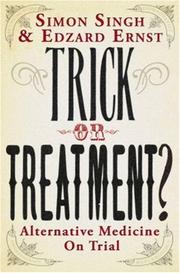
作品年表(1 本)
本站书库里署名埃查德·恩斯特的书(Open Library 上至少 10 人加过书架的才收),按首版年份排(有本站书页的用 Wikidata 记的首版年,其余用 Open Library 的);年份偶尔记成后来的版本或译本,以原书为准。全部作品见 Open Library。
- 2008Trick or Treatment?书架 17