 书单
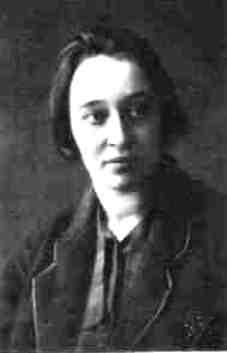
娜杰日达·曼德尔施塔姆
- 生卒
- 1899 – 1980
- 国籍
- 俄罗斯帝国、苏联
- 外文名
- Nadezhda Mandelstam
照片:作者不详,公有领域,来自维基共享资源「Наде́жда Я́ковлевна Мандельшта́м.jpg」(经缩小)。
生平与创作
娜杰日达·雅科夫列芙娜·曼德尔施塔姆(俄语:Надежда Яковлевна Мандельштам;1899年10月31日—1980年12月29日),婚前姓哈津娜(俄语:Ха́зина),苏联作家,诗人奥西普·曼德尔施塔姆的妻子。
生平
娜杰日达生于萨拉托夫一中产犹太家庭,早年于基辅度过,中学之后修读艺术。
在1921年结婚以后,娜杰日达与奥西普·曼德尔施塔姆曾在乌克兰、彼德格勒、莫斯科及格鲁吉亚等地居住过。奥西普于1934年因其作品《斯大林讽刺短诗集》而遭到逮捕,并与娜杰日达一同被放逐至彼尔姆边疆区的切尔登去,后来改到沃罗涅日。
奥西普第二次被捕后不久,随后于1938年在海参崴第二溪附近的临时难民营去世,这以后的娜杰日达几乎过着游牧民族式的生活,躲避意料之内与未经警告的逮捕,以及时常转换居住地和临时工作。内务人民委员会至少有一次(于加里宁)在她逃亡后的一天就到达进行追捕。
作为娜杰日达生命中的任务,她开始并认真地保存及出版她丈夫的诗作遗产。她当时设法将它们当中的大部分用记忆保存下来,因为她并不相信纸张。
斯大林死后,娜杰日达于1956年完成了她的论文,并于1958年被允许返回莫斯科。
在她的回忆录,最早在西方世界出版的,《心存希望》(Hope Against Hope)及《被放弃了的希望》(Hope Abandoned)中,她对自己的生平作了史诗式的分析,并对苏联1920年代及以后的道德及文化角落作出了批评。书名是一个双关语,“娜杰日达”在俄语中有“希望”之意。
娜杰日达于1979年将她的文档赠予普林斯顿大学。她于1980年逝世,享年81岁。
作品
Hope against Hope (ISBN 1-86046-635-4) (文字游戏:“娜杰日达”在俄语中有“希望”之意)
Hope Abandoned (ISBN 0-689-10549-5)
以上文字摘自维基百科「娜杰日达·曼德尔施塔姆」(去掉了参考文献等尾部小节),按 CC BY-SA 4.0 使用,作者为维基百科的各位编者。
中文维基百科的条目比较短,下面附上英文维基百科的内容(英文原文):
Nadezhda Yakovlevna Mandelstam (Russian: Надежда Яковлевна Мандельштам, IPA: [nɐˈdʲeʐdə ˈjakəvlʲɪvnə mənʲdʲɪlʲˈʂtam]; née Khazina [Хазина]; 30 October [O.S. 18 October] 1899 – 29 December 1980) was a Soviet writer, translator, educator, linguist, and memoirist.
She is the author of two memoirs about her life with her husband Osip Mandelstam and the repressive Stalinist regime they faced: Hope Against Hope (1970) and Hope Abandoned (1974), both first published in the West in English, translated by Max Hayward.
Early life and education
Nadezhda Yakovlevna Khazina was born on October 30, 1899 in Saratov, southern Russia, in a middle-class Jewish family.
Her father Yakov Arkadyevich Khazin was a sworn attorney, baptized Jew, the son of Khaim-Aron Khazin, a Yampil Cantonist. Her father was an educated man, with an educational background in mathematics and law. At a young age, he chose law and made enough profit from it to support a family. Her mother Vera Yakovlevna Khazina was among the first group of women in the Soviet Union to complete training as a medical doctor.
According to her own memoirs, her parents were advised by a priest to name her Nadezhda (hope), as her family was having financial problems when she was born. After her birth, the priest's prediction "came true", as her family moved to Kiev (now in Ukraine) for her father's work and he started to make money again.
Nadezhda Mandelstam was the youngest of four children. Her siblings were her brothers Aleksandr (1892–1920) and Evgeniy (1893–1974), and the oldest, her sister Anna (1888–1938). Both brothers volunteered for the White Army, while Aleksandr supposedly died at the age of 28, Evgeniy lived to the age of 80. Evgeniy was both born and died exactly 6 years before his sister Nadezhda.
Her family was wealthy enough to travel, and Nadezhda was frequently taken on trips to Europe as a child, as she would often fall ill. Between 1905 and 1914, she travelled to Switzerland, living there for 2 years, as well as Germany, France, Italy, and Sweden. Thanks to these trips, she learned French and German, as well as English.
The family did not practice Judaism, and kept Russian Orthodox holidays. Later they converted to Christianity. The family moved to Kiev, for her father's work, and the greater cultural and educational opportunities of the larger city. There she attended school. After gymnasium (secondary school), Nadezhda studied art. Raised without the constraints of traditional schooling or societal expectations, she thrived under the nurturing and indulgent care of her parents. Her father, especially, fostered her rebellious nature, shielding her from the rigid patriarchy and encouraging her to pursue her own interests, which resulted in her rejection of conventional ideals of femininity.
Personal life
During her youth, Nadezhda studied at the studio of avant-garde artist Alexandra Ekster, immersing herself in modernist artistic circles. She rejected the idealized image of women upheld by high society, embracing sexual frankness, casual relationships, and friendships marked by ease and companionship. She viewed her generation as responsible for dismantling the institution of marriage, seeing this as an achievement. In her perspective, casual relationships often resulted in stronger unions than conventional marriages built on lies.
Despite her disinterest in having children, anecdotal accounts from Anaida Hudaverdyan suggest that both she and Osip Mandelstam deeply desired children. Hudaverdyan also indicates that she specifically wished for a son.
以上文字摘自英文维基百科「Nadezhda Mandelstam」(有删节,去掉了参考文献等尾部小节),按 CC BY-SA 4.0 使用,作者为维基百科的各位编者。
资料卡
- 本名
- Надежда Яковлевна Хазина
- 出生
- 1899 年 10 月 30 日
- 出生地
- 萨拉托夫
- 逝世
- 1980 年 12 月 29 日
- 逝世地
- 莫斯科
- 职业
- 作家、传记作家、诗人、教师、语言学家、讲师
- 使用语言
- 俄语
- 写作语言
- 俄语
- 领域
- 英语
- 配偶
- 奥西普·曼德尔施塔姆(1922)
- 代表作
- Воспоминания
资料卡来自 Wikidata Q234765(CC0),众包数据,个别字段可能不全。
本站收录的作品(1)
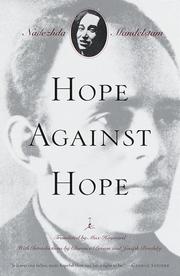
作品年表(1 本)
本站书库里署名娜杰日达·曼德尔施塔姆的书(Open Library 上至少 10 人加过书架的才收),按首版年份排(有本站书页的用 Wikidata 记的首版年,其余用 Open Library 的);年份偶尔记成后来的版本或译本,以原书为准。全部作品见 Open Library。
- 1970Hope Against Hope书架 23