 书单
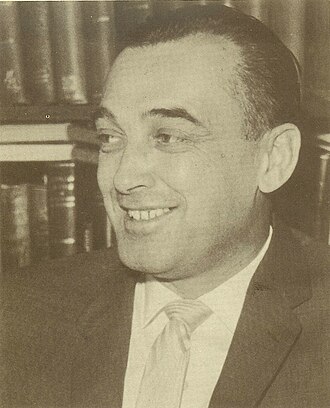
范·沃格特
- 生卒
- 1912 – 2000
- 国籍
- 加拿大、美国
- 外文名
- A. E. van Vogt
照片:作者不详,公有领域,来自维基共享资源「A. E. Van Vogt (1962).jpg」(经缩小)。
生平与创作
阿尔弗雷德·埃尔登·范·沃格特(Alfred Elton van Vogt,1912年4月26日—2000年1月26日)美国科幻小说作家。
生平
1912年生于加拿大,1944年迁居美国,是科幻小说黄金时期四大才子之一。
作品
1939年,以《猎犬号太空船》的第一部《宇宙的黑破坏者(Black Destroyer)》一举成名。
其他作品还有《武器制造者(The Weapon Makers)》(1947年)、《非A世界(The World of Ā)》(1947年)、《静止之家(The House That Stood Still)》(1950年)、《伊夏的武器店(The Weapon Shops of Isher)》(1951年)、《终点,银河系!(Destination: Universe! )》(1952年)和1959年以后发表的《精神牢房》等等。
以上文字摘自维基百科「范·沃格特」(去掉了参考文献等尾部小节),按 CC BY-SA 4.0 使用,作者为维基百科的各位编者。
中文维基百科的条目比较短,下面附上英文维基百科的内容(英文原文):
Alfred Elton van Vogt ( VAN VOHKT; April 26, 1912 – January 26, 2000) was a Canadian-born American science fiction writer. His fragmented, bizarre narrative style influenced later science fiction writers, including Philip K. Dick. He was one of the most popular and influential practitioners of science fiction in the mid-twentieth century, the genre's so-called Golden Age, and one of the most complex. The Science Fiction Writers of America named him their 14th Grand Master in 1995 (presented 1996).
Biography
Early life
Alfred Vogt (both "Elton" and "van" were added much later) was born on April 26, 1912, on his grandparents' farm in Edenburg, Manitoba, a tiny (and now defunct) Russian Mennonite community east of Gretna, Manitoba, Canada, in the Mennonite West Reserve. He was the third of six children born to Heinrich "Henry" Vogt and Aganetha "Agnes" Vogt (née Buhr), both of whom were born in Manitoba and grew up in heavily immigrant communities. Until he was four, van Vogt spoke only Plautdietsch at home.
For the first dozen or so years of his life, van Vogt's father, Henry Vogt, a lawyer, moved his family several times within the Prairies, moving to Neville, Saskatchewan; Swift Current, Saskatchewan, and Morden, Manitoba where he lived from 1922 to 1926, before moving to Winnipeg for high school. Alfred Vogt found these moves difficult, later remarking:
Childhood was a terrible period for me. I was like a ship without anchor being swept along through darkness in a storm. Again and again I sought shelter, only to be forced out of it by something new.
By the late 1920s, living in Saskatchewan, his father Henry worked as an agent for a steamship company, but the stock market crash of 1929 proved financially disastrous, and the family could not afford to send Alfred to college. During his teen years, Alfred worked as a farmhand and a truck driver, and by the age of 19, he was working in Ottawa for the Canadian Census Bureau.
In "the dark days of '31 and '32," van Vogt took a correspondence course in writing from the Palmer Institute of Authorship. He sold his first story in fall 1932. His early published works were stories in the true confession style of magazines such as True Story. Most of these stories were published anonymously, with the first-person narratives allegedly being written by people (often women) in extraordinary, emotional, and life-changing circumstances.
After a year in Ottawa, he moved to Winnipeg, Manitoba, where he sold newspaper advertising space and continued to write. While continuing to pen melodramatic "true confessions" stories through 1937, he also began writing short radio dramas for local radio station CKY, as well as conducting interviews published in trade magazines. He added the middle name "Elton" at some point in the mid-1930s, and at least one confessional story (1937's "To Be His Keeper") was sold to the Toronto Star, who misspelled his name "Alfred Alton Bogt" in the byline. Shortly thereafter, he added the "van" to his surname, and from that point forward he used the name "A. E. van Vogt" both personally and professionally.
Early career
By 1938, van Vogt decided to switch to writing science fiction, a genre he enjoyed reading. He was inspired by the August 1938 issue of Astounding Science Fiction, which he picked up at a newsstand. John W. Campbell's novelette "Who Goes There?" (later adapted into The Thing from Another World and The Thing) inspired van Vogt to write "Vault of the Beast", which he submitted to that same magazine. Campbell, who edited Astounding (and had written the story under a pseudonym), sent van Vogt a rejection letter in which Campbell encouraged van Vogt to try again. Van Vogt sent another story, entitled "Black Destroyer", which was accepted. It featured a fierce, carnivorous alien stalking the crew of a spaceship, and served as the inspiration for multiple science fiction movies, including Alien (1979). A revised version of "Vault of the Beast" was published in 1940.
以上文字摘自英文维基百科「A. E. van Vogt」(有删节,去掉了参考文献等尾部小节),按 CC BY-SA 4.0 使用,作者为维基百科的各位编者。
资料卡
- 母语名
- Alfred Elton van Vogt
- 本名
- Alfred Elton van Vogt
- 出生
- 1912 年 4 月 26 日
- 出生地
- 格雷特纳
- 逝世
- 2000 年 1 月 26 日
- 逝世地
- 好莱坞
- 职业
- 作家、小说家、科幻作家
- 使用语言
- 英语
- 文学运动 / 流派
- 科幻小说黄金时代
- 创作体裁
- 科学幻想
- 配偶
- Edna Mayne Hull
- 代表作
- The Weapon Shops of Isher、The Players of Null-A、The World of Null-A
- 获奖
- 达蒙·奈特纪念大师奖(1996);另有 3 项只有外文名
资料卡来自 Wikidata Q315059(CC0),众包数据,个别字段可能不全。
本站收录的作品(1)
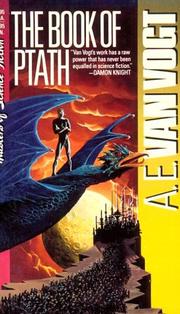
作品年表(14 本)
本站书库里署名范·沃格特的书(Open Library 上至少 10 人加过书架的才收),按首版年份排(有本站书页的用 Wikidata 记的首版年,其余用 Open Library 的);年份偶尔记成后来的版本或译本,以原书为准。全部作品见 Open Library。
- 1945The World of Ā书架 34
- 1946Slan书架 65
- 1947The Weapon Makers书架 15
- 1950The Voyage of the Space Beagle书架 47
- 1950The House that Stood Still书架 10
- 1951The Weapon Shops of Isher书架 38
- 1953The Universe Maker书架 11
- 1956The Pawns of Null-A书架 12
- 1957Empire of the atom书架 10
- 1959The War Against the Rull书架 11
- 1969The witchcraft reader书架 20
- 1970Quest for the Future书架 10
- 1974The Best of A. E. van Vogt书架 12
- 1985Null-A Three书架 11