 书单
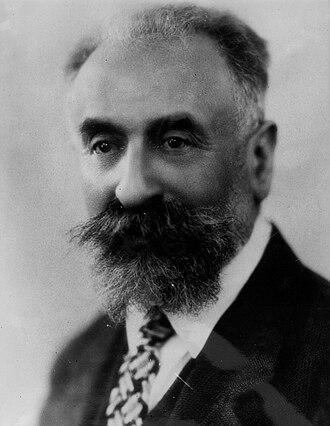
马塞尔·莫斯
- 生卒
- 1872 – 1950
- 国籍
- 法国
- 外文名
- Marcel Mauss
照片:Société des Amis du Centre d'Études Sociologiques (SACES),CC0,来自维基共享资源「M.Mauss 1872-1950.jpg」(经缩小)。
生平与创作
马塞尔·莫斯(法语:Marcel Mauss,法语发音:[maʁsɛl mos];1872年5月10日—1950年2月10日),法国社会学家,他是社会学家爱米尔·涂尔干的外甥。莫斯的学术作品跨越了社会学和人类学的边界。他在相关领域的影响一直延续至今。莫斯曾研究了世界各地不同文化中有关魔术、牺牲和礼物交换的现象。他于1925年发表在《社会学年鉴》上的《礼物》可谓是社会科学史上最重要的文本。
莫斯以一人一身,凝聚并体现了由圣西门和孔德开启,而后由涂尔干加以系统化的整个法国社会学传统,这一传统与(韦伯和齐美尔的)德国社会学传统,以及(芝加哥学派、杜威和帕森斯的)美国社会学传统鼎足而三。
以上文字摘自维基百科「马塞尔·莫斯」(去掉了参考文献等尾部小节),按 CC BY-SA 4.0 使用,作者为维基百科的各位编者。
中文维基百科的条目比较短,下面附上英文维基百科的内容(英文原文):
Marcel Israël Mauss (French: [mos]; 10 May 1872 – 10 February 1950) was a French sociologist and anthropologist known as the "father of French ethnology". The nephew of Émile Durkheim, Mauss, in his academic work, crossed the boundaries between sociology and anthropology. Today, he is perhaps better recognised for his influence on the latter discipline, particularly with respect to his analyses of topics such as magic, sacrifice and gift exchange in different cultures around the world. Mauss had a significant influence upon Claude Lévi-Strauss, the founder of structural anthropology. His most famous work is The Gift (1925).
Biography
Family and education
Mauss was born in Épinal, Vosges, to a Jewish family, his father a merchant and his mother an embroidery shop owner. Unlike his younger brother, Mauss did not join the family business and instead he joined the socialist and cooperative movement in the Vosges. Following the death of his grandfather, the Mauss and Durkheim families grew close and at this time Mauss began to feel concerned about his education and took initiatives in order to learn. Mauss obtained a religious education and was bar mitzvahed, yet by the age of eighteen he stopped practicing his religion.
Mauss studied philosophy at Bordeaux, where his maternal uncle Émile Durkheim was teaching at the time. In the 1890s, Mauss began his lifelong study of linguistics, Indology, Sanskrit, Hebrew, and the 'history of religions and uncivilized peoples' at the École pratique des hautes études. He passed the agrégation in 1893. He was also the first cousin of the much younger Claudette (née Raphael) Bloch, a marine biologist and mother of Maurice Bloch, who became a noted anthropologist. Instead of taking the usual route of teaching at a lycée following college, Mauss moved to Paris and took up the study of comparative religion and Sanskrit.
Academic career
His first publication in 1896 marked the beginning of a prolific career that would produce several landmarks in sociological literature. Like many members of the L'Année sociologique group, Mauss was attracted to socialism, especially that espoused by Jean Jaurès. He was particularly engaged around the antisemitic events of the Dreyfus affair. Towards the end of the century, he helped edit such left-wing papers as Le Populaire, L'Humanité and Le Mouvement socialiste, the last in collaboration with Georges Sorel.
In 1901, Mauss was appointed to the Chair of the History of Religions of Non-Civilized Peoples at the École pratique des hautes études. At this point, Mauss began drawing more on ethnography, and his work began to develop characteristics now associated with formal anthropology.
Mauss served in the French army during World War I from 1914 to 1919 as an interpreter. The military service was liberating from Mauss's intense academics, as he stated, "I'm doing wonderfully. I just wasn't made for the intellectual life and I am enjoying the life war is giving me" (Fournier 2006: 175). While liberating, he also dealt with the devastation and violence of the war as many of his friends and colleagues died in the war, and his uncle Durkheim died shortly before its end. Mauss began to write a book "On Politics" that remained unfinished, but the early 1920s emphasised his energy for politics through criticism of the Bolshevik's coercive resort to violence and their destruction of the market economy.
Like many other followers of Durkheim, Mauss took refuge in administration. He secured Durkheim's legacy by founding institutions to carry out research, such as Institut Français de Sociologie (1924) and Institut d'Ethnologie in 1926. These institutions stimulated the development of fieldwork-based anthropology by young academics. Among the students he influenced were George Devereux, Jeanne Cuisinier, Alfred Metraux, Marcel Griaule, Georges Dumezil, Denise Paulme, Michel Leiris, Germaine Dieterlen, Louis Dumont, Andre-Georges Haudricourt, Jacques Soustelle, and Germaine Tillion.
以上文字摘自英文维基百科「Marcel Mauss」(有删节,去掉了参考文献等尾部小节),按 CC BY-SA 4.0 使用,作者为维基百科的各位编者。
资料卡
- 母语名
- Marcel Mauss
- 出生
- 1872 年 5 月 10 日
- 出生地
- 埃皮纳勒
- 逝世
- 1950 年 2 月 10 日
- 逝世地
- 巴黎
- 职业
- 政治人物、社会学家、民族学家、人类学家、教授、哲学家、宗教学家、讲师
- 使用语言
- 法语
- 写作语言
- 法语
- 就读学校
- 波尔多大学
- 领域
- 民族志、宗教社会学
- 受谁影响
- 埃米尔·涂尔干
资料卡来自 Wikidata Q295393(CC0),众包数据,个别字段可能不全。
本站收录的作品(1)
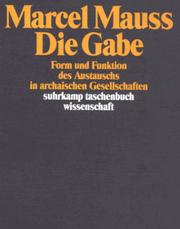
作品年表(1 本)
本站书库里署名马塞尔·莫斯的书(Open Library 上至少 10 人加过书架的才收),按首版年份排(有本站书页的用 Wikidata 记的首版年,其余用 Open Library 的);年份偶尔记成后来的版本或译本,以原书为准。全部作品见 Open Library。
- 1925论礼物Die Gabe书架 16