 书单
百科
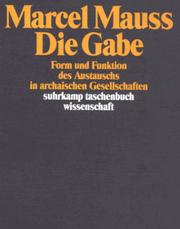
《礼物:古式社会中交换的形式与理由》(法语:Essai sur le don:Forme et raison de l'échange dans les sociétés archaïques)是法国社会学家马塞尔·莫斯最重要的作品,它于1925年发表在《社会学年鉴》上。在书中莫斯通过对斯堪的纳维亚、西北美洲和美拉尼西亚等地古代世界的资料进行汇总,莫斯主要考察了“库拉”、“金瓦利”,“通家”三种现象,提出了人类社会原本没有市场、交易、买卖,甚至契约的命题。马塞尔·莫斯认为社会的根基不是西方政治哲学主张的、至少在规范层面上的契约,而是理论上自愿、实际上义务性的礼物交换。
《礼物》最终得出了三方面的结论:
一、社会生活不仅关于功利,也关于情感,集体应该回归古式的当众赠与的、慷慨的道德。
二、礼物交换不是经济理性的,礼物本身可能是没有功用的东西,交换可能在于维持一种有利可图的且无法拒绝的联盟。
三、对于社会现象的研究应该考虑整体,寻找差异现象中的一般性。
以上文字摘自维基百科「礼物——古式社会中交换的形式与理由」(去掉了参考文献等尾部小节),按 CC BY-SA 4.0 使用,作者为维基百科的各位编者。
中文维基百科的条目比较短,下面附上英文维基百科的内容(英文原文):
The Gift: Forms and Functions of Exchange in Archaic Societies (French: Essai sur le don: forme et raison de l'échange dans les sociétés archaïques) is a 1925 essay by the French sociologist Marcel Mauss that is the foundation of social theories of reciprocity and gift exchange.
History
Mauss's original piece was entitled Essai sur le don. Forme et raison de l'échange dans les sociétés archaïques ("An essay on the gift: the form and reason of exchange in archaic societies") and was originally published in L'Année Sociologique in 1925. This was the first issue of L'Année Sociologique published following the devastation of World War I and the deaths of 12 of Mauss's colleagues, including his maternal uncle and mentor Émile Durkheim, who had formed the intellectual circle that gave birth to the journal and the particular tradition of French sociology. Mauss was deeply affected by the deaths of these colleagues, many of whom he was indebted to for ideas that were developed in The Gift. For example, Mauss points explicitly to the role of Robert Hertz's contributions towards incorporating the Maori concept of hau, which became a key idea demonstrating how reciprocity functions.
The impact of World War I on Mauss is also apparent in his conclusions to The Gift, where he states explicitly "...the clan, the tribe, and the peoples have learned--as tomorrow, in our so-called civilized world, classes and nations and individuals too will have to learn--how to confront one another without massacring each other, and to give to each other without sacrificing themselves to the other. Herein lies on of the lasting secrets of their wisdom and their solidarity" (p.197).
Various editions and translations of The Gift have been produced. Following its initial publication in 1925, the essay was later republished in French in 1950 and translated into English in 1954 by Ian Cunnison, with a foreword by Mauss's colleague E. E. Evans-Pritchard. A second English translation was published in 1990 by W. D. Halls with a foreword by Mary Douglas, and most recently a translation by Jane I. Guyer was published in 2016.
Summary
Mauss's essay focuses on the way that the exchange of objects between groups builds relationships between humans.
It analyzes the economic practices of archaic societies and finds that they have a common as well as a main practice centered on reciprocal exchange. In different archaic and indigenous societies, he finds evidence contrary to the presumptions of modern Western societies about the history and nature of exchange which assert that it is a relatively newer concept and practice. He shows that early exchange systems center around the obligations to give, to receive, and, most importantly, to reciprocate. They occur between groups, not only individuals, and they are a crucial part of “total phenomena” that work to build not just wealth and alliances marked by economic wants but social solidarity because “the gift” pervades all aspects of the society. Mauss calls it, therefore, a "total social fact". He uses a comparative method, drawing upon published secondary scholarship on peoples from around the world, but especially the Pacific Northwest (especially potlatch).
After examining the reciprocal gift-giving practices of each society, he finds in them common features, despite some variation. From the disparate evidence, he builds a case for a foundation to human society based on collective (vs. individual) exchange practices. In doing so, he refutes the English tradition of liberal thought, such as utilitarianism, as distortions of human exchange practices. He concludes by speculating that social welfare programs may be recovering some aspects of the morality of the gift within modern market economies.
Key Concepts
Total social fact - a practice that is highly integrated across many or all spheres of society, including economic, legal, political, and religious among others; Mauss builds on Durkheim's concept of social fact.
以上文字摘自英文维基百科「The Gift (essay)」(有删节,去掉了参考文献等尾部小节),按 CC BY-SA 4.0 使用,作者为维基百科的各位编者。
资料卡
- 原题
- Essai sur le don
- 原作语言
- 法语
- 首次出版
- 1925 年
- 体裁
- 非虚构作品、随笔
- 主题
- 互惠性、礼物
资料卡来自 Wikidata Q3058690(CC0),众包数据,个别字段可能不全。