 书单
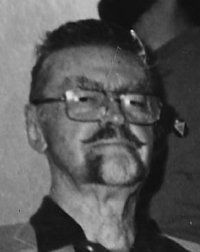
里昂·斯普拉格·德坎普
- 生卒
- 1907 – 2000
- 国籍
- 美国
- 外文名
- L. Sprague de Camp
照片:Cimon Avaro,公有领域,来自维基共享资源「L. Sprague de Camp crop.jpg」(经缩小)。
生平与创作
这个词条暂时没有中文维基百科条目,下面是英文维基百科的内容(英文原文):
Lyon Sprague de Camp (November 27, 1907 – November 6, 2000) was an American author of science fiction, fantasy and non-fiction literature. In a career spanning 60 years, he wrote over 100 books, including biographies of other fantasy authors. He was a major figure in science fiction in the 1930s and 1940s.
Biography
De Camp was born in New York City, one of three sons of Lyon de Camp (a businessman in real-estate and lumber), and of Emma Beatrice Sprague. His maternal grandfather was the accountant, banker, pioneering Volapükist and Civil War veteran Charles Ezra Sprague. De Camp once noted that he rarely used pen-names, "partly because my own true name sounds more like a pseudonym than most pseudonyms do".
De Camp began his education at the Trinity School in New York, then spent ten years attending the Snyder School in North Carolina, a military-style institution. His stay at the Snyder School represented an attempt by his parents, who were heavy-handed disciplinarians, to cure him of intellectual arrogance and of lack of discipline. He was awkward and thin, an ineffective fighter, and suffered from bullying by his classmates. His experiences at the school taught him to develop a detached, analytical style considered cold by all but his closest friends, though he could, like his father, be disarming and funny in social situations. He would later recall these challenging childhood experiences in the semi-autobiographical story Judgment Day (1955).
An aeronautical engineer by education, de Camp undertook undergraduate studies at the California Institute of Technology (where his roommate was at one point noted rocket-fuel scientist John Drury Clark), and earned his Bachelor of Science degree from Caltech in aeronautical engineering 1930. He earned his Master of Science degree in engineering from the Stevens Institute of Technology in 1933. De Camp was also a surveyor and an expert in patents.
In his first job he worked for the Inventors Foundation, Inc. in Hoboken, New Jersey, which was taken over by The International Correspondence Schools. De Camp transferred to the Scranton, Pennsylvania division. He was principal of the School of Inventing and Patenting when he resigned in 1937. His first book Inventions and Their Management resulted, published in July 1937.
On August 12, 1939, de Camp married Catherine Crook, with whom he collaborated on science fiction and nonfiction beginning in the 1960s. They had two children.
During World War II, de Camp served as a researcher at the Philadelphia Naval Yard along with his fellow-writers Isaac Asimov and Robert A. Heinlein. De Camp eventually rose to the rank of lieutenant commander in the U.S. Navy as a reserve officer. From 1942 to 1989, the de Camps generally lived near Philadelphia; for decades their home was in Villanova, Pennsylvania.
De Camp was a member of the all-male literary and dining club in New York City, the "Trap Door Spiders", which served as the basis of Asimov's fictional group of mystery-solvers the "Black Widowers". De Camp himself was the model for the character named "Geoffrey Avalon".
De Camp was a founding member of the Swordsmen and Sorcerers' Guild of America (SAGA), a loosely-knit group of heroic fantasy writers founded during the 1960s and led by Lin Carter, with entry by credentials as a fantasy writer alone.
The de Camps moved to Plano, Texas, in 1989, and Sprague de Camp died there on November 6, 2000 (seven months after his wife, on what would have been her birthday), at age 92. His ashes were inurned, together with hers, in the Arlington National Cemetery in Virginia.
De Camp's personal library of about 1,200 books was acquired for auction by Half Price Books in 2005. The collection included books inscribed by fellow writers, such as Isaac Asimov and Carl Sagan, as well as by de Camp himself.
Coinage of "extraterrestrial" and "E.T."
"Extraterrestrial", a coinage from "extra" + "terrestrial", meaning from beyond earth, is attested as an adjective as early as 1868, according to the Oxford English Dictionary. Its first use in connection with life beyond earth was likely by H. G. Wells, in his 1898 novel The War of the Worlds. L. Sprague de Camp is credited with its first usage as a noun with the meaning of "alien life" and with coining the abbreviation "E.T." in the first part of his two-part article "Design for Life", published in the May 1939 issue of Astounding Science Fiction.
Hypothesis regarding sea serpent sightings
De Camp made a suggestion in 1968 that fossil discoveries had influenced modern reports of sea monster sightings. The suggestion was made in his article "Dinosaurs in Today's World" in The Magazine of Fantasy & Science Fiction v. 34, no. 3, March 1968, later reprinted in his nonfiction collection The Fringe of the Unknown, Buffalo, New York: Prometheus, 1983. In 2019 de Camp's theory was scientifically tested by C. G. M. Paxton and D. Naish, who concluded that trends in the data of reported sightings appear to support his hypothesis.
Body of work
De Camp was a materialist who wrote works examining society, history, technology and myth. He published numerous short stories, novels, non-fiction works and poems during his career.
A common theme in many of his works is a corrective impulse regarding similar previous works by other authors. De Camp was frequently disturbed by what he regarded as logical lapses and absurdities in others' writings. Some, like Asimov, felt de Camp's conscientiousness about facts limited the scope of his stories: de Camp was reluctant to use technological or scientific concepts (e.g., hyperspace or faster-than-light travel) if he regarded them as impossible. Thus, his response to Mark Twain's A Connecticut Yankee in King Arthur's Court was to write a similar time travel novel (Lest Darkness Fall) in which the method of time travel was rationalized and the hero's technical expertise was constrained by the technological limitations of the age.
以上文字摘自英文维基百科「L. Sprague de Camp」(有删节,去掉了参考文献等尾部小节),按 CC BY-SA 4.0 使用,作者为维基百科的各位编者。
资料卡
- 本名
- Lyon Sprague de Camp
- 笔名
- J. Wellington Wells、Lymen R. Lyon、J. Wellington
- 出生
- 1907 年 11 月 27 日
- 出生地
- 纽约
- 逝世
- 2000 年 11 月 6 日
- 逝世地
- 普莱诺
- 职业
- 作家、军官、小说家、历史学家、散文家、文学评论家、科幻作家、新闻工作者
- 使用语言
- 英语
- 就读学校
- 加州理工学院、斯蒂文斯理工学院
- 创作体裁
- 推想虚构作品
- 配偶
- Catherine Crook de Camp
- 获奖
- 达蒙·奈特纪念大师奖(1979)、世界奇幻奖终身成就奖(1984)、雨果奖最佳相关作品奖(1997)、怀疑调查委员会会员;另有 4 项只有外文名
资料卡来自 Wikidata Q316313(CC0),众包数据,个别字段可能不全。
本站收录的作品(1)
作品年表(14 本)
本站书库里署名里昂·斯普拉格·德坎普的书(Open Library 上至少 10 人加过书架的才收),按首版年份排(有本站书页的用 Wikidata 记的首版年,其余用 Open Library 的);年份偶尔记成后来的版本或译本,以原书为准。全部作品见 Open Library。
- 1941Lest Darkness Fall书架 52
- 1963The ancient engineers书架 28
- 1963Swords and sorcery书架 15
- 1966Conan the Adventurer书架 11
- 1967Conan the Usurper书架 12
- 1968Conan of the Isles书架 19
- 1968Conan of Cimmeria书架 15
- 1968Conan the Wanderer书架 11
- 1968Conan the Freebooter书架 10
- 1973The fallible fiend书架 10
- 1975The compleat enchanter书架 27
- 1978Conan the Swordsman书架 10
- 1982野蛮人柯南Conan the Barbarian书架 15
- 1985The Fantasy Hall of Fame [30 stories]书架 44