 书单
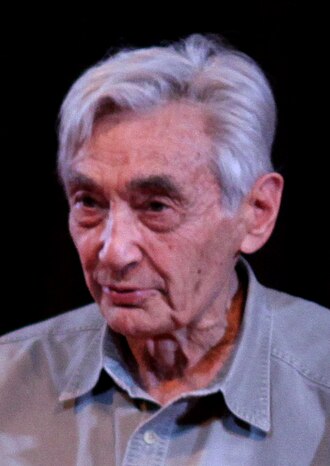
霍华德·津恩
- 生卒
- 1922 – 2010
- 国籍
- 美国
- 外文名
- Howard Zinn
照片:Jim from Stevens Point, WI, USA,CC BY-SA 2.0,来自维基共享资源「Howard Zinn, 2009 (cropped).jpg」(经缩小)。
生平与创作
霍华德·津恩(英语:Howard Zinn,1922年8月24日—2010年1月27日),美国左翼历史学家,政治学者,社会评论家,剧作家。
生平
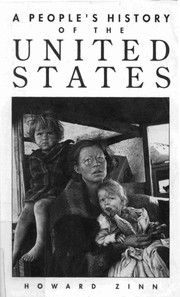
二十世纪六十年代以来,在美国民权、反战活动中相当活跃。代表作为《美国人民的历史》(A People's History of the United States),试图从美国下层人民、弱势群体的视角和社会活动挖掘“另类”史料,考察美国的历史和传统。
2010年1月27日因心脏病于加州圣莫尼卡去世。
著作
《美国人民的历史》(美)霍华德·津恩著,许先春等译,上海人民出版社,2000年 ISBN 7-208-03527-X
以上文字摘自维基百科「霍华德·津恩」(去掉了参考文献等尾部小节),按 CC BY-SA 4.0 使用,作者为维基百科的各位编者。
中文维基百科的条目比较短,下面附上英文维基百科的内容(英文原文):
Howard Zinn (August 24, 1922 – January 27, 2010) was an American historian. He was chair of the history and social sciences department at Spelman College, and a political science professor at Boston University. Zinn wrote more than 20 books, including his best-selling and influential A People's History of the United States in 1980. In 2007, he published a version of it for younger readers, A Young People's History of the United States.
Zinn described himself as "something of an anarchist, something of a socialist. Maybe a democratic socialist." He wrote extensively about the civil rights movement, the anti-war movement and labor history of the United States. His memoir, You Can't Be Neutral on a Moving Train (Beacon Press, 1994), was also the title of a 2004 documentary about Zinn's life and work. Zinn died of a heart attack in 2010, at the age of 87.
Early life
Zinn was born to a Jewish immigrant family in Brooklyn, New York City, on August 24, 1922. His father, Eddie Zinn, born in Austria-Hungary, immigrated to the US with his brother Samuel before the outbreak of World War I. His mother, Jenny (Rabinowitz) Zinn, emigrated from the Eastern Siberian city of Irkutsk. His parents first became acquainted as workers at the same factory. During the Great Depression, his father worked as a ditch digger and window cleaner, and for a brief time, his parents ran a neighborhood candy store, barely earning a living. For many years, Zinn's father was in the waiters' union and worked as a waiter for weddings and bar mitzvahs.
Both parents were factory workers with limited education when they met and married, and there were no books or magazines in the series of apartments where they raised their children. Zinn's parents introduced him to literature by sending 10 cents plus a coupon to the New York Post for each of the 20 volumes of Charles Dickens' collected works. Zinn studied creative writing at Thomas Jefferson High School in a special program established by principal and poet Elias Lieberman.
As a young man, Zinn made the acquaintance of several young Communists from his Brooklyn neighborhood. They invited him to a political rally being held in Times Square. Despite it being a peaceful rally, mounted police charged the marchers. Zinn was hit and knocked unconscious. This would have a profound effect on his political and social outlook.
Zinn initially opposed entry into World War II, influenced by his friends, by the results of the Nye Committee, and by his ongoing reading. However, these feelings shifted as he learned more about fascism and its rise in Europe. The book Sawdust Caesar had a particularly large impact through its depiction of Mussolini. After graduating from high school in 1940, Zinn took the Civil Service exam and became an apprentice shipfitter in the New York Navy Yard at the age of 18.
Concerns about low wages and hazardous working conditions compelled Zinn and several other apprentices to form the Apprentice Association. At the time, apprentices were excluded from trade unions and thus had little bargaining power, to which the Apprentice Association was their answer. The head organizers of the association, which included Zinn, would meet once a week outside of work to discuss strategy and read books that at the time were considered radical. Zinn was the Activities Director for the group. His time in this group would tremendously influence his political views and created for him an appreciation for unions.
World War II
Eager to fight fascism, Zinn joined the United States Army Air Corps during World War II and became an officer. He was assigned as a bombardier in the 490th Bombardment Group, bombing targets in Berlin, Czechoslovakia, and Hungary. As bombardier, Zinn dropped napalm bombs in April 1945 on Royan, a seaside resort in western France. The anti-war stance Zinn developed later was informed, in part, by his experiences.
以上文字摘自英文维基百科「Howard Zinn」(有删节,去掉了参考文献等尾部小节),按 CC BY-SA 4.0 使用,作者为维基百科的各位编者。
资料卡
- 母语名
- Howard Zinn
- 出生
- 1922 年 8 月 24 日
- 出生地
- 布鲁克林区
- 逝世
- 2010 年 1 月 27 日
- 逝世地
- 圣莫尼卡
- 职业
- 剧作家、政治学家、历史学家、作家、大学教师、新闻工作者、反战人士、人权活动家 等 9 项
- 使用语言
- 英语
- 就读学校
- 纽约大学、哥伦比亚大学、Thomas Jefferson High School
- 领域
- 历史
- 代表作
- 美国人民的历史
- 获奖
- 托马斯·默顿奖(1991);另有 2 项只有外文名
资料卡来自 Wikidata Q119546(CC0),众包数据,个别字段可能不全。
本站收录的作品(3)
作品年表(5 本)
本站书库里署名霍华德·津恩的书(Open Library 上至少 10 人加过书架的才收),按首版年份排(有本站书页的用 Wikidata 记的首版年,其余用 Open Library 的);年份偶尔记成后来的版本或译本,以原书为准。全部作品见 Open Library。
- 1968Disobedience and democracy书架 21
- 1980美国人民的历史A People's History of the United States书架 643
- 1994You can't be neutral on a moving train书架 28
- 2004美国人民历史之声Voices of a people’s history of the United States书架 14
- 2008A People’s History of American Empire书架 20