书单
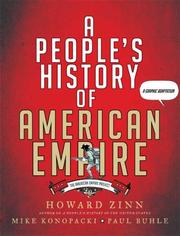
A People's History of American Empire (2008)
- 作者
- 霍华德·津恩、Paul Buhle、Mike Konopacki
- 首版
- 2008 年
- 国家/地区
- 美国
- Open Library
- 6 个版本
百科
这个词条暂时没有中文维基百科条目,下面是英文维基百科的内容(英文原文):
A People's History of American Empire is a 2008 graphic history by Howard Zinn, Mike Konopacki, and Paul Buhle. The book combines material from Zinn's history book A People's History of the United States and his autobiography You Can't Be Neutral on a Moving Train with new material from other sources, most notably George Lipsitz's A Rainbow at Midnight: Labor and Culture in the 1940s and Jim Zwick's Mark Twain's Weapons of Satire: Anti-Imperialist Writings on the Philippine-American War. Various historic subjects are covered as well as Zinn's own history of involvement in activism and historic events. The book was the last of Zinn's books that was published within his lifetime.
The book's story is based around a frame story of Zinn giving a speech at an anti-war rally. Through it, he talks about past acts of imperialism by the U.S. government, as well as acts of resistance to it both inside and outside of the country. During the story, comparisons are made between the American government's past actions and recent ones, often appearing in boxes marked as "Zinnformation".
Overview
The Prologue begins with Zinn writing an article on his typewriter about his reaction to the September 11, 2001 attacks and his anger at President George W. Bush for reacting in a way that Zinn saw as ahistorical (this article was "The Old Way of Thinking", which appeared in Progressive Magazine). He goes on to criticize the military actions in the War in Afghanistan that led to the deaths of civilians. The chapter ends with Zinn giving a speech at an anti-war rally, which becomes a speech on America's past acts of imperialism.
Chapter I, "The Internal Empire", starts by covering the Wounded Knee Massacre, narrated by survivor Black Elk. It goes on to cover the Robber Barons (specifically J. P. Morgan, John D. Rockefeller, Jay Gould, and George Pullman); strikes during 1892 such as the Copper Miners Strike, the New Orleans General Strike, the Railroad Switchmen's Strike, and the Steelworkers' Strike; the 1894 Railroad Strike against the Pullman Palace Car Company and Eugene V. Debs involvement in it; the Monroe Doctrine and the Open Door Policy; the invasion of Hawaii in 1893; and the 103 interventions carried out in other countries by the U.S. between 1798 and 1895, including Japan (1853–54), Nicaragua (1853–54), Uruguay (1855), Argentina (1853–54), and Angola (1860).
Chapter II, "The Spanish–American War", is about the events of the Spanish–American War. Various people who were involved in the events of the war and those leading up to it are discussed, such as Antonio Maceo Grajales, Máximo Gómez, José Martí, Clemencia Arango. Other topics covered include the media hype for the war created by William Randolph Hearst's New York Journal and Joseph Pulitzer's New York World (which led to the concept of yellow journalism); the explosion of the USS Maine, which the two newspapers blamed on the Spanish; the actions of labor unions, which supported the Cuban rebels but not U.S. intervention; the Black 25th Infantry and its experience with racism at the hands of the Rough Riders; the poisoning of soldiers by spoiled meat packaged by Armour and Co.; and the takeover of Cuba by the U.S.
Chapter III, "The Invasion of the Philippines", covers the events of the Philippine–American War. It begins with explaining how the end of the Spanish–American War resulted in the U.S. gaining the former Spanish colonies of Cuba, Puerto Rico, Guam, and the Philippines, and explains that William McKinley believed he had to take over the Philippines from its native people in order to "civilize and Christianize" them. Afterwards, it shows the struggles of Emilio Aguinaldo in trying to keep control of the Philippines for its own people. Other topics and individuals covered include George Dewey, Fermín Jáudenes, Fort San Antonio de Abad, the Benevolent Assimilation Proclamation, the battle of Santa Mesa, William Jennings Bryan, Albert J. Beveridge, Henry M. Turner, W. E. B. Du Bois, Littletown Waller, the shootings at Samar, Elihu Root, Theodore Roosevelt, the use of the water cure in the war, Leonard Wood, the Moro Crater massacre, Mark Twain, and the Anti-Imperialist League.
Chapter IV, "War is the Health of the State", covers World War I and the events leading into it. It begins with discussing how the U.S. government used its military power to protect American business interests both within the country and abroad during such events as the aftermath of the Mexican Revolution and the Ludlow Massacre. Zinn goes on to explain how the U.S. and European countries entered into World War I to gain imperial power over Africa, the Balkans, Alsace-Lorraine, and the Middle-East, while the U.S. itself also entered to increase patriotism and to weaken the growing popular interest in socialism. Other topics and individuals covered include Woodrow Wilson, Randolph Bourne, Robert Lansing, Bernard Baruch, William Gibbs McAdoo, the Lusitania, the Sykes–Picot Agreement, the Conscription Act of 1917, the Espionage Act of 1917, Champ Clark, the American Protective League, the Industrial Workers of the World, Camp Funston, Sheldon W. Smith, Leavenworth Prison, Kate Richards O'Hare, Alice Paul, the National Woman's Party, and Emma Goldman.
Chapter V, "Growing Up Class-Conscious", covers Zinn's childhood and teenage years. Zinn begins the chapter by telling about how his community worked together to get through the Great Depression and their reaction to the execution of Sacco and Vanzetti. He goes on to tell of how he began to understand poverty through reading the works of Charles Dickens, working with his father as a waiter, and getting involved in a demonstration with some of the communists in his neighborhood. These led to Zinn becoming class-conscious and abandoning his liberal views for radical ones.
以上文字摘自英文维基百科「A People's History of American Empire」(有删节,去掉了参考文献等尾部小节),按 CC BY-SA 4.0 使用,作者为维基百科的各位编者。
资料卡
- 原题
- A People's History of American Empire
- 插图
- Mike Konopacki
- 原作语言
- 英语
- 首次出版
- 2008 年 1 月 1 日
- 体裁
- 非虚构作品、漫画
- 首版出版社
- 亨利·霍尔特出版公司
- 主题
- 美国历史
资料卡来自 Wikidata Q4658753(CC0),众包数据,个别字段可能不全。