 书单
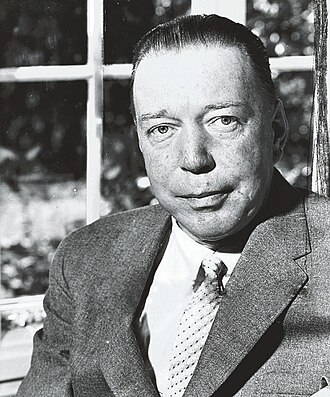
米卡·瓦尔塔里
- 生卒
- 1908 – 1979
- 国籍
- 芬兰、芬兰大公国
- 外文名
- Mika Waltari
照片:作者不详,公有领域,来自维基共享资源「Mika Waltari 1939.jpg」(经缩小)。
生平与创作
米卡·托伊米·瓦尔塔里(芬兰语:Mika Toimi Waltari,1908年9月19日—1979年8月26日),芬兰著名历史小说家。最有名的作品是《埃及人西努赫》。
作品
小说
A Stranger Came to the Farm (Vieras mies tuli taloon, 1937)
The Egyptian (Sinuhe, egyptiläinen, 1945, abridged translation)
The Adventurer (Mikael Karvajalka, 1948)
A Nail Merchant Nightfall (Neljä päivänlaskua, 1949)
The Wanderer (Mikael Hakim, 1949)
The Dark Angel (Johannes Angelos, 1952)
The Etruscan (Turms kuolematon, 1955)
The Secret of the Kingdom (Valtakunnan salaisuus, 1959)
The Roman (Ihmiskunnan viholliset, 1964)
中篇小说
Moonscape (Kuun maisema, 1953)
The Tree of Dreams (Koiranheisipuu, 1961)
以上文字摘自维基百科「米卡·瓦爾塔里」(去掉了参考文献等尾部小节),按 CC BY-SA 4.0 使用,作者为维基百科的各位编者。
中文维基百科的条目比较短,下面附上英文维基百科的内容(英文原文):
Mika Toimi Waltari (pronounced [ˈmikɑ ˈʋɑltɑri] ; 19 September 1908 – 26 August 1979) was a Finnish writer, best known for his best-selling novel The Egyptian (Finnish: Sinuhe egyptiläinen). He was extremely productive; Besides his novels he also wrote poetry, short stories, crime novels, plays, essays, travel stories, film scripts, and rhymed texts for comic strips by Asmo Alho.
Biography
Early life
Waltari was born in Helsinki on 19 September 1908. His parents were Toimi Waltari and Olga Johansson; Toimi was a Lutheran pastor once, teaching religion in Porvoo, and Olga one of his pupils. A scandal caused by their relationship had forced them to move to Tampere and the two married on 18 November 1906. At the age of five, Mika Waltari suddenly lost his father to illness on 5 July 1914, and the 25-year old Olga Waltari was left, with crucial help from Toimi's brother Toivo, to support her three children: Samuli (7 years), Mika (5 years) and Erkki (6 months). As a boy, Waltari witnessed the Finnish Civil War, during which his White-sided family fled to the home of his mother's aunt at Laukkoski in Pornainen, near Porvoo, which was relatively peaceful and where the Whites were predominant.
Later he enrolled in the University of Helsinki as a theology student, according to his uncle Toivo's wishes, but soon abandoned theology in favour of philosophy, aesthetics and literature, graduating in 1929. While studying, he contributed to various magazines and wrote poetry and stories, getting his first book Jumalaa paossa published in 1925. It was a success, selling 3000 copies despite being only 72 pages long. In 1927, he went to Paris where he wrote his first major novel Suuri illusioni ('The Grand Illusion'), a story of bohemian life. In terms of style, the novel is considered to be the Finnish equivalent to the works of the American writers of the Lost Generation. (In Waltari's historical novel The Adventurer, taking place in the 16th century, the protagonist is a Finn who goes to study in Paris at much the same age that the author went to the same city in the 20th century). Suuri illusioni was a surprise hit, selling 8000 copies and turning Mika Waltari into a famous author. Waltari also was, for a while, a member of the liberal literary movement Tulenkantajat, though his political and social views later turned conservative. He was married on 8 March 1931 to Marjatta Luukkonen, whom he had met during military service the preceding year, and on 4 January 1932 they had a daughter, Satu. Satu also became a writer.
Throughout the 1930s and 1940s, Waltari worked as a journalist and critic, writing for a number of newspapers and magazines and travelling widely in Europe. He published articles in the official magazine of the Association of Finnish Culture and Identity, Suomalainen Suomi ('Finnish Finland'), which was later renamed as Kanava. He directed the magazine Suomen Kuvalehti. At the same time, he kept writing books in many genres, moving easily from one literary field to another. He had a very busy schedule and strict work ethic. He also suffered from manic-depressive psychosis and became depressed after completion of a book, sometimes to the extent of needing hospital treatment; in his manic phases he did his writing. He participated, and often succeeded, in literary competitions to prove the quality of his work to critics. One of these competitions gave rise to one of his most popular characters, Inspector Palmu, a gruff detective of the Helsinki police department, who starred in three mystery novels, all of which were filmed (a fourth film was made without Waltari involved). Waltari also scripted the popular cartoon Kieku ja Kaiku and wrote Aiotko kirjailijaksi, a guidebook for aspiring writers that influenced many younger writers such as Kalle Päätalo.
以上文字摘自英文维基百科「Mika Waltari」(有删节,去掉了参考文献等尾部小节),按 CC BY-SA 4.0 使用,作者为维基百科的各位编者。
资料卡
- 本名
- Mika Toimi Waltari
- 笔名
- Kristian Korppi、Leo Rainio、Leo Arne、M. Ritvala 等 5 项
- 出生
- 1908 年 9 月 19 日
- 出生地
- 赫尔辛基
- 逝世
- 1979 年 8 月 26 日
- 逝世地
- 赫尔辛基
- 职业
- 作家、译者、新闻工作者、小说家、编剧、诗人、剧作家
- 使用语言
- 芬兰语、瑞典语
- 写作语言
- 芬兰语
- 就读学校
- 赫尔辛基大学、Helsinki Normal Lyceum
- 创作体裁
- 历史小说、犯罪文学、诗歌、剧本、儿童文学、随笔
- 获奖
- 阿莱克西斯·基维奖(1947);另有 4 项只有外文名
资料卡来自 Wikidata Q193111(CC0),众包数据,个别字段可能不全。
本站收录的作品(1)
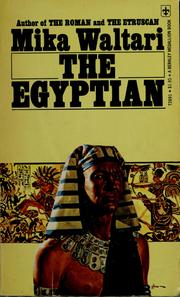
作品年表(4 本)
本站书库里署名米卡·瓦尔塔里的书(Open Library 上至少 10 人加过书架的才收),按首版年份排(有本站书页的用 Wikidata 记的首版年,其余用 Open Library 的);年份偶尔记成后来的版本或译本,以原书为准。全部作品见 Open Library。
- 1945埃及人西努赫The Egyptian (The Greatest Historical Novels)书架 18
- 1947Sinuhe egyptiläinen书架 54
- 1949The Egyptian书架 18
- 1966The Roman书架 10