 书单
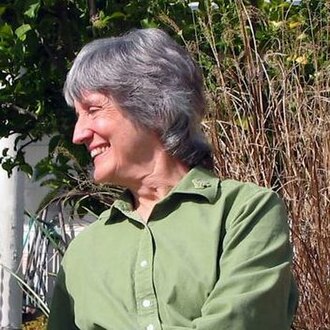
唐娜·哈拉维
- 生卒
- 1944 –
- 国籍
- 美国
- 外文名
- Donna Haraway
照片:Rusten Hogness,CC BY-SA 3.0,来自维基共享资源「Donna Haraway 2006 (cropped).jpg」(经缩小)。
生平与创作
唐娜·哈拉维(英语:Donna J. Haraway,1944年9月6日—),或译唐娜·哈洛威,美国哲学家,主要研究后现代主义和女性主义,现任加州大学圣克鲁斯分校教授。
唐娜·哈拉维著作丰富,包括《灵长类视觉——现代科学世界中的性别、种族和自然》、《类人猿、赛博格和女人》等,目的是解构人们对于身体,种族的知识。她的作品批判了人类中心主义,强调了非人类过程(processes)的自组织能力,并探讨了这些过程与文化习俗之间的不和谐关系,重新思考伦理的来源。
2000年9月,唐娜·哈拉维因其领域的“杰出贡献”而被授予社会科学学会最高荣誉协会John Desmond Bernal奖。
经历
1944年9月6日生于美国丹佛市,哈拉维的父亲是丹佛邮报的体育记者,她的母亲是来自爱尔兰的天主教徒,她在哈拉维16岁时去世。哈拉维在科罗拉多州樱桃山村的圣玛丽学院上高中。
1962年开始在科罗拉多学院学习动物学与哲学,同时兼修英语专业的课程。获得了全额奖学金。1966年获得了福布莱特计划的资助,赴法从事为期一年的进化哲学和神学的研究。
1972年,哈拉维在耶鲁大学生物系以“关于隐喻在20世纪发育生物学研究中的作用特征”的论文获得博士学位。
哈拉维曾任教于夏威夷大学、加州大学圣克鲁斯分校。
理论
赛伯格宣言
1985年,哈洛威发表〈赛伯格宣言〉。尽管哈洛威早期作品批判科学界的父权,但该宣言系回应当时的女性主义,主张不再存在某种本质让女人归属同一类,一如赛伯格。
相关文献
《身体:符号、隐喻与跨界——唐娜·哈拉维“技科学”的主体解析》. 周丽昀. 上海大学社会科学学院
《哈拉维及其“赛博格”神话》. 李建会 苏湛. 北京师范大学哲学与社会学学院
以上文字摘自维基百科「唐娜·哈拉维」(去掉了参考文献等尾部小节),按 CC BY-SA 4.0 使用,作者为维基百科的各位编者。
中文维基百科的条目比较短,下面附上英文维基百科的内容(英文原文):
Donna Jeanne Haraway (born September 6, 1944) is an American philosopher, who contributed to the intersection of information technology and feminist theory, and is a scholar in contemporary ecofeminism. Her work criticizes anthropocentrism, emphasizes the self-organizing powers of nonhuman processes, and explores dissonant relations between those processes and cultural practices, rethinking sources of ethics.
Haraway taught women's studies and the history of science at the University of Hawaiʻi (1971–1974) and Johns Hopkins University (1974–1980). She began working as a professor at the University of California, Santa Cruz in 1980 where she became the first tenured professor in feminist theory in the United States.
Haraway's works have contributed to the study of both human–machine and human–animal relations. Her work has sparked debate in primatology, philosophy, and developmental biology. Haraway participated in a collaborative exchange with the feminist theorist Lynn Randolph from 1990 to 1996. Their engagement with specific ideas relating to feminism, technoscience, political consciousness, and other social issues, formed the images and narrative of Haraway's book Modest_Witness for which she received the Society for Social Studies of Science's (4S) Ludwik Fleck Prize in 1999. She was also awarded the American Sociological Association's Section on Science, Knowledge and Technology's Robert K. Merton Award in 1992 for her work Primate Visions: Gender, Race, and Nature in the World of Modern Science. In 2017, Haraway was awarded the Wilbur Cross Medal, one of the highest honors for alumni of Yale University. In 2021, Haraway received the Nuevo León Alfonso Reyes Prize for imagining new horizons for the fusion of science, humanities, biology, and philosophy. In 2025, she was awarded the Erasmus Prize.
Biography
Early life
Donna Jeanne Haraway was born on September 6, 1944, in Denver, Colorado. Her father, Frank O. Haraway, was a sportswriter for The Denver Post. Her mother, Dorothy Mcguire Haraway, who came from an Irish Catholic background, died from a heart attack when Haraway was 16 years old. Haraway attended high school at St. Mary's Academy in Cherry Hills Village, Colorado.
Although she is no longer religious, Catholicism had a strong influence on her as she was taught by nuns in her early life. The impression of the eucharist influenced her linkage of the figurative and the material.
Education
Haraway majored in zoology, with minors in philosophy and English at Colorado College, on the full-tuition Boettcher Scholarship. After college, Haraway moved to Paris and studied evolutionary philosophy and theology at the Fondation Teilhard de Chardin on a Fulbright scholarship. She completed her Ph.D. in biology at Yale University in 1972 writing a dissertation about the use of metaphor in shaping experiments in experimental biology titled The Search for Organizing Relations: An Organismic Paradigm in Twentieth-Century Developmental Biology. Her dissertation was later edited into a book and published under the title Crystals, Fabrics, and Fields: Metaphors of Organicism in Twentieth-Century Developmental Biology.
以上文字摘自英文维基百科「Donna Haraway」(有删节,去掉了参考文献等尾部小节),按 CC BY-SA 4.0 使用,作者为维基百科的各位编者。
资料卡
- 母语名
- Donna Haraway
- 出生
- 1944 年 9 月 6 日
- 出生地
- 丹佛
- 职业
- 哲学家、社会学家、大学教师、历史学家、生物学家、非虚构文学作家、女性主义者
- 使用语言
- 英语、法语
- 写作语言
- 英语
- 就读学校
- 耶鲁大学、科罗拉多学院、科罗拉多大学系统
- 创作体裁
- 女性主义科幻小说
- 领域
- 性别研究
- 所属团体
- 英国科学院(2019)
- 受谁影响
- 乔治·伊夫林·哈钦森、格雷戈里·贝特森
- 代表作
- When Species Meet、机器人宣言、Staying with the Trouble、The Companion Species Manifesto
- 获奖
- 美国图书奖(1992)、富布赖特项目、约翰·德斯蒙·伯纳尔奖(2000)、Wilbur Lucius Cross奖章(2017)、路德维克·弗莱克奖(1999)、伊拉斯谟奖(2025);另有 2 项只有外文名
资料卡来自 Wikidata Q253407(CC0),众包数据,个别字段可能不全。
本站收录的作品(1)
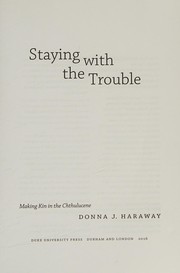
作品年表(1 本)
本站书库里署名唐娜·哈拉维的书(Open Library 上至少 10 人加过书架的才收),按首版年份排(有本站书页的用 Wikidata 记的首版年,其余用 Open Library 的);年份偶尔记成后来的版本或译本,以原书为准。全部作品见 Open Library。
- 2016Staying with the Trouble书架 23