 书单
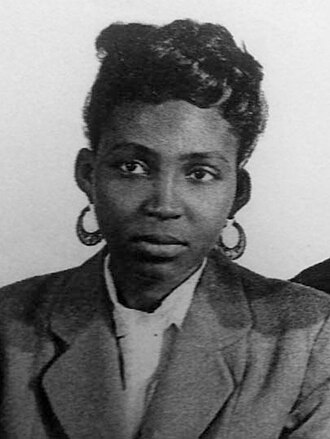
Mariama Bâ
- 生卒
- 1929 – 1981
- 国籍
- 塞内加尔
照片:作者不详,公有领域,来自维基共享资源「Mariama Bâ vers 1958 Unesco Domaine public.jpg」(经缩小)。
生平与创作
这个词条暂时没有中文维基百科条目,下面是英文维基百科的内容(英文原文):
Mariama Bâ (April 17, 1929 – August 17, 1981) was a Senegalese author and feminist. Her two French-language novels have been translated into more than a dozen languages each. Born in Dakar, Senegal, she was raised a Muslim.
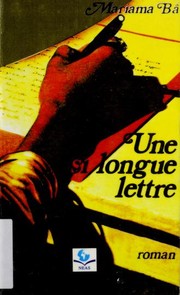
Her frustration with the fate of African women is expressed in her first novel, Une si longue lettre (1979; translated into English as So Long a Letter). In this semi-autobiographical epistolary work, Bâ depicts the sorrow and resignation of a widow who must share the work of mourning with her late husband's second, younger wife. The novel was awarded the first Noma Award for Publishing in Africa in 1980.
Biography
Early years and education
Bâ was born in Dakar, Senegal, in 1929, into an educated and affluent Senegalese family of Lebu ethnicity. Her mother, Fatou Kiné Gaye, died when Mariama was 4 years of age. Her father, Amadou Bâ, founded the separatist African Autonomist Movement in 1946. He was the Minister of Health for Senegal in 1956 while her paternal grandfather, Sarakholé, worked as an interpreter for French officials during the French occupation regime. After her mother's death, Bâ was primarily raised by her maternal grandparents, who emphasized conservative Muslim values.
Bâ's father enrolled her in a French-language Koranic school located in Dakar to study alongside Berthe Maubert, a woman after whom the school was later renamed. Bâ studied the Koran in school with a well-known Islamic cleric in Dakar. At age 14, she gained admission to École Normale de Rufisque, a French teacher-training school, by scoring the highest in a competition held in all of French West Africa. Her grandparents were hesitant to allow her to pursue further education due to their belief that women in Senegal did not need to be educated. At the school, Bâ was taught by Germaine Le Goff. She described the transformative power of education in her later writing and advocacy.
In 1947, when she was 18 years old, Bâ graduated and began her teaching career. Her first experience was teaching at the School of Medicine in Dakar. Bâ went on to teach at multiple institutions for 12 years. She later left teaching and became a Senegalese Regional Inspectorate of Teaching due to her deteriorating health.
Personal life and later years
Bâ was married to Obèye Diop, a member of the Senegalese parliament. Their marriage, which produced nine children, eventually ended in divorce. Bâ's experiences within this union deeply influenced her writing, particularly her critique of gender roles and marital expectations in postcolonial Senegal. Her observations of the emotional and social impact of polygamy and unequal power within marriage provided the foundation for her first novel, So Long a Letter, which portrays the struggles of educated women navigating tradition and modernity. Her personal experiences, including marriage, motherhood, and divorce, informed her nuanced understanding of the social and emotional challenges that women faced.
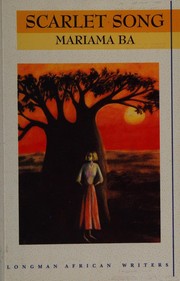
Bâ died of lung cancer on August 17, 1981. Her death came before the publication of her second novel, Un Chant écarlate (Scarlet Song). This novel explores the relationship between two individuals from different ethnic and cultural backgrounds, who struggle with the pressures of their tradition, societal expectations, and prejudice. Through this work, Bâ continued her critique of patriarchal and cultural constraints, symbolising the hardships people, especially women, faced between modernity and tradition in postcolonial African society.
Work
So Long a Letter
In 1980, Une si longue lettre, translated as So Long a Letter, was awarded the first Noma Award for Publishing in Africa. In this book, Bâ recognized the immense contributions African women have made and continue to make in the building of their societies. The book was internationally successful. It was particularly successful in Senegal, which had only recently become independent from French colonial rule.
The book is written in the form of a letter, or a diary, from a widow, Ramatoulaye, to her childhood girlfriend, Aissatou, who lives in the United States. Nafissatou Niang Diallo (1941–1982), who started her works in the 1970s, was a mirror for Mariama Bâ, whose leading role was a strong-minded character. Moreover, she found support, friendship and values from female confidence, unity and harmony. The discriminatory use of power forces Ramatoulaye to deal with its consequences. This discriminatory power is what is in the novel a form of male domination coming from society's construction of a patriarchal ideology. Because Ramatoulaye is a woman, she has little power in determining her own destiny, but Aissatou rejects this notion and chooses her own life without being denied a life of her own by her husband Mawdo.
So Long a Letter is often identified as an early feminist text, resonating with themes that women navigate globally. This is reflected through the characterization of Ramatoulaye, who undergoes a personal transformation shaped by the broader movement of women's liberation struggles. Some scholars draw on historical and contemporary contexts to interpret key events within the novel's timeline. Published in 1970s Senegal, the novel is situated within a period marked by significant socio-political developments, including the passage of the Family Code—which expanded women's rights but faced religious resistance—the resurgence of Islamic fundamentalism, and the pressures of rapid Westernization and modernization. Beyond this immediate context, Bâ highlights the social realities of Senegalese women in the 1970s, addressing themes such as polygamy, motherhood, and the challenging of stereotypes.
以上文字摘自英文维基百科「Mariama Bâ」(有删节,去掉了参考文献等尾部小节),按 CC BY-SA 4.0 使用,作者为维基百科的各位编者。
资料卡
- 出生
- 1929 年 4 月 17 日
- 出生地
- 达喀尔
- 逝世
- 1981 年 8 月 17 日
- 逝世地
- 达喀尔
- 职业
- 作家、小说家、女权活动家、教师(1947)、政治活动者
- 使用语言
- 法语
- 就读学校
- École normale de Rufisque(1943)
- 配偶
- Obèye Diop
- 代表作
- Une si longue lettre.、Un chant écarlate
资料卡来自 Wikidata Q464389(CC0),众包数据,个别字段可能不全。
本站收录的作品(2)
作品改编
同时代的塞内加尔作家
Open Library 上的全部作品
正在读取…