书单
百科
这个词条暂时没有中文维基百科条目,下面是英文维基百科的内容(英文原文):
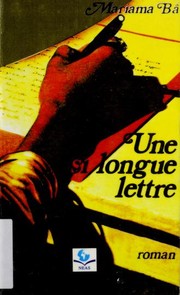
So Long a Letter (French: Une si longue lettre) is a semi-autobiographical epistolary novel originally written in French by the Senegalese writer Mariama Bâ. It was her first novel. Its theme is the condition of women in Western African society.
As the novel begins, Ramatoulaye Fall is beginning a letter to her lifelong friend Aissatou Bâ. The occasion for writing is Ramatoulaye's recent widowhood. As she gives her friend the details of her husband's death, she recounts the major events in their lives.
The novel is often used in literature classes focusing on women's roles in post-colonial Africa. It won the first Noma Award for Publishing in Africa in 1980.
Plot summary
So Long a Letter is written as a series of entries in a long letter from the main character Ramatoulaye Fall to her best friend Aissatou following the sudden death from heart attack of Ramatoulaye's husband Modou Fall. The letter is written while Ramatoulaye is going through 'Iddah, a four month and ten day mourning process that widow of the Muslim Senegalese culture must follow. Ramatoulaye begins by recalling and describing the emotions that flooded her during the first few days after her husband's death and speaks in detail about how he lost his life. She transitions the tone and time by discussing the life she had with her husband, from the beginning of their relationship to his betrayal of a thirty year marriage by secretly marrying his daughter's school best friend to the life he had with his second wife. Throughout this short and compelling novel, Ramatoulaye details to Aissatou, who experienced a similar but different marital situation, how she emotionally dealt with and was changed by his betrayal, his death, and by being a single mother of many.
Analysis
The letter covered many topics such as polygamy, Senegalese class hierarchy, and religion, so it was difficult to place the genre of the book. Some called it a novel while others referred to Bâ's work as a letter.
Author and professor Uzoma Esonwanne interpreted the book as a challenge to colonialism while also acknowledging colonial practices. The character Ramatoulaye's insistence on being heard and providing inside commentary on the downside of polygamy, made Esonwanne question the part gender plays in this new era of the world.
Author and Yale professor Christopher L. Miller found Bâ's So Long a Letter more journal-like, in that it held her written letter with no one answering back.
Literary scholar Abiola Irele called it "the most deeply felt presentation of the female condition in African fiction".
Reception
The letter was used in the western hemisphere to study how strong bonds women formed influenced them. Ramatoulaye and Aissatou's friendship helped them break away from social norms, gaining social and political respect without a male.
The letter was also used to understand women's views on polygamy. Some women in Senegal saw fault in polygamy and fought against it.
Aissatou leaves her husband for practising polygamy and Ramatoulaye says no to marriage to another man.
The author was praised for her involvement in expanding African literature as well as feminism through personal accounts of her life.
Themes
So Long a Letter deals with multiple themes, which includes the life of women in Senegal during the 1970s, family and community life, Islam and polygamy, and death rituals.
The letters explore the tensions between Ramatoulaye's feminist values (developed largely as a consequence of her French colonial education) and her religion, which is often used a means of justifying the mistreatment of women like herself. However, Ramatoulaye attributes the mistreatment of women by men to the misinterpretation and misappropriation of Islamic scriptures, rather than suggesting that they are inherently sexist.
Characters
Ramatoulaye: The widowed Senegalese woman who, after 30 years of marriage and 12 children, narrates the story of her psychological abandonment by her husband, who marries a second wife. Ramatoulaye physically distances herself from Modou who dies four years after this second marriage. Ramatoulaye turns down two other marriage proposals, including that of Daouda Dieng. She is well educated and teaches at a university. After her husband's second marriage, she must work a lot, since her husband cuts off family ties and financial support.
Modou: The husband of Ramatoulaye and of Binetou. He was well educated, handsome, and charming. For his own selfish desires, he marries Binetou and cuts ties with his 12 children and first wife, Ramatoulaye. He later dies of a heart attack.
Mawdo: Ex-husband of Aïssatou. After being pressured by his mother Nabou, Mawdo follows tradition of polygamy and marries a young girl also named Nabou, who is his first cousin. After his marriage with Nabou, Aïssatou (his first wife) divorces him. He is Modou's long-time friend and a doctor.
Aïssatou: Ramatoulaye's best friend, to whom the letters are addressed. She divorced Mawdo because she did not believe in polygamy; she left him a letter explaining her actions and never returned. She takes care of herself well and bought Ramatoulaye a car, which made life much easier for Ramatoulaye. Her divorce is symbolic because it represents a new life for her. She later leaves Senegal with her four sons and moves to the United States to start over. She succeeds in making a new life for herself.
Aïssatou: Ramatoulaye and Modou's daughter, who is named after her best friend. She enters into a relationship with a boy named Ibrahim Sall, whom she calls "Iba," a poor student who impregnates her. They claim to love each other and plan their marriage after their studies. Since she is still a high school student, Iba's mother will take care of the child until she graduates.
Ibrahima Sall: A student of law who impregnates Aissatou, Ramatoulaye's daughter. He is tall, respectful, well-dressed, and punctual. Aïssatou is his first and possibly only love, he says. He will marry Aïssatou if Ramatoulaye will allow it.
以上文字摘自英文维基百科「So Long a Letter」(有删节,去掉了参考文献等尾部小节),按 CC BY-SA 4.0 使用,作者为维基百科的各位编者。
资料卡
- 原题
- Une si longue lettre.
- 原作语言
- 法语
- 首次出版
- 1980 年 1 月 1 日
- 作品形式
- 长篇小说
- 体裁
- 书信体小说
- 首版出版社
- 海尼曼出版社
- 故事发生地
- 塞内加尔
资料卡来自 Wikidata Q7549373(CC0),众包数据,个别字段可能不全。
改编作品
电影1
名单来自 Wikidata(CC0):只列条目里写明「改编自 / 取材于」这本书的作品,不按名字猜;众包数据,可能不全。