 书单
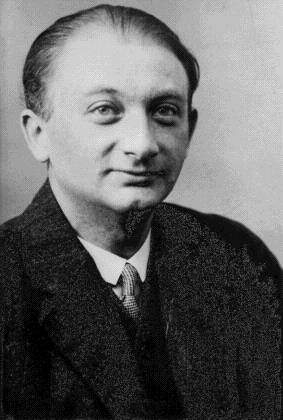
约瑟夫·罗特
- 生卒
- 1894 – 1939
- 国籍
- 奥地利、内莱塔尼亚
- 外文名
- Joseph Roth
照片:s/a,公有领域,来自维基共享资源「Joseph Roth (1926).jpg」(经缩小)。
生平与创作
约瑟夫·罗特(Joseph Roth,1894年9月2日—1939年5月27日),奥地利作家,政治记者。出生于东加利西亚地区的布罗德。
以上文字摘自维基百科「约瑟夫·罗特」(去掉了参考文献等尾部小节),按 CC BY-SA 4.0 使用,作者为维基百科的各位编者。
中文维基百科的条目比较短,下面附上英文维基百科的内容(英文原文):
Moses Joseph Roth (Austrian German: [roːt]; 2 September 1894 – 27 May 1939) was an Austro-Hungarian journalist and novelist, best known for his family saga Radetzky March (1932), about the decline and fall of the Austro-Hungarian Empire, his novel of Jewish life Job (1930) and his seminal essay "Juden auf Wanderschaft" (1927; translated into English as The Wandering Jews), a fragmented account of the Jewish migrations from eastern to western Europe in the aftermath of World War I and the Russian Revolution. In the 21st century, publications in English of Radetzky March and of collections of his journalism from Berlin and Paris created a revival of interest in Roth.
Biography
Joseph Roth was born into a Jewish family and grew up in Brody (currently in Ukraine), a small town near Lemberg (now Lviv, Ukraine) in East Galicia, in the easternmost reaches of what was then the Austro-Hungarian empire. Jewish culture played an important role in the life of the town, which had a large Jewish population. Roth grew up with his mother and her relatives; he never saw his father, who had disappeared before he was born.
After secondary school, Joseph Roth moved to Lemberg to begin his university studies in 1913, before transferring to the University of Vienna in 1914 to study philosophy and German literature. In 1916, Roth broke off his university studies and volunteered to serve in the Austro-Hungarian Army on the Eastern Front, "though possibly only as an army journalist or censor". This experience had a major and long-lasting influence on his life. So, too, did the collapse in 1918 of the Habsburg Empire, which marked the beginning of a pronounced sense of "homelessness" that was to feature regularly in his work. As he wrote: "My strongest experience was the War and the destruction of my fatherland, the only one I ever had, the Dual Monarchy of Austria-Hungary."
Roth married Friederike (Friedl) Reichler in 1922. In the late 1920s, his wife became schizophrenic, which threw Roth into a deep crisis, both emotionally and financially. She lived for years in a sanatorium and was later murdered in the Nazis' Aktion T4 programme.
In 1929 he met Andrea Manga Bell, born in Hamburg and unhappily married to Alexandre Douala Manga Bell, Prince of Douala in Cameroon. Her husband had returned to Cameroon while she and their children stayed in Europe. When Roth met her, she was editor of the Ullstein magazine Gebrauchsgraphik.
Being a prominent liberal Jewish journalist, Roth left Germany when Adolf Hitler became Reich Chancellor on 30 January 1933. Andrea Manga Bell accompanied him with her children. He spent most of the next six years in Paris, a city he loved. His essays written in France display a delight in the city and its culture.
Shortly after Hitler's rise to power, in February 1933, Roth wrote in a prophetic letter to his friend, the Austrian writer Stefan Zweig:
You will have realized by now that we are drifting towards great catastrophes. Apart from the private—our literary and financial existence is destroyed—it all leads to a new war. I won't bet a penny on our lives. They have succeeded in establishing a reign of barbarity. Do not fool yourself. Hell reigns.
The relationship with Andrea Manga Bell failed due to financial problems and Roth's jealousy. From 1936 to 1938, Roth had a romantic relationship with Irmgard Keun. They worked together, traveling to Paris, Wilna, Lemberg, Warsaw, Vienna, Salzburg, Brussels and Amsterdam.
Without denying his Jewish origins, Roth considered his relationship to Catholicism very important. In the final years of his life, he may have converted: Michael Hofmann states in the preface to the collection of essays The White Cities (also published as Report from a Parisian Paradise) that Roth "was said to have had two funerals, one Jewish, one Catholic".
以上文字摘自英文维基百科「Joseph Roth」(有删节,去掉了参考文献等尾部小节),按 CC BY-SA 4.0 使用,作者为维基百科的各位编者。
资料卡
- 母语名
- Joseph Roth
- 本名
- Moses Joseph Roth
- 出生
- 1894 年 9 月 2 日
- 出生地
- 布罗德
- 逝世
- 1939 年 5 月 27 日
- 逝世地
- 巴黎
- 职业
- 作家、新闻工作者、剧作家
- 使用语言
- 德语
- 写作语言
- 德语
- 就读学校
- 维也纳大学
- 创作体裁
- 讽刺
- 代表作
- Radetzkymarsch、Hiob、Die Kapuzinergruft
资料卡来自 Wikidata Q78509(CC0),众包数据,个别字段可能不全。
本站收录的作品(4)
作品年表(7 本)
本站书库里署名约瑟夫·罗特的书(Open Library 上至少 10 人加过书架的才收),其中 1 本记的年份比作者去世晚 50 年以上或者早于他出生(多半是后世的版本、译本或占位年份),不列年份,按首版年份排(有本站书页的用 Wikidata 记的首版年,其余用 Open Library 的);年份偶尔记成后来的版本或译本,以原书为准。全部作品见 Open Library。
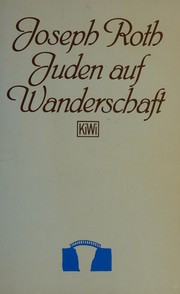
- 1927Juden auf Wanderschaft书架 10
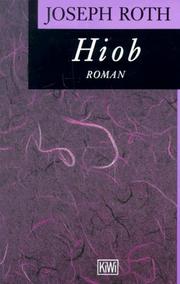
- 1930Hiob书架 15
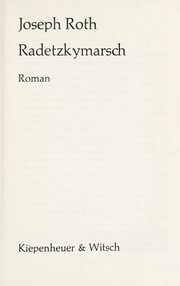
- 1932Radetzkymarsch书架 67
- 1938Die Kapuzinergruft. Roman书架 19
- 1939Die Legende vom heiligen Trinker书架 12
- 1967Das Spinnennetz. Roman书架 10
- 年份不详What I Saw书架 17