 书单
约翰·克利伦·霍姆斯
- 生卒
- 1926 – 1988
- 国籍
- 美国
- 外文名
- John Clellon Holmes
生平与创作
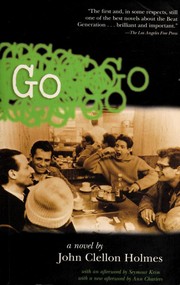
约翰·克莱伦·霍姆斯(英语:John Clellon Holmes,1926年3月12日—1988年3月30日),美国作家、诗人、教授。他与垮掉派核心人物杰克·凯鲁亚克、艾伦·金斯堡、尼尔·卡萨迪等人为好友。他在1952年以这些朋友为角色蓝本创作了小说《走》(英语: Go )。
以上文字摘自维基百科「约翰·克莱伦·霍姆斯」(去掉了参考文献等尾部小节),按 CC BY-SA 4.0 使用,作者为维基百科的各位编者。
中文维基百科的条目比较短,下面附上英文维基百科的内容(英文原文):
John Clellon Holmes (March 12, 1926 – March 30, 1988) was an American author, poet and professor, best known for his 1952 novel Go. Considered the first "Beat" novel, Go depicted events in his life with his friends Jack Kerouac, Neal Cassady and Allen Ginsberg. He was often referred to as the "quiet Beat" and was one of Kerouac's closest friends. Holmes also wrote what is considered the definitive jazz novel of the Beat Generation, The Horn.
Life and career
He was born in Holyoke, Massachusetts, to John McClellan Holmes Sr. and Elizabeth Franklin Emmons (Betty) Holmes. He had two sisters. Holmes dropped out of high school in 1942 and moved to New York City. He attended a non-degree General Studies program at Columbia University, where he honed his passion for reading and writing.
In June 1944, Holmes was drafted into the U.S. Navy. Serving for a year, he was trained as a medic and was assigned to a San Diego naval hospital that treated sailors wounded in battles in the Pacific. He spent his last six months in the navy working at St. Albans Naval Hospital in Queens, New York. While on leave in August 1944, Holmes married Marian Milliambro, a woman three years older.
At the end of the war, Holmes found his way into Columbia University literature and philosophy classes where he worked to turn himself into a professional writer. By May 1948, Holmes, who used the pen name “Clellon Holmes” to distinguish himself from another writer named John Holmes, had his first published poem in the Partisan Review. A couple of months later, Holmes met Jack Kerouac; and in Kerouac's novel On the Road Holmes appears as the character Ian MacArthur.
Holmes is credited with helping spread the term the “Beat Generation” via a November 16, 1952 article ["This is the Beat Generation," The New York Times Magazine]in which he wrote: “The origins of the word ‘beat’ are obscure, but the meaning is only too clear to most Americans. More than a mere weariness, it implies the feeling of having been used, of being raw.” In the article, Holmes attributes the term "Beat" to Kerouac, who had acquired the idea from Herbert Huncke. Holmes came to the conclusion that the values and ambitions of the Beat Generation were symbolic of something bigger, which was the inspiration for Go, published that same year.
Holmes received a substantial advance for the paperback rights of the book, half of which went to his wife Marian, who had filed for divorce on the grounds of adultery. In 1953, Holmes married Louisiana native Shirley Allen, and they remained together until Holmes's death.
Holmes never went "On the Road." He and Shirley settled in Old Saybrook, Connecticut, where they were visited by many of the Beats including, repeatedly, Kerouac. (See Barry Gifford, Jack's Book: an Oral Biography of Jack Kerouac, 1978.) He wrote of Kerouac, "Well, if love is total involvement, deep emotional clairvoyance about the other's soul, fury & hunger all intermixed, he was the only man I ever loved. He changed my life irrevocably." Though he could match them as a talker and drinker, Holmes was more an observer, appreciator, and chronicler of beat personages like Gregory Corso, Neal Cassady and Kerouac than actively one of them. He asked Allen Ginsberg for "any and all information on your poetry and your visions," saying that "I am interested in knowing also anything you may wish to tell... about Neal, [Herbert] Huncke, Lucien [Carr] in relation to you..." Ginsberg replied with an 11-page letter detailing, as completely as he could, the nature of his "divine vision".
Holmes's 1988 Representative Men, a posthumously published volume of biographical essays, includes memory pieces about Kerouac, Ginsberg, Casssady, and Nelson Algren, an appreciation of W.C. Fields and, importantly, "Gone in October," a 40-page remembrance of attending Kerouac's 1969 wake and funeral in Lowell, Massachusetts, along with Ginsberg, Corso, and Peter Orlovsky. Among the attendants: Robert Creeley, Jimmy Breslin.
以上文字摘自英文维基百科「John Clellon Holmes」(有删节,去掉了参考文献等尾部小节),按 CC BY-SA 4.0 使用,作者为维基百科的各位编者。
资料卡
- 出生
- 1926 年 3 月 12 日
- 出生地
- 马萨诸塞州
- 逝世
- 1988 年 3 月 2 日
- 逝世地
- 米德尔敦
- 职业
- 诗人、小说家、作家、大学教师
- 使用语言
- 英语
- 写作语言
- 英语
- 文学运动 / 流派
- 垮掉的一代
- 获奖
- 古根海姆学者奖
资料卡来自 Wikidata Q2706276(CC0),众包数据,个别字段可能不全。
本站收录的作品(1)
作品年表(1 本)
本站书库里署名约翰·克利伦·霍姆斯的书(Open Library 上至少 10 人加过书架的才收),按首版年份排(有本站书页的用 Wikidata 记的首版年,其余用 Open Library 的);年份偶尔记成后来的版本或译本,以原书为准。全部作品见 Open Library。
- 1952Go书架 10