 书单
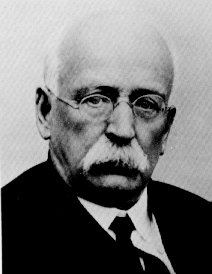
埃比尼泽·霍华德
- 生卒
- 1850 – 1928
- 国籍
- 英国
- 外文名
- Ebenezer Howard
照片:The original uploader was Marnanel at English Wikipedia.,公有领域,来自维基共享资源「Ebenezer Howard.jpg」(经缩小)。
生平与创作
埃比尼泽·霍华德 OBE(英语:Ebenezer Howard,1850年1月29日—1928年5月1日),英国城市学家、社会活动家,“田园城市”运动的创始人、现代城市规划的奠基人之一。他最为知名的著作是其1898年出版的《明日的田园城市》(Garden Cities of To-morrow)。他提出的理想主义与现实主义结合的田园城市,开创了现代意义上的城市规划,即现今的新市镇。
以上文字摘自维基百科「埃比尼泽·霍华德」(去掉了参考文献等尾部小节),按 CC BY-SA 4.0 使用,作者为维基百科的各位编者。
中文维基百科的条目比较短,下面附上英文维基百科的内容(英文原文):
Sir Ebenezer Howard (29 January 1850 – 1 May 1928) was an English urban planner and founder of the garden city movement, known for his publication To-Morrow: A Peaceful Path to Real Reform (1898), the description of a utopian city in which people live harmoniously together with nature. The publication resulted in the founding of the garden city movement, and the building of the first garden city, Letchworth Garden City, commenced in 1903.
The second true Garden City was Welwyn Garden City (1920) and the movement influenced the development of several model suburbs in other countries, such as Forest Hills Gardens designed by F. L. Olmsted Jr. in 1909, Radburn, New Jersey (1923), Pinelands, Cape Town, and the four Suburban Resettlement Program towns of the 1930s, Greenbelt, Maryland, Greenhills, Ohio, Greenbrook, New Jersey, and Greendale, Wisconsin.
Howard aimed to reduce the alienation of humans and society from nature, and hence advocated garden cities and Georgism. Howard is believed by many to be one of the great guides to the town planning movement, with many of his garden city principles being used in modern town planning.
Early life
Howard was born in Fore Street, City of London, the son of Ebenezer Howard (1817–1900), a baker, and Ann (née Tow, 1816–1900). He was sent to schools in Suffolk and Hertfordshire. Howard left school at 15 and began working as a stenographer in London. Howard subsequently had several clerical jobs, including one with Dr Parker of the City Temple.
In 1871, at the age of 21, influenced partly by a farming uncle, Howard emigrated with two friends to America. He went to Nebraska, and after his farming efforts failed, discovered he did not wish to be a farmer. He then relocated to Chicago and worked as a reporter for the courts and newspapers. Howard arrived in Chicago just after the great fire of 1871, which destroyed most of the central business district, and witnessed the regeneration of the city and the growth of its suburbs. In the US he became acquainted with, and admired, poets Walt Whitman and Ralph Waldo Emerson. Howard began to ponder ways to improve the quality of life.
Later life
By 1876, he was back in England, where he found a job with Hansard company, which produces the official verbatim record of Parliament, and he spent the rest of his life in this occupation. Howard's time in parliament exposed him to ideas about social reform, and helped inspire his ideas for the Garden City. In August 1879, he married Eliza Ann Bills. Sociologist Brett Clark describes Howard as a "humble and practical" inventor who used his spare time to create outlines of new cities. It was the social milieu of the 1800s which led Howard to consider the social problems of the time and try to find alternatives. Howard mingled with free thinkers, anarchists and socialists, whose revolutionary and reforming ideas greatly influenced him.
Howard's parents died on consecutive days in 1900, after he had published the first edition of his book, but before work had started on the first garden city: his mother died on 23 November 1900 from pneumonia and his father died on 24 November 1900 from gastritis.
Howard's wife, Eliza Ann Bills (1853–1904), died in November 1904, shortly after work on the first garden city at Letchworth had begun. Howard married again in 1907 to Edith Annie Hayward (1864–1941), who became Edith, Lady Howard when Howard was knighted in 1927, and with whom he is buried in Letchworth Cemetery.
Influences and ideas
Howard read widely, including Edward Bellamy's 1888 utopian novel, Looking Backward, and Henry George's economic treatise, Progress and Poverty, and thought much about social issues. He disliked the way modern cities were being developed and thought people should live in places that should combine the best aspects of both cities and the countryside.
以上文字摘自英文维基百科「Ebenezer Howard」(有删节,去掉了参考文献等尾部小节),按 CC BY-SA 4.0 使用,作者为维基百科的各位编者。
资料卡
- 母语名
- Ebenezer Howard
- 出生
- 1850 年 1 月 29 日
- 出生地
- Fore Street
- 逝世
- 1928 年 5 月 1 日
- 逝世地
- 韦林花园城
- 职业
- 建筑师、世界语者、城市规划师、景观建筑师
- 使用语言
- 世界语、英语
- 写作语言
- 英语
- 领域
- 城市规划、景观设计
- 代表作
- 田园城市理论、明日的田园城市、城市与乡村规划联合会
- 获奖
- 大英帝国官佐(1924)、下级勋位爵士(1927)
资料卡来自 Wikidata Q23766(CC0),众包数据,个别字段可能不全。
本站收录的作品(1)
作品年表(1 本)
本站书库里署名埃比尼泽·霍华德的书(Open Library 上至少 10 人加过书架的才收),按首版年份排(有本站书页的用 Wikidata 记的首版年,其余用 Open Library 的);年份偶尔记成后来的版本或译本,以原书为准。全部作品见 Open Library。
- 1902Garden cities of to-morrow书架 10