书单
明日的田园城市 (1898)
百科
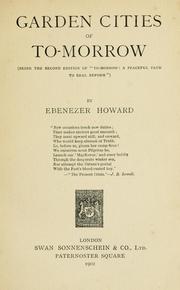
《明日的田园城市》(英语:Garden Cities of To-morrow)是英国城市规划师埃比尼泽·霍华德的一本书。该书于1898年出版时,名为《明日:一条通向真正改革的和平道路》(英语:To-morrow: A Peaceful Path to Real Reform)。1902年,它以《明日的田园城市》为题重印 。这本书引发了田园城市运动,且在城市设计领域占有重要地位。
背景
该书提出了一个没有贫民窟的城镇的愿景,享受城镇(如机会、娱乐和高工资)和乡村(如美景、新鲜空气和低租金 )的好处。霍华德用他的“三磁铁”图说明了这个理念。他的想法是针对资本主义经济体系的背景而设想的,并力求平衡个人和社区的需求。
英国有两座城镇按田园城市的构想建成,分别为莱奇沃思和韦林花园市。虽然并没有完全达到理想水平,但它们提供了一个控制城市蔓延的模型。
以上文字摘自维基百科「明日的田园城市」(去掉了参考文献等尾部小节),按 CC BY-SA 4.0 使用,作者为维基百科的各位编者。
中文维基百科的条目比较短,下面附上英文维基百科的内容(英文原文):
Garden Cities of To-morrow is a book by the British urban planner Ebenezer Howard. When it was published in 1898, the book was titled To-morrow: A Peaceful Path to Real Reform. In 1902, it was reprinted as Garden Cities of To-Morrow. The book gave rise to the garden city movement and is very important in the field of urban design.
Background
This book offered a vision of towns free of slums and enjoying the benefits of both town (such as opportunity, amusement, and high wages) and country (such as beauty, fresh air and low rents). Howard illustrated the idea with his "Three Magnets" diagram. His ideas were conceived for the context of a capitalist economic system and sought to balance individual and community needs.
Two English towns were built as garden cities, Letchworth and Welwyn. Though they did not completely measure up to the ideal, they provided a model for controlling urban sprawl.
以上文字摘自英文维基百科「Garden Cities of To-morrow」(去掉了参考文献等尾部小节),按 CC BY-SA 4.0 使用,作者为维基百科的各位编者。
资料卡
- 原题
- To-morrow: A Peaceful Path to Real Reform 等 2 项
- 原作语言
- 英语
- 首次出版
- 1898 年
- 主题
- 田园城市理论
资料卡来自 Wikidata Q5522190(CC0),众包数据,个别字段可能不全。