 书单
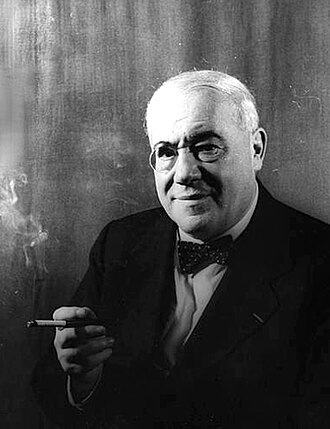
莫尔纳·费伦茨
- 生卒
- 1878 – 1952
- 国籍
- 匈牙利
- 外文名
- Ferenc Molnár
照片:Carl Van Vechten,公有领域,来自维基共享资源「Ferenc Molnár 1941.jpg」(经缩小)。
生平与创作
莫尔纳·费伦茨(1878年1月12日—1952年4月1日)是匈牙利作家、舞台导演、剧作家和诗人。莫尔纳·费伦茨的父母有德国犹太人血统。第二次世界大战期间,他为了逃避纳粹当局对犹太人的迫害而移民美国,后来加入美国国籍。他最终在纽约去世。
以上文字摘自维基百科「莫尔纳·费伦茨」(去掉了参考文献等尾部小节),按 CC BY-SA 4.0 使用,作者为维基百科的各位编者。
中文维基百科的条目比较短,下面附上英文维基百科的内容(英文原文):
Ferenc Molnár (US: FERR-ents MOHL-nar, -ənts -, - MAWL-, Hungarian: [ˈfɛrɛnt͡s ˈmolnaːr]; born Ferenc Neumann; January 12, 1878 – April 1, 1952), often anglicized as Franz Molnar, was a Hungarian-born author, stage director, dramatist, and poet. He is widely regarded as Hungary's most celebrated and controversial playwright.
His primary aim through his writing was to entertain by transforming his personal experiences into literary works of art. While he never connected to any one literary movement, he did use the precepts of naturalism, neo-romanticism, expressionism, and Freudian psychoanalytic theories, so long as they suited his desires. According to Clara Györgyey, “By fusing the realistic narrative and stage tradition of Hungary with Western influences into a cosmopolitan amalgam, Molnár emerged as a versatile artist whose style was uniquely his own."
As a novelist, Molnár is perhaps remembered best for The Paul Street Boys, the story of two rival gangs of youths in Budapest. It has been translated into 42 languages and adapted for the stage and film. It has been considered a masterpiece by many.
However, it was as a playwright that he made his most significant contribution and how he is best known internationally. For Györgyey, "In his graceful, whimsical, sophisticated drawing-room comedies, he provided a felicitous synthesis of naturalism and fantasy, realism and romanticism, cynicism, and sentimentality, the profane and the sublime." Of his many plays, The Devil, Liliom, The Swan, The Guardsman, and The Play's the Thing endure as classics. His influences included luminaries such as Oscar Wilde, George Bernard Shaw, and Gerhart Hauptmann.
Molnár's plays continue to be performed world-wide. His national and international fame has inspired many Hungarian playwrights, including Elemér Boross, László Fodor, Lajos Bíró, László Bús-Fekete, Ernő Vajda, Attila Orbók, and Imre Földes, among others.
He immigrated to the United States to escape the persecution of Hungarian Jews during World War II and later adopted American citizenship. He died in New York City.
Life
Early years
Ferenc Molnár was born in Budapest on January 12, 1878, to Dr. Mór Neumann, a prosperous and well-regarded gastroenterologist, and Jozefa Wallfisch, both of German-Jewish heritage. The home in which he lived was opulent but gloomy. Even though he was born into wealth, "It was not a friendly atmosphere for the lively and precocious Ferenc, who constantly had to be warned to keep quiet." Just a year before his birth, his parents' firstborn son and Molnár's brother, László, died. His mother was frail and frequently bedridden. Illness spread throughout the rooms of his house, and young Ferenc was constantly being told to keep quiet. His mother died in 1898 when Ferenc was 20 years of age.
In 1887, Molnár entered the Lónyay Utcai Református Gimnázium, a secondary school (high school) located in Budapest, Hungary, where he was inspired to learn foreign languages and where his talent as a writer began to emerge. At fourteen, he started a periodical, Haladás ("Progress"), which sold only four copies, and a secondary publication, Életképek ("Panorama"), selling only 20 copies. His first dramatic work was A Kék Barlang (The Blue Cave), a controversial play written, directed, and staged in the basement of a friend's house.
Upon completing secondary school, Molnár studied law at the University of Budapest in 1895. Shortly after, he was sent to Geneva by his father to continue his studies at the University of Geneva. While living in Geneva, he began to write frequently, often sending his work to various papers. Molnár also wrote the short novella Magdolna during this time.
He also traveled to Paris to see some of the chic new plays. "The fashionable boulevard comedies of Bernstein, Bataille, Capus, and others left a deep impression on him and later greatly influenced his dramatic style."
以上文字摘自英文维基百科「Ferenc Molnár」(有删节,去掉了参考文献等尾部小节),按 CC BY-SA 4.0 使用,作者为维基百科的各位编者。
资料卡
- 母语名
- Molnár Ferenc
- 本名
- Neumann Ferenc
- 出生
- 1878 年 1 月 12 日
- 出生地
- 布达佩斯
- 逝世
- 1952 年 4 月 1 日
- 逝世地
- 纽约
- 职业
- 作家、新闻工作者、剧作家、编剧、儿童文学作家
- 使用语言
- 匈牙利语
- 写作语言
- 匈牙利语
- 就读学校
- 日内瓦大学(1897)
- 领域
- 文学、戏剧、电影编剧、新闻学
- 配偶
- Sári Fedák(1922)、Margit Vészi(1906)、Lili Darvas(1926)
- 代表作
- 帕尔街的男孩们
资料卡来自 Wikidata Q296809(CC0),众包数据,个别字段可能不全。
本站收录的作品(1)
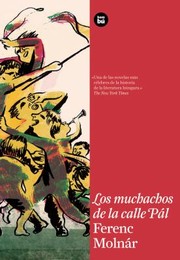
作品年表(1 本)
本站书库里署名莫尔纳·费伦茨的书(Open Library 上至少 10 人加过书架的才收),按首版年份排(有本站书页的用 Wikidata 记的首版年,其余用 Open Library 的);年份偶尔记成后来的版本或译本,以原书为准。全部作品见 Open Library。
- 1906帕尔街的男孩们A Pál utczai fiúk书架 23