 书单
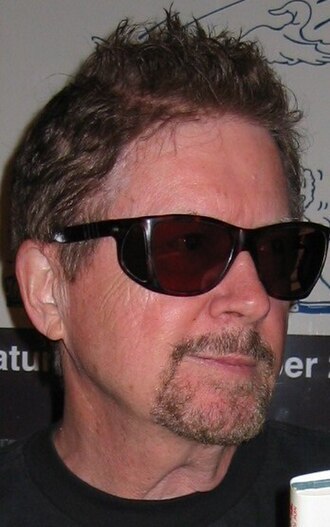
汤姆·罗宾斯
- 生卒
- 1932 – 2025
- 国籍
- 美国
- 外文名
- Tom Robbins
照片:48states (talk) (Uploads),公有领域,来自维基共享资源「Tom Robbins (cropped).jpg」(经缩小)。
生平与创作
这个词条暂时没有中文维基百科条目,下面是英文维基百科的内容(英文原文):
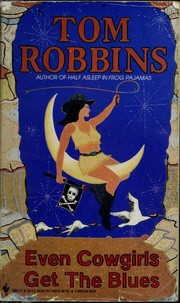
Thomas Eugene Robbins (July 22, 1932 – February 9, 2025) was an American novelist. His most notable works are "seriocomedies" (also known as "comedy dramas"). His 1976 novel Even Cowgirls Get the Blues was adapted into the 1993 film version by Gus Van Sant. His last work, published in 2014, was Tibetan Peach Pie, a self-declared "un-memoir". From 1970, Robbins lived in La Conner, Washington, where he wrote nine of his books.
Early life
Thomas Eugene Robbins was born on July 22, 1932, in Blowing Rock, North Carolina, to George Thomas Robbins and Katherine Belle Robinson. Both of his grandfathers were Southern Baptist preachers. The Robbins family lived in Blowing Rock before moving to Warsaw, Virginia, when the author was still a young boy. In adulthood, Robbins described his young self as being a "hillbilly".
Robbins attended Warsaw High School (class of 1949) and Hargrave Military Academy in Chatham, Virginia, where he won the Senior Essay Medal. The next year he enrolled at Washington and Lee University in Lexington, Virginia, to major in journalism, leaving at the end of his sophomore year after being disciplined by his fraternity for bad behavior and failing to earn a letter in basketball.
In 1953, he enlisted in the U.S. Air Force after receiving his draft notice, spending a year as a meteorologist in Korea, followed by two years in the Special Weather Intelligence unit of the Strategic Air Command in Nebraska. He was discharged in 1957 and returned to Richmond, Virginia, where his poetry readings at the Rhinoceros Coffee House gained him a reputation in the local bohemian scene.
Early media work
In late 1957, Robbins enrolled at Richmond Professional Institute (RPI), a school of art, drama, and music, which later became Virginia Commonwealth University. He served as an editor and columnist for the college newspaper, Proscript, from 1958 to 1959. He also worked nights on the sports desk of the daily Richmond Times-Dispatch. After graduating with honors from RPI in 1959 and indulging in some hitchhiking, Robbins joined the staff of the Times-Dispatch as a copy editor.
In 1962, Robbins moved to Seattle to seek an M.A. at the Far East Institute of the University of Washington. During the next five years in Seattle (minus a year spent in New York City researching a book on Jackson Pollock) he worked for the Seattle Times as an art critic. In 1965, he wrote a column on the arts for Seattle Magazine as well as occasionally for Art in America and Artforum. Also during this time, he hosted a weekly alternative radio show, Notes from the Underground, at non-commercial KRAB-FM, Seattle. It was in 1967, while writing a review of the rock band The Doors, that Robbins said he found his literary voice. While working on his first novel, Robbins worked the weekend copy desk of the Seattle Post-Intelligencer. Robbins would remain in Seattle, on and off, for the following forty years.
Writing career
In 1966, Robbins was contacted by Doubleday's West Coast editor, Luthor Nichols. Nichols asked Robbins about writing a book on Northwest art. Instead Robbins told Nichols he wanted to write a novel and pitched the idea of what was to become Another Roadside Attraction. In 1967, Robbins moved to South Bend, Washington, where he wrote his first novel. In 1970, Robbins moved to La Conner, Washington, and it was at his home on Second Street that he subsequently authored nine books (although, in the late 1990s, he spent two years living on the Swinomish Indian reservation).
In the 1980s and early 1990s, Robbins regularly published articles and essays in Esquire magazine, and also contributed to Playboy, The New York Times, and GQ.
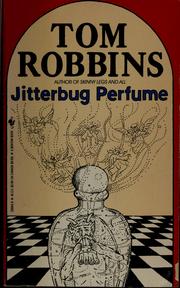
Robbins's 1982 contract with editor Alan Rinzler stipulated that he would accompany Robbins on three holiday trips to resorts Robbins would choose where he could discuss the work-in-progress novel. Rinzler later discovered it was Jitterbug Perfume. He later wrote this on the topic of editing for Robbins:
Tom would read out loud from his work in progress, and I would comment. Just a few pages at a time. He was a real southern gentleman, and welcomed intellectual discourse about his theme, characters, and intentions, from the inside. He took the process of conception, research, trial and error, moving things around, changing voices and pitch very seriously, wrote slowly and carefully, revised constantly, developing, refining and evolving this novel over the course of about two years.Michael Dare described Robbins's writing style: "When he starts a novel, it works like this. First he writes a sentence. Then he rewrites it again and again, examining each word, making sure of its perfection, finely honing each phrase until it reverberates with the subtle texture of the infinite. Sometimes it takes hours. Sometimes an entire day is devoted to one sentence, which gets marked on and expanded upon in every possible direction until he is satisfied. Then, and only then, does he add a period". When Robbins was asked to explain his "gift" for storytelling in 2002, he replied:
I'm descended from a long line of preachers and policemen. Now, it's common knowledge that cops are congenital liars, and evangelists spend their lives telling fantastic tales in such a way as to convince otherwise rational people that they're factual. So, I guess I come by my narrative inclinations naturally.
Over the course of his writing career, Robbins delivered readings on four continents, in addition to performances he gave at festivals from Seattle to San Miguel de Allende. Robbins also read at Bumbershoot in 2014.
Recognition
In 1997, Robbins won the Bumbershoot Golden Umbrella Award for Lifetime Achievement in the arts that is presented annually by the Bumbershoot arts festival in Seattle. In 2000, Robbins was named one of the 100 Best Writers of the 20th Century by Writer's Digest magazine, while the legendary Italian critic Fernanda Pivano called Robbins "the most dangerous writer in the world".
以上文字摘自英文维基百科「Tom Robbins」(有删节,去掉了参考文献等尾部小节),按 CC BY-SA 4.0 使用,作者为维基百科的各位编者。
资料卡
- 母语名
- Tom Robbins
- 本名
- Thomas Eugene Robbins
- 出生
- 1932 年 7 月 22 日
- 出生地
- 布洛英罗克 (北卡罗莱纳州)
- 逝世
- 2025 年 2 月 9 日
- 逝世地
- La Conner
- 职业
- 作家、小说家、新闻工作者、传记作家、自传作者
- 使用语言
- 英语
- 写作语言
- 美国英语
- 就读学校
- 弗吉尼亚联邦大学、华盛顿大学
- 文学运动 / 流派
- 后现代主义
资料卡来自 Wikidata Q452404(CC0),众包数据,个别字段可能不全。
本站收录的作品(8)
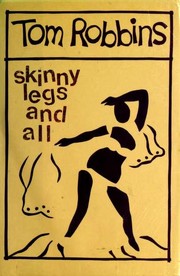
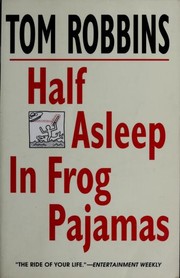
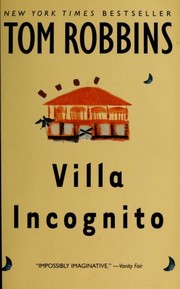
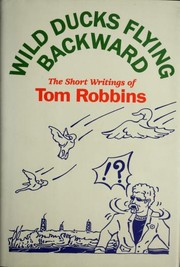
作品年表(11 本)
本站书库里署名汤姆·罗宾斯的书(Open Library 上至少 10 人加过书架的才收),按首版年份排(有本站书页的用 Wikidata 记的首版年,其余用 Open Library 的);年份偶尔记成后来的版本或译本,以原书为准。全部作品见 Open Library。
- 1971Another roadside attraction书架 67
- 1976Even Cowgirls Get the Blues书架 69
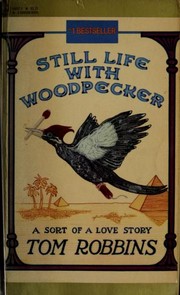
- 1980Still Life with Woodpecker书架 99
- 1984Jitterbug Perfume书架 110
- 1990Skinny Legs and All书架 105
- 1994Half asleep in frog pajamas书架 20
- 2000Fierce Invalids Home From Hot Climates书架 21
- 2003Villa Incognito书架 19
- 2005Wild ducks flying backward书架 16
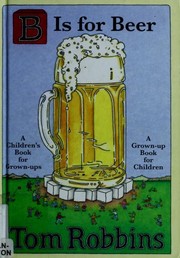
- 2009B is for beer书架 14
- 2014Tibetan Peach Pie A True Account Of An Imaginative Life书架 13