 书单
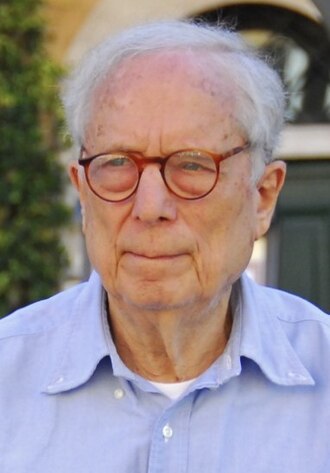
罗伯特·文丘里
- 生卒
- 1925 – 2018
- 国籍
- 美国
- 外文名
- Robert Venturi
照片:todd sheridan from New York, United States,CC BY-SA 2.0,来自维基共享资源「Robert Venturi 2008 Rome (cropped).jpg」(经缩小)。
生平与创作
小罗伯特·查尔斯·文丘里(英语:Robert Charles Venturi, Jr.,1925年6月25日—2018年9月18日),生于美国费城,美国建筑家,1991年普立兹克奖得主。他是文丘里-斯考特·布朗公司的创办人。配偶是建筑师丹尼丝·斯科特·布朗。
他曾在大学时代就挑战密斯·凡德勒的“少就是多”(“less is more”)的原则,提出“少则厌烦”(“less is a bore”)的看法,主张用历史建筑因素和美国的通俗文化来赋予现代建筑以审美性和娱乐性,成为“后现代主义建筑”的重要先驱。
罗伯特·文丘里于1964年为母亲于费城建造了一座住宅(Vanna Venturi House),整个建筑布满种种不同以往的奇特设计,住宅后来被认为是第一幢“后现代主义建筑”。
以上文字摘自维基百科「罗伯特·文丘里」(去掉了参考文献等尾部小节),按 CC BY-SA 4.0 使用,作者为维基百科的各位编者。
中文维基百科的条目比较短,下面附上英文维基百科的内容(英文原文):
Robert Charles Venturi Jr. (June 25, 1925 – September 18, 2018) was an American architect, founding principal of the firm Venturi, Scott Brown and Associates.
Together with his wife and partner, Denise Scott Brown, he helped shape the way that architects, planners and students experience and think about architecture and the built environment. Their buildings, planning, theoretical writings, and teaching have also contributed to the expansion of discourse about architecture.
Venturi was awarded the Pritzker Prize in Architecture in 1991; the prize was awarded to him alone, despite a request to include his equal partner, Scott Brown. Subsequently, a group of women architects attempted to get her name added retroactively to the prize, but the Pritzker Prize jury declined to do so. Venturi coined the maxim "Less is a bore", a postmodern antidote to Mies van der Rohe's famous modernist dictum "Less is more". Venturi lived in Philadelphia with Denise Scott Brown. He is the father of James Venturi, founder and principal of ReThink Studio.
Early life and education
Venturi was born in Philadelphia to Robert Venturi Sr. and Vanna (née Luizi) Venturi, and was raised as a Quaker. Venturi attended school at the Episcopal Academy in Merion, Pennsylvania. He graduated summa cum laude from Princeton University in 1947 where he was a member-elect of Phi Beta Kappa and won the D'Amato Prize in Architecture. He received his M.F.A. from Princeton in 1950. The educational program at Princeton under Professor Jean Labatut, who offered provocative design studios within a Beaux-Arts pedagogical framework, was a key factor in Venturi's development of an approach to architectural theory and design that drew from architectural history and commercial architecture in analytical, as opposed to stylistic, terms. In 1951 he briefly worked under Eero Saarinen in Bloomfield Hills, Michigan, and later for Louis Kahn in Philadelphia. He was awarded the Rome Prize Fellowship at the American Academy in Rome in 1954, where he studied and toured Europe for two years.
From 1959 to 1967, Venturi held teaching positions at the University of Pennsylvania, where he served as Kahn's teaching assistant, an instructor, and later, as associate professor. It was there, in 1960, that he met fellow faculty member, architect and planner Denise Scott Brown. Venturi taught later at the Yale School of Architecture and was a visiting lecturer with Scott Brown in 2003 at the Graduate School of Design at Harvard University.
Career
A controversial critic of what he saw as the blithely functionalist and symbolically vacuous architecture of corporate modernism during the 1950s, Venturi was one of the first architects to question some of the premises of the Modern Movement. He published his "gentle manifesto", Complexity and Contradiction in Architecture in 1966; in its introduction, Vincent Scully called it "probably the most important writing on the making of architecture since Le Corbusier's Vers Une Architecture of 1923." The work was derived from course lectures at the University of Pennsylvania, and Venturi received a grant from the Graham Foundation in 1965 to aid in its completion. The book demonstrated, through countless examples, an approach to understanding architectural composition and complexity, and the resulting richness and interest. Citing vernacular as well as high-style sources, Venturi drew new lessons from the buildings of architects familiar (Michelangelo, Alvar Aalto) and, at the time, forgotten (Frank Furness, Edwin Lutyens). He made a case for "the difficult whole" rather than the diagrammatic forms popular at the time, and included examples — both built and unrealized — of his work to demonstrate the possible application of such techniques. The book has been published in 18 languages to date.
以上文字摘自英文维基百科「Robert Venturi」(有删节,去掉了参考文献等尾部小节),按 CC BY-SA 4.0 使用,作者为维基百科的各位编者。
资料卡
- 母语名
- Robert Venturi
- 本名
- Robert Charles Venturi
- 出生
- 1925 年 6 月 25 日
- 出生地
- 费城
- 逝世
- 2018 年 9 月 18 日
- 逝世地
- 费城
- 职业
- 建筑师、摄影师、大学教师
- 使用语言
- 英语
- 就读学校
- 普林斯顿大学建筑学院、主教学院、罗马美国学院
- 文学运动 / 流派
- 后现代主义建筑、后现代主义
- 领域
- 建筑、后现代主义建筑
- 所属团体
- 美国哲学会、美国艺术暨文学学会、欧洲科学与艺术院、美国文理科学院、ΦΒΚ荣誉学会 等 8 项,另有 2 项只有外文名
- 配偶
- 丹尼丝·斯科特·布朗(1967)
- 代表作
- 文丘里母亲住宅
- 获奖
- 普利兹克奖(1991)、文森特·斯库利奖、罗马奖、国家艺术奖章、美国建筑师学会金奖(2016)、美国建筑师学会荣誉会士;另有 4 项只有外文名
资料卡来自 Wikidata Q212312(CC0),众包数据,个别字段可能不全。
本站收录的作品(1)
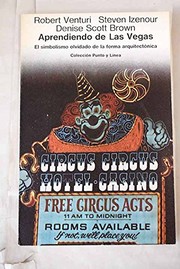
作品年表(3 本)
本站书库里署名罗伯特·文丘里的书(Open Library 上至少 10 人加过书架的才收),按首版年份排(有本站书页的用 Wikidata 记的首版年,其余用 Open Library 的);年份偶尔记成后来的版本或译本,以原书为准。全部作品见 Open Library。
- 1966Complexity and contradiction in architecture书架 54
- 1972向拉斯维加斯学习Learning from Las Vegas书架 98
- 2002Robert Venturi书架 10