 书单
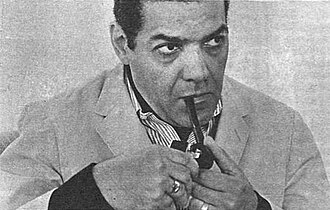
George Russell
- 生卒
- 1923 – 2009
- 国籍
- 美国
照片:作者不详,公有领域,来自维基共享资源「George Russell the jazz musician.jpg」(经缩小)。
生平与创作
这个词条暂时没有中文维基百科条目,下面是英文维基百科的内容(英文原文):
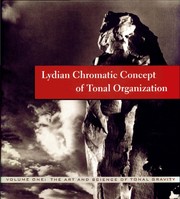
George Allen Russell (June 23, 1923 – July 27, 2009) was an American jazz pianist, composer, arranger and theorist. He is considered one of the first jazz musicians to contribute to general music theory with a theory of harmony based on jazz rather than European music, in his book Lydian Chromatic Concept of Tonal Organization (1953).
Early life
Russell was born in Cincinnati, Ohio, on June 23, 1923, to a white father and a black mother. He was adopted by a nurse and a chef on the B & O Railroad, Bessie and Joseph Russell. Young Russell sang in the choir of the African Methodist Episcopal Church and listened to the Kentucky Riverboat music of Fate Marable. He made his stage debut at age seven, singing "Moon Over Miami" with Fats Waller.
Surrounded by the music of the black church and the big bands which played on the Ohio Riverboats, and with a father who was a music educator at Oberlin College, he began playing drums with the Boy Scouts and Bugle Corps, receiving a scholarship to Wilberforce University, where he joined the Collegians, a band noted as a breeding ground for jazz musicians including Ben Webster, Coleman Hawkins, Charles Freeman Lee, Frank Foster, and Benny Carter. Russell served in that band at the same time as another noted jazz composer, Ernie Wilkins. When called up for the draft at the beginning of World War II, he was hospitalized with tuberculosis, during which he was taught the fundamentals of music theory by a fellow patient.
Early career
After his release from the hospital, he played drums with Benny Carter's band, but decided to give up drumming as a vocation after hearing Max Roach, who replaced him in the orchestra. Inspired by hearing Thelonious Monk's "'Round Midnight", Russell moved to New York in the early 1940s, where he became a member of a coterie of young innovators who frequented the apartment of Gil Evans on 14 West 55th Street, a clique which included Miles Davis, Charlie Parker, Gerry Mulligan, and John Lewis, later the music director of the Modern Jazz Quartet.
In 1945–46, Russell was again hospitalized for tuberculosis for 16 months. Forced to turn down work as Charlie Parker's drummer, during that time he worked out the basic tenets of what was to become his Lydian Chromatic Concept of Tonal Organization, a theory encompassing all of equal-tempered music which has been influential well beyond the boundaries of jazz. During this period he also studied composition with Stefan Wolpe. The first edition of his book was self-published by Russell in 1953, while he worked as a sales clerk at Macy's. At that time, his modal ideas were a crucial influence on John Coltrane and Miles Davis on the classic recording Kind of Blue, and served as a beacon for other modernists such as Eric Dolphy and Art Farmer.
While working on the theory, Russell was also applying its principles to composition. His first famous composition was for the Dizzy Gillespie Orchestra, the two-part "Cubano Be, Cubano Bop" (1947), part of that band's pioneering experiments in fusing bebop and Cuban jazz elements. "A Bird in Igor's Yard" (a tribute to both Charlie Parker and Igor Stravinsky) was recorded in a session led by Buddy DeFranco the next year. Also, a lesser known but pivotal work arranged by Russell was recorded in January 1950 by Artie Shaw entitled "Similau" that employed techniques of both the works done for Gillespie and DeFranco.
Russell began playing piano, leading a series of groups which included Bill Evans, Art Farmer, Hal McKusick, Barry Galbraith, Milt Hinton, Paul Motian, and others. Jazz Workshop was his first album as leader, and one where he played relatively little, as opposed to masterminding the events (rather like his colleague Gil Evans).
In 1957, Russell was one of several composers commissioned by Brandeis University to write a piece for their jazz festival. He wrote a suite for orchestra, All About Rosie, which featured Bill Evans among other soloists, and has been cited as one of the few convincing examples of composed polyphony in jazz.
Members of the orchestra on his 1958 extended work, New York, N.Y., included Bill Evans, John Coltrane, Art Farmer, Milt Hinton, Bob Brookmeyer, and Max Roach, among others, and featured wrap-around raps by singer/lyricist Jon Hendricks. Jazz in the Space Age (1960) was an even more ambitious big band album, featuring the unusual dual piano voicings of Bill Evans and Paul Bley. Russell formed his own sextet in which he played piano. Between 1960 and 1963, the Russell Sextet featured musicians like Dave Baker and Steve Swallow and memorable sessions with Eric Dolphy (on Ezz-thetics) and singer Sheila Jordan (their bleak version of "You Are My Sunshine" on The Outer View (1962) is highly regarded).
Europe
In 1964, Russell, who as a half black man was dismayed by race relations in the United States, moved to Scandinavia. He toured Europe with his sextet and lived in Scandinavia for five years, teaching at Lund University. In 1966, he was part of the first Pori Jazz festival. Through the early 1970s, Russell did most of his work in Norway and Sweden. He played there with young musicians who would go on to international fame: guitarist Terje Rypdal, saxophonist Jan Garbarek and drummer Jon Christensen.
This Scandinavian period also provided opportunities to write for larger groupings, and Russell's larger-scale compositions of this time pursue his idea of "vertical form", which he described as "layers or strata of divergent modes of rhythmic behaviour". The Electronic Sonata for Souls Loved by Nature, commissioned by Bosse Broberg of Swedish Radio for the Radio Orchestra, was first recorded in 1968, as an extended work recorded with electronic tape. It continued Russell's continuing exploration of new approaches and new instrumentation.
以上文字摘自英文维基百科「George Russell (composer)」(有删节,去掉了参考文献等尾部小节),按 CC BY-SA 4.0 使用,作者为维基百科的各位编者。
资料卡
- 出生
- 1923 年 6 月 23 日
- 出生地
- 辛辛那提
- 逝世
- 2009 年 7 月 27 日
- 逝世地
- 波士顿
- 职业
- 钢琴家、作曲家、音乐学家、音乐教育家、音乐理论家、爵士音乐家、鼓手、音乐家 等 9 项
- 使用语言
- 英语
- 就读学校
- 威尔伯福斯大学
- 创作体裁
- 爵士乐
- 领域
- 爵士乐、音乐理论
- 配偶
- Annakajsa Wahlstedt
- 获奖
- 麦克阿瑟天才奖(1989)、古根海姆学者奖(1969)、古根海姆学者奖(1972)、爵士大师奖
资料卡来自 Wikidata Q535308(CC0),众包数据,个别字段可能不全。
本站收录的作品(1)
同时代的美国作家
Open Library 上的全部作品
正在读取…