 书单
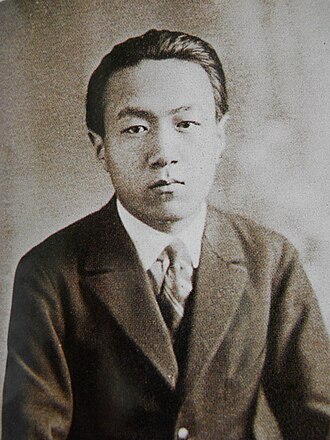
大冈升平
- 生卒
- 1909 – 1988
- 国籍
- 日本、大日本帝国
- 外文名
- Shōhei Ōoka
照片:大岡家,公有领域,来自维基共享资源「Syouhei Oooka.jpg」(经缩小)。
生平与创作
大冈升平(日语:大冈 升平/おおおか しょうへい,罗马化:Ōoka Shōhei,1909年3月6日—1988年12月25日),日本小说家、评论家、翻译家。
生平
1909年(明治42年)3月6日,大冈升平于东京市牛込区新小川町出生。父亲大冈贞三郎是和歌山市近郊农家三男。
1919年(大正8年),大冈升平发表“红鸟”童谣。
1921年(大正10年)4月,大冈升平就读青山学院中学部、受到基督教吸引。秋、母・つるが芸妓だったことを知った。
1929年(昭和4年)4月,大冈升平就读京都帝国大学文学部。大冈升平与河上彻太郎、中原中也创立杂志“白痴群”。
关联人物
小林秀雄
中原中也
中村光夫
福田恒存
吉田健一
埴谷雄高
武田泰淳
三岛由纪夫
大江健三郎
正冈忠三郎
天野太郎
以上文字摘自维基百科「大岡昇平」(去掉了参考文献等尾部小节),按 CC BY-SA 4.0 使用,作者为维基百科的各位编者。
中文维基百科的条目比较短,下面附上英文维基百科的内容(英文原文):
Shōhei Ōoka (Japanese: 大岡 昇平, romanized: Ōoka Shōhei; March 6, 1909 – December 25, 1988) was a Japanese novelist, literary critic, and lecturer and translator of French literature who was active during the Shōwa period. Ōoka belongs to the group of postwar writers whose Pacific War experiences at home and abroad figure prominently in their works. Over his lifetime, he contributed short stories and critical essays to almost every literary magazine in Japan.
Early life
Ōoka was born in the ward of Ushigome in Tokyo (now part of Shinjuku) to parents from Wakayama Prefecture. His father was a stockbroker and his mother was a geisha. Raised to study literature from early childhood, he mastered French while in high school. His parents also hired the famed literary critic Kobayashi Hideo to be his tutor. Under Kobayashi's instruction, he made the acquaintance of poet Nakahara Chūya, the critic Kawakami Tetsutaro, and others who would become well known literary figures. He entered Kyoto Imperial University School of Literature in April 1929, graduating in March 1932.
After graduation, he became a journalist with the Kokumin Shimbun, a pro-government newspaper, but quit after one year to devote himself to the study and translation of the works of Stendhal and other European writers into Japanese. In 1938, to support himself, he found a job as a translator with Air Liquide (Teikoku Sanso), a Franco-Japanese industrial company based in Kobe. In June 1943, he left their employ, and in November of the same year obtained a position at Kawasaki Heavy Industries.
However, in 1944, he was drafted into the Imperial Japanese Army, given only three months of rudimentary training and sent to the front line at Mindoro Island in the Philippines, where he served as his battalion's communications technician until his battalion was routed and numerous men killed. In January 1945, he was captured by American forces and sent to a prisoner of war camp on Leyte Island. Survival was very traumatic for Ōoka, who was troubled that he, a middle-aged and, to his way of thinking, unworthy soldier, had survived when so many others had not. He returned to Japan at the end of the year and lived at Akashi, Hyōgo.
Literary career
It was not until his repatriation after the war's end that Ōoka began his career as a writer. On the recommendation of his childhood French tutor and mentor Kobayashi Hideo, he published an autobiographical short-story of his experiences as a prisoner of war entitled Furyoki (俘虜記; lit. 'Account of a Prisoner of War'), published in English as Taken Captive: A Japanese POW's Story, in three separate parts between 1948 and 1951. Its publication, along with winning the Yokomitsu Riichi Prize in 1949, encouraged him to take up writing as a career.
His next work, Musashino Fujin, (武蔵野夫人, "A Wife in Musashino", 1950), is a psychological novel patterned after the works of Stendhal.
His best-known novel, Nobi (野火, Fires on the Plain, 1951), was also well received by critics, and won the prestigious Yomiuri Prize in 1951. Considered one of the most important novels of the postwar period and based loosely on his own wartime experiences in the Philippines, Nobi explores the meaning of human existence through the struggle for survival of men who are driven by starvation to cannibalism. It was subsequently made into a prize-winning film by Ichikawa Kon in 1959, although the film substantially changes the protagonist's relationship to the theme of cannibalism and Christianity.
In 1958, he veered from his usual subjects and produced Kaei (花影, "The Shade of Blossoms", 1958–1959), depicting an aging, naive nightclub hostess’s struggle and ultimate demise from the destructive forces of desire and wealth in the decadent 1950s Ginza. The setting had changed but the recurring themes had not. His characters were still adrift and struggling for survival in an inhospitable environment. Kaei won the Shinchosha Literary Prize in 1961.
以上文字摘自英文维基百科「Shōhei Ōoka」(有删节,去掉了参考文献等尾部小节),按 CC BY-SA 4.0 使用,作者为维基百科的各位编者。
资料卡
- 母语名
- 大岡昇平
- 出生
- 1909 年 3 月 6 日
- 出生地
- 牛込区 等 3 项
- 逝世
- 1988 年 12 月 25 日
- 逝世地
- 东京
- 职业
- 译者、小说家、作家、编剧、文学评论家
- 使用语言
- 日语、法语
- 就读学校
- 京都大学
- 领域
- 文学、文学批评、翻译、翻译自法文
- 代表作
- 野火、Leyte Senki
- 获奖
- 读卖文学赏(1952)、毎日出版文化奖(1961)、每日艺术奖(1972)、野间文艺奖(1974)、朝日奖(1976)、日本推理作家协会奖(1978);另有 1 项只有外文名
资料卡来自 Wikidata Q385747(CC0),众包数据,个别字段可能不全。
本站收录的作品(1)
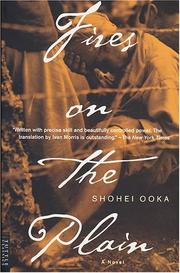
作品年表(2 本)
本站书库里署名大冈升平的书(Open Library 上至少 10 人加过书架的才收),按首版年份排(有本站书页的用 Wikidata 记的首版年,其余用 Open Library 的);年份偶尔记成后来的版本或译本,以原书为准。全部作品见 Open Library。
- 1957Nobi书架 16
- 1957Fires on the plain书架 11