 书单
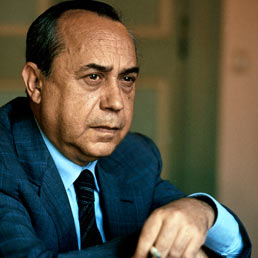
列昂纳多·夏夏
- 生卒
- 1921 – 1989
- 国籍
- 意大利、意大利王国
- 外文名
- Leonardo Sciascia
照片:作者不详,公有领域,来自维基共享资源「Leonardo Sciascia2.jpg」(经缩小)。
生平与创作
列昂纳多·夏夏(意大利语:Leonardo Sciascia,1921年1月8日—1989年11月20日),意大利作家、政治家。因对政治腐败和独断权力的形而上学的考察而知名。夏夏就就读于卡尔塔尼塞塔的马吉斯特拉莱学院,多年任文职或教员,1968年退休后专门从事写作。他的政治生涯开始于1976年,当时他是巴勒莫市参议会的一名共产党议员。以后他又成为意大利议会的一名激进党议员。第一部著作作为讽刺法西斯主义的《独裁的预言》(1950)。早期还写过两本诗集。他的第一部有分量的小说《撒在伤口上的盐》(1956),记录了一个西西里小城的历史以及政治对其居民生活的影响。在《西西里的大伯大叔们》(1958)的四篇短篇小说中进一步考察了他所谓的“西西里习气”。虽说西西里生活和心态一直是他写作的主要题材,但到1961年出版了刻画黑手党的《猫头鹰的日子》之后才发现自己真正擅长的是神秘小说。于是他接着写了许多神秘小说,其中有《一个人的幸福》(1966)、《旗鼓相当》(1971)和《想方设法》(1974)。此外,他还写作历史分析文章、剧本、短篇小说和论述西西里和其他题目的文章,并为塞拉里奥出版社编辑一套丛书,专收西西里作家所写的罕见和未曾出版的作品。
以上文字摘自维基百科「列昂纳多·夏夏」(去掉了参考文献等尾部小节),按 CC BY-SA 4.0 使用,作者为维基百科的各位编者。
中文维基百科的条目比较短,下面附上英文维基百科的内容(英文原文):
Leonardo Sciascia (Italian: [leoˈnardo ʃˈʃaʃʃa] ; 8 January 1921 – 20 November 1989) was an Italian writer, novelist, essayist, playwright, and politician. Some of his works have been made into films, including Porte Aperte (1990; Open Doors), Cadaveri Eccellenti (1976; Illustrious Corpses), Todo Modo (also 1976) and Il giorno della civetta (1968; The Day of the Owl).
Biography
Sciascia was born in Racalmuto, Sicily, on 8 January 1921. In 1935, his family moved to Caltanissetta, where Sciascia studied under Vitaliano Brancati, who would become his model in writing and introduce him to French novelists. From Giuseppe Granata, future Communist member of the Italian Senate, Sciascia learned about the French Enlightenment and American literature. In 1944, he married Maria Andronico, an elementary school teacher in Racalmuto. In 1948, his brother committed suicide, an event which profoundly impacted Sciascia.
Sciascia's first work, Favole della dittatura (Fables of the Dictatorship), a satire on fascism in Italy, was published in 1950. This was followed in 1952 by La Sicilia, il suo cuore (Sicily, its Heart), his first and only poetry collection, illustrated by Emilio Greco. The following year Sciascia won the Premio Pirandello, awarded by the Sicilian Region, for his essay "Pirandello e il pirandellismo" ("Pirandello and Pirandellism").
In 1954, Sciascia began collaborating with literature and ethnology magazines published by Salvatore Sciascia in Caltanissetta. In 1956, he published Le parrocchie di Regalpetra (The Parishes of Regalpetra), an autobiographic novel inspired by his experience as an elementary school teacher in his home town. In the same year, he moved to teach in Caltanissetta, only to move again to Rome in 1957 where he struck up a lifelong friendship with Sicilian artist, Bruno Caruso. In the autumn of 1957, he published Gli zii di Sicilia (Uncles of Sicily), which includes sharp views about themes such as the influence of the U.S. and of communism in the world, and the 19th century unification of Italy.
After one year in Rome, Sciascia moved back to Caltanissetta, in Sicily. In 1961, he published Il giorno della civetta (The Day of the Owl), one of his most famous novels, about the Mafia, and in 1963, the historical novel Il consiglio d'Egitto (The Council of Egypt), set in 18th-century Palermo. After a series of essays, in 1965 he wrote the play L'onorevole (The Honorable), a denunciation of the complicities between government and the mafia. Another political mystery novel is 1966's A ciascuno il suo (To Each His Own).
The following year, Sciascia moved to Palermo. In 1969, he began a collaboration with Il Corriere della Sera. That same year he published the play Recitazione della controversia liparitana dedicata ad A.D. (Recitation of liparitana dispute dedicated to A.D.), dedicated to Alexander Dubček. In 1971, Sciascia returned again to mystery with Il contesto (The Challenge), which inspired Francesco Rosi's movie Cadaveri eccellenti (1976; Illustrious Corpses). The novel created Polemics, due to its merciless portrait of Italian politics, as did his novel Todo modo (1974; One Way or Another), due to its description of Italy's Catholic clergy.
At the 1975 communal elections in Palermo, Sciascia ran as an independent within the Italian Communist Party (PCI) slate and was elected to the city council. In the same year, he published La scomparsa di Majorana (The Disappearance of Majorana), dealing with the mysterious disappearance of scientist Ettore Majorana. In 1977, he resigned from PCI, due to his opposition to any dealing with Christian Democracy (DC). Later, he would be elected to the Italian and European Parliament with the Radical Party. Sciascia's last works include the essay collection Cronachette (1985), the novels Porte aperte (1987; Open Doors) and Il cavaliere e la morte (1988; The Horseman and Death). He died on 20 November 1989 in Palermo.
以上文字摘自英文维基百科「Leonardo Sciascia」(有删节,去掉了参考文献等尾部小节),按 CC BY-SA 4.0 使用,作者为维基百科的各位编者。
资料卡
- 母语名
- Leonardo Sciascia
- 出生
- 1921 年 1 月 8 日
- 出生地
- 拉卡尔穆托
- 逝世
- 1989 年 11 月 20 日
- 逝世地
- 巴勒莫
- 职业
- 政治人物、作家、新闻工作者、小说家、剧作家、编剧、诗人、散文家 等 9 项
- 使用语言
- 意大利语、法语
- 写作语言
- 意大利语
- 代表作
- Equal Danger、Il giorno della civetta、To Each His Own
- 获奖
- 巴古塔奖(1986);另有 1 项只有外文名
资料卡来自 Wikidata Q317142(CC0),众包数据,个别字段可能不全。
本站收录的作品(1)
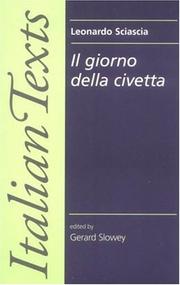
作品年表(3 本)
本站书库里署名列昂纳多·夏夏的书(Open Library 上至少 10 人加过书架的才收),按首版年份排(有本站书页的用 Wikidata 记的首版年,其余用 Open Library 的);年份偶尔记成后来的版本或译本,以原书为准。全部作品见 Open Library。
- 1961Il giorno della civetta书架 41
- 1984The day of the owl书架 24
- 1989To each his own书架 42