 书单
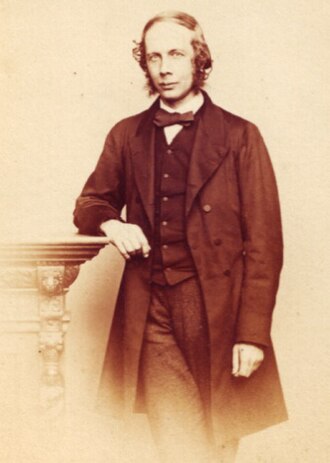
亨利·萨姆奈·梅因
- 生卒
- 1822 – 1888
- 国籍
- 英国
- 外文名
- Henry James Sumner Maine
照片:Simon Baddeley,公有领域,来自维基共享资源「HSMaine.jpg」(经缩小)。
生平与创作
亨利·梅因(英语:Henry James Sumner Maine,1822年8月15日—1888年2月3日)是一位英国辉格党人、比较法学家和历史学家,主要作品有《古代法》等。
以上文字摘自维基百科「亨利·梅因」(去掉了参考文献等尾部小节),按 CC BY-SA 4.0 使用,作者为维基百科的各位编者。
中文维基百科的条目比较短,下面附上英文维基百科的内容(英文原文):
Sir Henry James Sumner Maine, (15 August 1822 – 3 February 1888), was a British Whig comparative jurist and historian. He is famous for the thesis outlined in his book Ancient Law that law and society developed "from status to contract." According to the thesis, in the ancient world individuals were tightly bound by status dealing with(in) a particular group while in the modern one, in which individuals are viewed as autonomous agents, they are free to make contracts and form associations with whomever they choose. Because of this thesis, Maine can be seen as one of the forefathers of modern legal anthropology, legal history and sociology of law.
Early life
Maine was the son of Dr. James Maine, of Kelso, Roxburghshire. He was educated at Christ's Hospital, where a boarding house was named after him in 1902, being the 7th block on the avenue, and 3rd on the East Side. From there he went up to Pembroke College, Cambridge, in 1840. At Cambridge, he was noted as a classical scholar and also won the Chancellor's Gold Medal for poetry in 1842. He won a Craven scholarship and graduated as senior classic in 1844, being also senior chancellor's medallist in classics. He was a Cambridge Apostle.
Shortly afterwards, he accepted a tutorship at Trinity Hall. In 1847, he was appointed Regius Professor of Civil Law, and he was called to the bar three years later; he held this chair until 1854. Meanwhile, in 1852 he had become one of the readers appointed by the Inns of Court.
In India
The post of legal member of council in India was offered to Maine in 1861; he declined it once, on grounds of health. The following year Maine was persuaded to accept, and it turned out that India suited him much better than Cambridge or London. He was asked to prolong his services beyond the regular term of five years, and he returned to England in 1869.
The subjects on which it was Maine's duty to advise the government of India were as much political as legal. They ranged from such problems as the land settlement of the Punjab, or the introduction of civil marriage to provide for the needs of unorthodox Hindus, to the question of how far the study of Persian should be required or encouraged among European civil servants. Plans of codification were prepared, and largely shaped, under Maine's direction, which were implemented by his successors, Sir James Fitzjames Stephen and Dr Whitley Stokes.
Maine became a member of the Secretary of State's council in 1871 and remained so for the rest of his life. In the same year he was gazetted a K.C.S.I.
Oxford professor
In 1869, Maine was appointed to the chair of historical and comparative jurisprudence newly founded in the University of Oxford by Corpus Christi College. Residence at Oxford was not required, and the election amounted to an invitation to the new professor to resume and continue in his own way the work he had begun in Ancient Law.
Cambridge professor
In 1877, the mastership of Trinity Hall, Cambridge, where Maine had formerly been tutor, became vacant. There were two strong candidates whose claims were so nearly equal that it was difficult to elect either; the difficulty was solved by a unanimous invitation to Maine to accept the post. His acceptance entailed the resignation of the Oxford chair, though not continuous residence at Cambridge. Ten years later, he was elected to succeed Sir William Harcourt as Whewell Professor of International Law at Cambridge.
In 1886, he was elected as a member to the American Philosophical Society.
Death
Maine's health, which had never been strong, gave way towards the end of 1887. He went to the Riviera under medical advice, and died at Cannes, France, on 3 February 1888. He left a wife, Jane, and two sons, of whom the elder died soon afterwards. An oil portrait of Jane remains in the possession of their descendants.
以上文字摘自英文维基百科「Henry James Sumner Maine」(有删节,去掉了参考文献等尾部小节),按 CC BY-SA 4.0 使用,作者为维基百科的各位编者。
资料卡
- 本名
- Henry James Sumner Maine
- 出生
- 1822 年 8 月 15 日
- 出生地
- 克艾素
- 逝世
- 1888 年 2 月 3 日
- 逝世地
- 戛纳
- 职业
- 人类学家、法律史学家、历史学家、法学教授、社会学家、法学家、作家、大律师 等 9 项
- 使用语言
- 英语
- 写作语言
- 英语
- 就读学校
- 剑桥大学彭布罗克学院、基督公学
- 领域
- 法制史
- 所属团体
- 英国皇家学会(1874)、美国文理科学院、意大利猞猁之眼国家科学院(1877)、意大利猞猁之眼国家科学院(1883)
- 配偶
- Jane Main(1847)
- 获奖
- 英国皇家学会院士、英文诗歌校长金牌;另有 2 项只有外文名
资料卡来自 Wikidata Q1195523(CC0),众包数据,个别字段可能不全。
本站收录的作品(1)
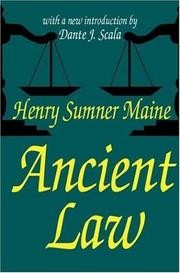
同时代的英国作家
Open Library 上的全部作品
正在读取…