 书单
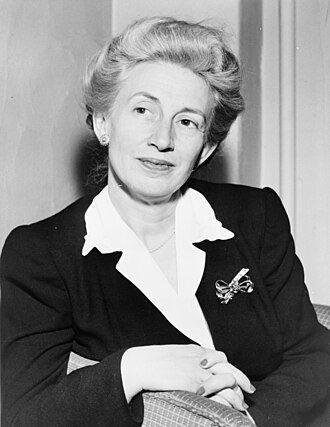
Lillian Smith
- 生卒
- 1897 – 1966
- 国籍
- 美国
照片:C. M. Stieglitz, World Telegram staff photographer,公有领域,来自维基共享资源「Lillian Eugenia Smith NYWTS.jpg」(经缩小)。
生平与创作
这个词条暂时没有中文维基百科条目,下面是英文维基百科的内容(英文原文):
Lillian Eugenia Smith (December 12, 1897 – September 28, 1966) was a writer and social critic of the Southern United States, known for both her non-fiction and fiction works, including the best-selling novel Strange Fruit (1944). Smith was a White woman who openly embraced controversial positions on matters of race and gender equality. She was a southern liberal who was unafraid to criticize segregation and to work toward the dismantling of Jim Crow laws at a time when such actions virtually guaranteed social ostracism.
Early life
Smith was born on December 12, 1897, to a prominent family in Jasper, Florida, the seventh of nine children. Her life as the daughter of an upper middle-class civic and business leader took an abrupt turn in 1915 when her father lost his turpentine mills. The family was not without resources, however, and relocated to their summer residence in the mountains of Clayton, Georgia, where her father had previously purchased property. There, the family operated the Laurel Falls Camp for Girls starting in 1920.
As a young adult financially on her own, Smith was free to pursue her love of music and teaching. She spent a year studying at Piedmont College in Demorest, Georgia, (1915–16). She also had two stints at the Peabody Conservatory in Baltimore in 1917 and 1919. She returned home to help her parents manage a hotel and taught in two mountain schools before accepting a position as director of music at a Methodist school for girls in Huzhou (now Wuxing, Zhejiang), China, even though she was not a churchgoer and did not consider herself religious. This time abroad was pivotal in Smith's awareness of the Southern double standard. She studied Chinese philosophy during her time overseas and by living in China was exposed to the similarities between the suppression of the Chinese and the suppression of African Americans in the States.
As a result of her father's declining health, Smith was forced to return from China in 1925. Back in Georgia, she became the head of the Laurel Falls Camp, a position she would hold for 23 years (1925–48). Under her direction, Laurel Falls Camp soon became very popular as an innovative educational institution known for its instruction in the arts, music, drama, and modern psychology. When her father died in 1930 she took responsibility for the family business and the care of her ill mother.
Personal life and career
During her time at the family camp, Lillian Smith began a lifelong relationship with one of the camp's school counselors, Paula Snelling, of Pinehurst, Georgia. The two remained closeted as a lesbian couple for the rest of their lives, as their correspondence has shown. Smith never addressed her sexuality openly. However, some of her literature's characters were lesbians. At that time, homosexuality was viewed even more negatively in Southern society than desegregation.
Smith and Snelling began publishing a small quarterly literary magazine, Pseudopodia, in 1936. The magazine encouraged writers, Black or White, to offer honest assessments of modern Southern life and to work for social and economic reform; it criticized those who ignored the Old South's poverty and racial injustice. It quickly gained regional fame as a forum for liberal thought, undergoing two name changes to reflect its expanding scope. In 1937 it became the North Georgia Review, and in 1942, the title was changed to its final form, South Today. South Today ceased publication in 1945. (All issues of Pseudopodia/North Georgia Review/South Today are available online through the Archives Online of Piedmont University Library in Demorest, Georgia.)
In 1944, Smith published the bestselling novel Strange Fruit, which dealt with the then-forbidden and controversial theme of interracial romance. The title was originally Jordan is so Chilly, with Smith later changing the title to Strange Fruit. In her autobiography, singer Billie Holiday wrote that Smith chose to name the book after her song "Strange Fruit", which is about lynching, although Smith maintained that the book's title referred to the "damaged, twisted people (both black and white) who are the products or results of our racist culture." After the book's release, it was banned in Boston and Detroit for "lewdness" and crude language. Strange Fruit was also forbidden to be mailed through the United States Postal System. The ban against the book was eventually lifted by President Franklin D. Roosevelt after his wife Eleanor requested it of him.
In 1949, Smith wrote the book Killers of the Dream, a collection of essays that attempted to identify, challenge and dismantle the Old South's racist traditions, customs and beliefs, warning that racial segregation corrupted the soul. She also emphasized the negative implications on the minds of women and children. Written in a confessional and autobiographical style that was highly critical of Southern moderates, it was largely ignored by critics of the time.
Relationship with Paula Snelling
Paula Snelling was one of the individuals Lillian Smith was closest to. They shared a job as co-directors of Laurel Falls Camp for Girls. Snelling also worked as a school teacher and librarian outside of the girls camp and she wrote as well, but not much is known about her specific works. Paula Snelling was Lillian Smith's lifelong partner, but they were not out at the time because of the intense backlash that would have come with it. Starting in 1936, Smith and Snelling together published a literary magazine called South Today.
以上文字摘自英文维基百科「Lillian Smith (author)」(有删节,去掉了参考文献等尾部小节),按 CC BY-SA 4.0 使用,作者为维基百科的各位编者。
资料卡
- 出生
- 1897 年 12 月 12 日
- 出生地
- 贾斯帕
- 逝世
- 1966 年 9 月 28 日
- 逝世地
- 亚特兰大
- 职业
- 小说家、编辑、社运人士、散文家、作家
- 使用语言
- 英语
- 就读学校
- Peabody音乐学院、皮埃蒙特学院
- 领域
- 随笔
资料卡来自 Wikidata Q6548210(CC0),众包数据,个别字段可能不全。
本站收录的作品(1)
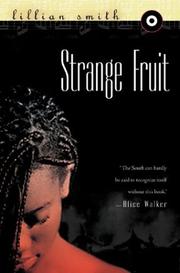
作品年表(2 本)
本站书库里署名Lillian Smith的书(Open Library 上至少 10 人加过书架的才收),按首版年份排(有本站书页的用 Wikidata 记的首版年,其余用 Open Library 的);年份偶尔记成后来的版本或译本,以原书为准。全部作品见 Open Library。
- 1944Strange fruit书架 27
- 1949Killers of the dream书架 12