 书单
生平与创作
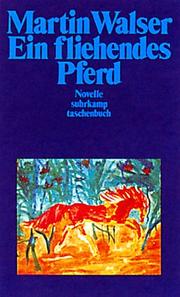
马丁·瓦尔泽(德语:Martin Walser,1927年3月24日—2023年7月28日),德国小说家、剧作家。二战时曾加入纳粹德国防空部队,后曾在雷根斯堡和图宾根念书。1947年开始发表文学作品。一开始研究卡夫卡,后来走现实主义创作路线。曾获四七社文学奖、黑塞奖、毕希纳奖、席勒促进奖等荣誉。其代表作为中篇小说《惊马奔逃》(1978年)。
以上文字摘自维基百科「马丁·瓦尔泽」(去掉了参考文献等尾部小节),按 CC BY-SA 4.0 使用,作者为维基百科的各位编者。
中文维基百科的条目比较短,下面附上英文维基百科的内容(英文原文):
Martin Johannes Walser (German: [ˈmaʁ.tiːn ˈvalˌzɐ] ; 24 March 1927 – 26 July 2023) was a German writer, known especially as a novelist. He began his career as journalist for Süddeutscher Rundfunk, where he wrote and directed audio plays. He was a member of Group 47 from 1953 on.
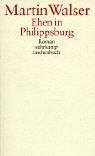
His first novel, Marriage in Philippsburg, a satirical portrait of postwar society, became a success in 1957. Walser then turned to freelance writing. He published a trilogy of novels about the character Anselm Kristlein, beginning with Halbzeit in 1960, Das Einhorn (The Unicorn) in 1966 and ending with Der Sturz (The Fall) in 1973. Most of his major works have been translated into English, including the 1978 novella Runaway Horse, which was successful with both readers and critics. He also wrote plays (Die Zimmerschlacht), screenplays, story collections and essays. Several of his books have been adapted to the screen, including Runaway Horse in 1986 and again in 2007.
Walser received many awards, including the Georg Büchner Prize in 1981 and the Peace Prize of the German Publishers' Association in 1998. His acceptance speech for the Peace Prize caused controversy with Walser's remarks on German commemoration of the Holocaust. The "monumentalization of shame", he said, risks turning remembrance of the Holocaust into a "lip service" ritual. In 2002, Walser's portrayal of the literary critic Marcel Reich-Ranicki in his novel Tod eines Kritikers ("Death of a Critic") was regarded as antisemitic.
Walser is regarded, along with Heinrich Böll, Günter Grass, and Siegfried Lenz, as one of Germany's most influential postwar authors.
Early life and education
Walser was born on 24 March 1927 in Wasserburg, on Lake Constance. His parents were coal merchants who also kept an inn next to the train station in Wasserburg. The second of three children, Walser lost his father at age ten. He described the environment in which he grew up in his novel A Gushing Fountain. From 1938 to 1943 he attended the secondary school in Lindau, until his induction to the armed forces, initially as an anti-aircraft auxiliary. According to documents released in June 2007, he became a member of the Nazi Party on 20 April 1944 at age 17. Walser denied that he knowingly entered the party, and assumed that he was enrolled by a garrison commander as part of a larger group without his knowledge. The claim was disputed by Hans-Dieter Kreikamp from the German Federal Archives, who said that a personal signature was formally required, even in times of war. By the end of the Second World War, Walser was a soldier in the Wehrmacht.
After the war, he completed his Abitur in Lindau in 1946. He then studied literature, history, and philosophy at the University of Regensburg and the University of Tübingen, achieving his doctorate in literature in 1951 with a thesis on Franz Kafka.
Career
While studying, Walser worked as a reporter for the Süddeutscher Rundfunk broadcasting company, and wrote and directed his first audio plays. He travelled to Czechoslovakia, England, France, Italy, and Poland as part of his job. In 1950 Walser married Katharina "Käthe" Neuner-Jehle; the couple had four daughters.
Beginning in 1953, Walser was regularly invited to conferences of the Group 47, which was focused on literature for a new democratic Germany. The group awarded him a prize for his story Templones Ende in 1955. His first novel, Marriage in Philippsburg, was published in 1957. Like his later books, it was set in Southern Germany in a postwar society, and satirically portrayed the "conservative middle class" during the "so-called economic miracle". The novel first appeared in English three years later as The Gadarene Club.
The book became a huge success, which enabled Walser to work as a freelance author and reside in Friedrichshafen. In 1958 Walser lived in the U.S. for three months and participated in the Harvard International Seminary. He returned to the U.S. several times, invited by American universities to observe political conditions there.
以上文字摘自英文维基百科「Martin Walser」(有删节,去掉了参考文献等尾部小节),按 CC BY-SA 4.0 使用,作者为维基百科的各位编者。
资料卡
- 母语名
- Martin Walser
- 本名
- Martin Johannes Walser
- 出生
- 1927 年 3 月 24 日
- 出生地
- 瓦塞尔布尔格
- 逝世
- 2023 年 7 月 26 日
- 逝世地
- 于伯林根
- 职业
- 作家、小说家、剧作家、编剧、新闻工作者、导演
- 使用语言
- 德语
- 就读学校
- 蒂宾根大学、雷根斯堡大学
- 领域
- 长篇小说、creative and professional writing、戏剧、散文家
- 所属团体
- 德国笔会、欧洲科学与艺术院、Sächsische Akademie der Künste、德国语言文学科学院、柏林艺术学院 等 7 项
- 配偶
- Katharina Neuner-Jehle
- 代表作
- Marriage in Philippsburg、Runaway Horse
- 获奖
- Pour le Mérite for Sciences and Arts order、毕希纳奖(1981)、巴登-符腾堡州功绩勋章(1980)、Knight Commander's Cross of the Order of Merit of the Federal Republic of Germany、Hermann-Hesse-Preis(1957)、Gerhart Hauptmann Prize(1962)、Schiller Memorial Prize(1980)、Alemannischer Literaturpreis(2002)、德国书商和平奖(1998)、Friedrich-Schiedel-Literaturpreis(1987)、巴伐利亚马克西米兰科学与艺术勋章(1995)、Literature Award of the Bavarian Academy of the Fine Arts(1990)、尼采奖(2015)、Franz Nabl Prize(1993) 等 21 项
资料卡来自 Wikidata Q57387(CC0),众包数据,个别字段可能不全。
本站收录的作品(2)
前后几届的毕希纳奖得主
全部得主 ›Open Library 上的全部作品
正在读取…