 书单
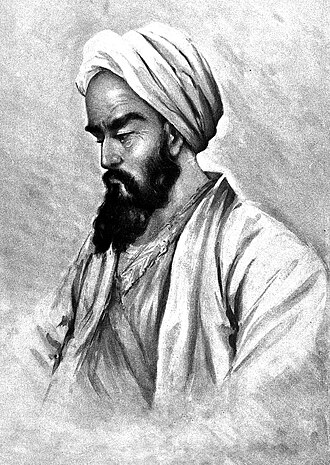
拉齐
- 生卒
- 866 – 925
- 外文名
- Abu Bakr al-Razi
照片:见原图页面,CC BY 4.0,来自维基共享资源「Portrait of Rhazes (al-Razi) (AD 865 - 925) Wellcome L0005053 (cropped).jpg」(经缩小)。
生平与创作
阿布·贝克尔·穆罕默德·扎卡里亚·拉齐(波斯语:ابوبكر محمّد زکرياى رازى,Abūbakr Mohammad-e Zakariā-ye Rāzī;865年—925年),波斯医师、炼金术师、化学家、哲学家。他博学多才,为早期医学、化学、音乐和哲学领域做出很大贡献。医学方面,他发现天花与麻疹是两种不同的疾病,并最早阐明了过敏和免疫的原理。化学上,他发现乙醇,并认为元素嬗变为金银是可能的。他创立了完善的蒸馏和提取方法,并通过蒸馏绿矾(油)和石油,分别发现硫酸和煤油。一生著有200部书籍和文章,记载了他在各领域的探索。
以上文字摘自维基百科「阿布·贝克尔·拉齐」(去掉了参考文献等尾部小节),按 CC BY-SA 4.0 使用,作者为维基百科的各位编者。
中文维基百科的条目比较短,下面附上英文维基百科的内容(英文原文):
Abū Bakr al-Rāzī, also known as Rhazes (full name: أبو بکر محمد بن زکریاء الرازي, Abū Bakr Muḥammad ibn Zakariyyāʾ al-Rāzī, 864 or 865 – 925 or 935 CE), was a Persian Muslim physician, philosopher, alchemist, and pre-eminent medical writer of the Islamic Golden Age, widely regarded as one of the most important figures in the history of medicine. In addition to medicine and philosophy, he wrote on logic, astronomy, and grammar.
Al-Rāzī studied medicine in Baghdad, where he spent much of his career, and became a successful physician who served as chief physician of hospitals in Baghdad and Ray. He was an early proponent of experimental medicine and made numerous medical advances through observation and discovery. As a teacher he attracted students of differing backgrounds and interests and was reputed to be compassionate and devoted to patients irrespective of whether they were rich or poor. Together with Thābit ibn Qurra (836–901), he was among the first physicians to distinguish clinically between smallpox and measles. He recognized the complexity of the causes of disease and the importance of the patient's own disposition or will in recovery, observing that this influence could be sufficiently strong for even charlatans sometimes to bring about apparent cures, while also acknowledging the limitations of physicians themselves.
A prolific author, al-Rāzī is credited with more than 200 works or manuscripts. Among his major medical writings were Kitāb al-Manṣūrī, translated into Latin as Liber Almansoris, Kitāb al-Mulūkī (Liber Regius), and the extensive medical encyclopaedia Ḥāwī (Continens), which was completed by his pupils after his death. The latter was first translated into Latin in 1279 and subsequently became one of the early printed medical books, being printed five times between 1488 and 1542. Through Latin translation, his writings exerted a profound influence on medieval European medicine and medical education. Portions of Al-Manṣūrī, including sections on surgery and general therapeutics, entered the curricula of Western universities. Edward Granville Browne regarded him as "probably the greatest and most original of all the Muslim physicians, and one of the most prolific as an author". He has additionally been described as the father of pediatrics and as a pioneer in obstetrics and ophthalmology.
In philosophy, al-Rāzī accorded a particularly high status to reason, regarding it as a divine gift through which human beings could attain the benefits available to them in this life and the next. He was also critical of religion, particularly the concepts of prophethood and revelation, and a now lost work on prophecy reportedly maintained that reason occupied a higher rank than prophecy. His religio-philosophical doctrines, including a belief in five "eternal principles", survive only fragmentarily and are known largely through reports by writers who were often hostile to him. Toward the end of his life he became blind and declined treatment, explaining that after so long a life he had already seen enough of the world.
Biography
Al-Razi was born in the city of Ray (modern Rey, also the origin of his name "al-Razi"), into a family of Persian stock and was a native speaker of the Persian language. Ray was situated on the Great Silk Road that for centuries facilitated trade and cultural exchanges between East and West. It is located on the southern slopes of the Alborz mountain range situated near Tehran, Iran.
以上文字摘自英文维基百科「Abu Bakr al-Razi」(有删节,去掉了参考文献等尾部小节),按 CC BY-SA 4.0 使用,作者为维基百科的各位编者。
资料卡
- 母语名
- محمد بن زكريا الرازي
- 出生
- 866 年
- 出生地
- 拉格斯
- 逝世
- 925 年
- 逝世地
- 拉格斯
- 职业
- 数学家、化学家、哲学家、发明家、医生、作家
- 使用语言
- 波斯语、阿拉伯语
- 领域
- 医学
- 代表作
- Ṭibb al-rūḥānī、The comprehensive book on medicine、Doubts About Galen
资料卡来自 Wikidata Q169234(CC0),众包数据,个别字段可能不全。
本站收录的作品(1)
作品年表(1 本)
本站书库里署名拉齐的书(Open Library 上至少 10 人加过书架的才收),其中 1 本记的年份比作者去世晚 50 年以上或者早于他出生(多半是后世的版本、译本或占位年份),不列年份,按首版年份排(有本站书页的用 Wikidata 记的首版年,其余用 Open Library 的);年份偶尔记成后来的版本或译本,以原书为准。全部作品见 Open Library。
- 年份不详Kitab al-hawi fi al-tibb书架 20