 书单
百科
这个词条暂时没有中文维基百科条目,下面是英文维基百科的内容(英文原文):
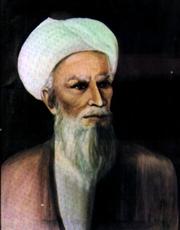
Kitab al-Hawi or Al-Hawi or Kitāb al-Ḥāwī fī al-ṭibb translated as The Comprehensive Book on Medicine is an extensive medical encyclopedia authored by the Persian polymath Abu Bakr Muhammad ibn Zakariya al-Razi (865–925), commonly known in the West as Rhazes in the 10th century. This monumental work is a compendium of Greek, Syrian, and early Arabic medical knowledge, as well as some Indian medical practices.
It was first translated into Latin in 1279 under the title Continens by Faraj ben Salim, a physician of Sicilian-Jewish origin employed by Charles of Anjou.
The oldest partial remaining copy of this work belongs to the National Library of Medicine in Bethesda, Maryland dated 1094 CE.
Historical context and composition
The Kitab al-Hawi was composed around the year 900 and spans 22 volumes. It was later published by the Dairat'l-Macarif-il-Osmania (Osmania Oriental Publications Bureau) in Hyderabad, India.
Contents and significance
The book covers a wide range of medical topics, including theoretical and practical medicine. Al-Razi's approach was notably comprehensive, as he not only included medical knowledge from Greek and Syrian sources but also incorporated insights from Indian medical traditions.
Al-Razi frequently recommended various treatments, including those that might be considered magical remedies by today's standards. For instance, he addressed conditions such as quartan fever and recommended specific practices for their treatment.
Legacy
The Kitab al-Hawi had a profound influence on the development of medical knowledge in the medieval Islamic world and subsequently in Europe. It was translated into Latin in the 12th century and became one of the main sources of medical knowledge in medieval Europe.
以上文字摘自英文维基百科「Al-Hawi」(去掉了参考文献等尾部小节),按 CC BY-SA 4.0 使用,作者为维基百科的各位编者。
资料卡
- 原作语言
- 阿拉伯语
- 主题
- 医学
资料卡来自 Wikidata Q12186092(CC0),众包数据,个别字段可能不全。