 书单
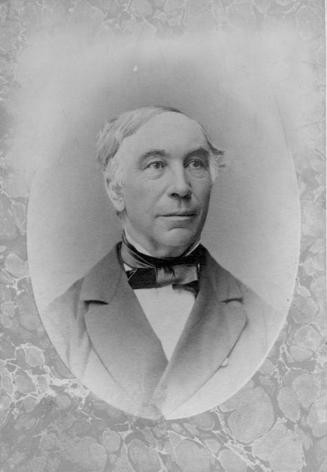
容根·莫伊
- 生卒
- 1813 – 1882
- 国籍
- 挪威、瑞典-挪威联盟
- 外文名
- Jørgen Moe
照片:Frederik Klem,公有领域,来自维基共享资源「Jørgen Moe (Frederik Klem).jpg」(经缩小)。
生平与创作
约尔根·英格布雷特森·穆厄(Jørgen Engebretsen Moe,1813年4月22日—1882年3月27日)是一位挪威主教、诗人。他与彼得·克里斯滕·阿斯比约恩森合编了《挪威民话集》。
约尔根·穆厄与彼得·克里斯滕·阿斯比约恩森在学院结识,两人皆热衷于搜集民间传说。1841年出版了第一版《挪威民话集》,该书后来成为挪威文学的重要文献。1874年约尔根·穆厄成为克里斯蒂安桑教区主教,直到1882年去世。
以上文字摘自维基百科「約爾根·穆厄」(去掉了参考文献等尾部小节),按 CC BY-SA 4.0 使用,作者为维基百科的各位编者。
中文维基百科的条目比较短,下面附上英文维基百科的内容(英文原文):
Jørgen Engebretsen Moe (22 April 1813–27 March 1882) was a Norwegian folklorist, bishop, poet, and author. He is best known for the Norske Folkeeventyr, a collection of Norwegian folk tales which he edited in collaboration with Peter Christen Asbjørnsen. He also served as the Bishop of the Diocese of Kristianssand from 1874 until his death in 1882.
Biography
Jørgen Engebretsen Moe was born at the farm of Øvre Moe in the municipality of Hole in the traditional district of Ringerike. He was the son of local farmer and politician Engebret Olsen Moe. He first met Asbjørnsen while the two were preparing for exams at Norderhov Rectory and soon found they had a shared interest in folklore.
Starting in 1841, Moe traveled almost every summer through the southern parts of Norway, collecting traditions and stories from the people living in the mountainous areas. In 1845, he was appointed professor of theology in the Norwegian Military Academy. However, Moe had long intended to take holy orders, and in 1853 he did so. He became a resident chaplain in Krødsherad at Olberg Church and Holmen Church in Sigdal, positions that he held for 10 years.
At his first parish he found inspiration for many of his most famous poems, like den gamle Mester (The Old Master) and Sæterjentens Søndag (Sunday at the Mountain Pastures). In 1863, he moved to Drammen and became parish priest of Bragernes Church, then in 1870 he moved again to Vestre Aker, close to Christiania (now Oslo). In 1874, he became bishop in the Diocese of Kristianssand based at the Kristiansand Cathedral, a position he held from 1874 until his death in 1882. He was a much beloved bishop, and his teaching had a great impact on his contemporaries.
Moe has a special claim on critical attention in regard to his lyrical poems, of which a small collection appeared in 1850. Moe felt strongly that writing should be "objective," in the sense that it removed the ego from the narrative. Still, he strove to build and maintain a literary aesthetic in his work. He wrote little original verse, but in his slender volume are to be found many pieces of exquisite delicacy and freshness. Moe also published a delightful collection of prose stories for children, I Brønden og i Tjernet (In the Well and in the Tarn), 1851; and En liden Julegave (A Little Christmas Present), 1860. Asbjørnsen and Moe had the advantage of an admirable style of narrative prose. It was usual that the vigor came from Asbjørnsen and the charm from Moe, but it seems that from the long habit of writing in unison they had come to adopt almost precisely identical modes of literary expression.
Moe was appointed Knight of the Order of St. Olav in 1873 and was made commander of the 1st cross class in 1881. During January 1882, he resigned his diocese due to failing health, and died the following March. His son, Moltke Moe, continued his father's work in folklore and fairy tales and became the first professor of the subject at Christiania University.
Impact on Norwegian culture
Together with Peter Christen Asbjørnsen, the impact of Jørgen Moe on Norwegian culture was enormous. To Norwegians, the names Asbjørnsen and Moe have become synonymous with traditional folk tales, the way the name Brothers Grimm is associated with German tales. Not only did they collect and secure parts of the wealth of Norwegian fairy tales and edit them for common readers, but in doing this, they also contributed to the development of the Norwegian language.
The folk literature collected by Peter Christen Asbjørnsen and Jørgen Moe is widely regarded in Norway as a significant contribution to the country's national identity. Askeladden (Ash Boy), a character whose creativity and resourcefulness always win him the Princess and half the Kingdom, is seen as something typically Norwegian. Some of Moe's works of poetry are still cherished, not least because of the tunes set to them. His achievements in the Church are now mostly forgotten, except locally.
以上文字摘自英文维基百科「Jørgen Moe」(有删节,去掉了参考文献等尾部小节),按 CC BY-SA 4.0 使用,作者为维基百科的各位编者。
资料卡
- 母语名
- Jørgen Engebretsen Moe
- 出生
- 1813 年 4 月 22 日
- 出生地
- 霍勒
- 逝世
- 1882 年 3 月 27 日
- 逝世地
- 克里斯蒂安桑
- 职业
- 诗人、作家、民俗学家、儿童文学作家、民间传说收集者、散文家、民族学家、神职人员 等 9 项
- 使用语言
- 挪威语、丹麦语
- 写作语言
- 挪威语
- 所属团体
- 挪威皇家科学与文学院;另有 1 项只有外文名
资料卡来自 Wikidata Q470002(CC0),众包数据,个别字段可能不全。
本站收录的作品(1)
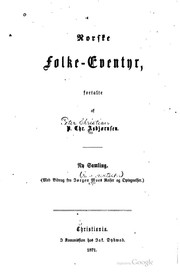
同时代的挪威作家
Open Library 上的全部作品
正在读取…