 书单
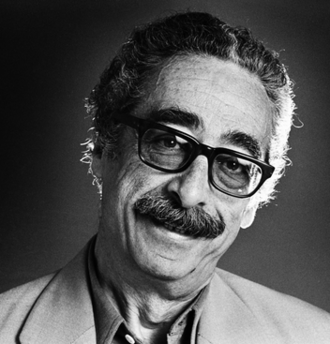
曼努埃尔·德·佩德罗洛
- 生卒
- 1918 – 1990
- 国籍
- 西班牙
- 外文名
- Manuel de Pedrolo i Molina
照片:Generalitat de Catalunya,CC BY 3.0,来自维基共享资源「Manuel de Pedrolo- portrait.png」(经缩小)。
生平与创作
这个词条暂时没有中文维基百科条目,下面是英文维基百科的内容(英文原文):
Manuel de Pedrolo i Molina (Catalan pronunciation: [mənuˈɛl də pəˈðɾɔlu]; 1918 – 1990) was a Catalan author of novels, short stories, poetry and plays. He is mostly known for his sci-fi novel Mecanoscrit del segon origen (Typescript of the Second Origin).
Manuel de Pedrolo was born in 1918 in L'Aranyó, in the Segarra comarca (county), in Catalonia. After the Spanish Civil War he settled in Barcelona, where he worked a variety of jobs while writing in his spare time. From 1974, he devoted himself entirely to literature, creating works, translating, and performing minor editorial tasks. He died in Barcelona in 1990 after a long illness.
Pedrolo explored literary genres including poetry, narrative, short stories, and theatre. His most well-known novel, Mecanoscrit del segon origen, is one of the best-selling books in Catalan literature.
Biography
Born in Castell de l'Aranyó, he belonged to a lower nobility family, the Pedrolo family. His father was a lawyer, although he never practiced. His mother died shortly after the birth of his younger brother Ramon. He studied secondary education in Tàrrega until 1935, when he moved to Barcelona; however, the Spanish Civil War interrupted his studies. In 1943, he married and settled permanently in Barcelona, in a flat-office in Sant Gervasi-Galvany (Carrer de Calvet, 9).
He began his literary career with a book of poems published in 1949. In 1953, he published his first novel, Es vessa una sang fàcil. In 1954, he won the Joanot Martorell Prize. He also contributed to Catalan publications such as Ariel, Canigó, Oriflama, and Serra d'Or. In 1979 he received the Premi d'Honor de les Lletres Catalanes.
A strong defender of an independent and socialist Catalan Countries, He was particularly critical of Catalan political parties before, during, and after the Spanish transition to democracy, and was often considered a reference and intellectual of the Esquerra Independentista. In 1979, he opposed the extradition from France of the Catalan independence activist Manuel Viusà. In 1982, he signed a petition requesting that the five Catalan independence activists of the "Batista i Roca case" be tried in Catalonia instead of Madrid, as was customary at the Audiencia Nacional (Spain).
During the Spanish Civil War, he joined the Confederación Nacional de Trabajo and worked as a teacher in Fígols de les Mines. He served in the artillery branch of the People's Army and was sent to the fronts of Falset, Figueres, and Barcelona.
He was a member of the Associació d'Escriptors en Llengua Catalana, which organized the Mecanoscrit Prize for young writers from 1984 to 1989.
Pedrolo died on 26 June 1990 in Barcelona from cancer at the age of seventy-two.
In 2018, on the centenary of his birth, the Government of Catalonia officially commemorated the Year of Manuel de Pedrolo. The same year, Bel Zaballa published his biography, Manuel de Pedrolo. La llibertat insubornable.
Theatre
According to Graells, Manuel de Pedrolo's theatrical work can be grouped into three periods: the first, from 1951 to 1956; the second, which could be called the "fertile triennium" (1957–1959); and the last, which includes his later production, from 1962 to 1978.
The first period includes the plays Els hereus de la cadira (1954) and La nostra mort de cada dia (1956), which feature realist elements that disappear in his later works. The central period comprises eight plays: Cruma (1957), Pell vella al fons del pou (1957), Homes i No (1957), Situació bis (1958), Algú a l'altre cap de peça (1958), Darrera versió, per ara (1958), Sóc el defecte (1958), and Tècnica de cambra (1959). The third period includes Acompanyo qualsevol cos (1962), Bones notícies de Sister (1962), L'ús de la matèria (1963), La sentència (1966), Aquesta nit tanquem (1973), and D'ara a demà (1977). However, the relationship among these works is less clearly defined.
Rosselló, on the other hand, refers to a central production period between 1957 and 1963 (from Cruma to L'ús de la matèria), consisting of two types of plays: one in which the protagonist rebels against a situation of oppression, and another focused on philosophical issues such as knowledge, communication, fate, or death.
Translation
Beyond his work as a writer, Manuel de Pedrolo also carried out significant translation work, with 42 published translations. His first translations were of poetry from French (Rimbaud, Valéry, Éluard), English (Eliot, Sitwell, Pound), and Italian (Quasimodo). However, most of these translations were never published. Later, he also translated Sandburg, Cummings, Corso, Baudelaire, Campana, Ungaretti, and Saba, among others.
Regarding novel translation, Pedrolo directed the series «La Cua de Palla», which included translators such as Maria Aurèlia Capmany, Ramon Folch i Camarasa, Josep Vallverdú, Joaquim Carbó, Rafael Tasis, Maurici Serrahima i Bofill, Joan Oliver, and Pedrolo himself. Pedrolo is considered the introducer of contemporary North American fiction in Catalonia, with translations of Dos Passos, Salinger, Kerouac, Faulkner, Steinbeck, and Miller, among others.
In 1976, due to vision problems and back pain, Pedrolo abandoned his translation activity to focus exclusively on writing. Some translations completed before this were later published.
Censorship
According to Benassar, Manuel de Pedrolo was the most persecuted writer under Francoist censorship. His works written during this period often experienced publishing delays; with an average delay of eight years for narrative works, five years for poetry, and ten years for theatre. In this period, thirty-three books waited more than ten years before being published; three of them (L'interior és el final, Fronteres interiors, and La nit horitzontal) waited over twenty years.
以上文字摘自英文维基百科「Manuel de Pedrolo」(有删节,去掉了参考文献等尾部小节),按 CC BY-SA 4.0 使用,作者为维基百科的各位编者。
资料卡
- 母语名
- Manuel de Pedrolo i Molina
- 本名
- Manuel de Pedrolo i Sánchez de Molina
- 出生
- 1918 年 4 月 1 日
- 出生地
- L'Aranyó
- 逝世
- 1990 年 6 月 26 日
- 逝世地
- 巴塞罗那
- 职业
- 新闻工作者、诗人、作家、译者、剧作家、科幻作家
- 使用语言
- 加泰罗尼亚语、西班牙语
- 写作语言
- 加泰罗尼亚语
- 创作体裁
- 电视电影
- 领域
- 纯文学
- 所属团体
- 共和军(1936)、加泰罗尼亚语作家协会
- 代表作
- Mecanoscrit del segon origen
- 获奖
- 布鲁登希·贝特拉纳小说奖(1968);另有 12 项只有外文名
资料卡来自 Wikidata Q427403(CC0),众包数据,个别字段可能不全。
本站收录的作品(1)
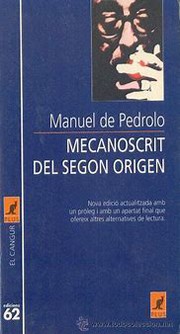
作品年表(1 本)
本站书库里署名曼努埃尔·德·佩德罗洛的书(Open Library 上至少 10 人加过书架的才收),按首版年份排(有本站书页的用 Wikidata 记的首版年,其余用 Open Library 的);年份偶尔记成后来的版本或译本,以原书为准。全部作品见 Open Library。
- 1974Mecanoscrit del segon origen书架 11