 书单
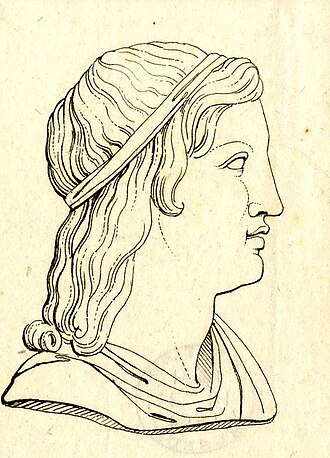
苏埃托尼乌斯
- 生卒
- 69 – 126
- 国籍
- 古罗马
- 外文名
- Suetonius
照片:Achille Réveil,公有领域,来自维基共享资源「Suetonius etching (cropped).jpg」(经缩小)。
生平与创作
盖乌斯·苏维托尼乌斯·特兰克维鲁斯(拉丁语:Gaius Suetonius Tranquillus,约69或75年—130年之后),罗马帝国时期历史学家,属于骑士阶级。
他最重要的现存作品是从凯撒到图密善的12位皇帝的传记,即《罗马十二帝王传》(拉丁语:De Vita Caesarum)。其他作品内容包括罗马日常生活、政治、演讲,著名作家(包括诗人、历史学家、文法家)。这些作品中仅有少数流传至今,其余都已散佚。
以上文字摘自维基百科「苏埃托尼乌斯」(去掉了参考文献等尾部小节),按 CC BY-SA 4.0 使用,作者为维基百科的各位编者。
中文维基百科的条目比较短,下面附上英文维基百科的内容(英文原文):
Gaius Suetonius Tranquillus (Latin: [ˈɡaːiʊs sweːˈtoːniʊs traŋˈkᶣɪlːʊs]), commonly referred to as Suetonius ( swih-TOH-nee-əs; c. AD 69 – after AD 122), was a Roman historian who wrote during the early Imperial era of the Roman Empire. His most important surviving work is De vita Caesarum, commonly known in English as The Twelve Caesars, a set of biographies of 12 successive Roman rulers from Julius Caesar to Domitian. Other works by Suetonius concerned the daily life of Rome, politics, oratory, and the lives of famous writers, including poets, historians, and grammarians. A few of these books have partially survived, but many have been lost.
Life
Gaius Suetonius Tranquillus was probably born about AD 69, a date deduced from his remarks describing himself as being about 57 years after Nero's death. His place of birth is disputed, but most scholars place it in Hippo Regius (the modern Annaba), at the time a small north African town in Numidia, in modern-day Algeria. It is certain that Suetonius came from a family of moderate social position, that his father, Suetonius Laetus, was a tribune belonging to the equestrian order (tribunus angusticlavius) in Legio XIII Gemina, and that Suetonius was educated when schools of rhetoric flourished in Rome.
Suetonius was a close friend of senator and letter-writer Pliny the Younger. Pliny describes him as "quiet and studious, a man dedicated to writing". Pliny helped him buy a small property and interceded with the Emperor Trajan (not Hadrian) to grant Suetonius tax immunities usually granted to a father of three, the ius trium liberorum, because he was childless even though he was married; such tax immunities were also granted to thousands of inhabitants of Italy who were part of the empire at the time of Suetonius and Trajan and at the time...the population of Rome is estimated to have been more than 600,000 people. Through Pliny, Suetonius came into favour with Trajan and Hadrian. Suetonius may have served on Pliny's staff when Pliny was imperial governor (legatus Augusti pro praetore) of Bithynia and Pontus (northern Asia Minor) between 110 and 112. Under Trajan he served as secretary of studies (a studiis (precise functions are uncertain)) and director of Imperial archives (a bibliotecis); while under Hadrian, Suetonius became the emperor's secretary (ab epistulis).
According to the controversial and often unreliable collection of biographies, "The Historia Augusta", written more than 150 years after "The Twelve Caesars", Hadrian later dismissed Suetonius from his position for conducting himself too informally around his wife, the empress Vibia Sabina. "The Twelve Caesars" does not include Hadrian as emperor of Rome and the Roman senate at the time of Hadrian's death was less willing to deify Hadrian.
Works
The Twelve Caesars
Suetonius is mainly remembered as the author of De Vita Caesarum—translated as The Life of the Caesars, although a more common English title is The Lives of the Twelve Caesars or simply The Twelve Caesars—his only extant work except for the brief biographies and other fragments noted below. The Twelve Caesars, probably written in Hadrian's time, is a collective biography of the Roman Empire's first leaders, Julius Caesar (the first few chapters are missing), Augustus, Tiberius, Caligula, Claudius, Nero, Galba, Otho, Vitellius, Vespasian, Titus and Domitian. The book was dedicated to his friend Gaius Septicius Clarus, a prefect of the Praetorian Guard in 119. The work tells the tale of each Caesar's life according to a set formula: the descriptions of appearance, omens, family history, quotes, and then a history are given in a consistent order. He recorded the earliest accounts of Julius Caesar's epileptic seizures.
Partly extant
De Viris Illustribus ("On Famous Men"—in the field of literature), to which belong:
De Illustribus Grammaticis ("Lives of the Grammarians"; 20 brief lives, apparently complete)
De Claris Rhetoribus ("Lives of the Rhetoricians"; 5 brief lives out of an original 16 survive)
以上文字摘自英文维基百科「Suetonius」(有删节,去掉了参考文献等尾部小节),按 CC BY-SA 4.0 使用,作者为维基百科的各位编者。
资料卡
- 母语名
- Caius Suetonius Tranquillus
- 本名
- Caius Suetonius Tranquillus
- 出生
- 69 年
- 逝世
- 126 年
- 逝世地
- 罗马帝国
- 职业
- 传记作家
- 使用语言
- 拉丁语
- 写作语言
- 拉丁语
- 创作体裁
- 传记
- 代表作
- 罗马十二帝王传
资料卡来自 Wikidata Q10133(CC0),众包数据,个别字段可能不全。
本站收录的作品(1)
作品年表(1 本)
本站书库里署名苏埃托尼乌斯的书(Open Library 上至少 10 人加过书架的才收),其中 1 本记的年份比作者去世晚 50 年以上或者早于他出生(多半是后世的版本、译本或占位年份),不列年份,按首版年份排(有本站书页的用 Wikidata 记的首版年,其余用 Open Library 的);年份偶尔记成后来的版本或译本,以原书为准。全部作品见 Open Library。
- 年份不详罗马十二帝王传Dē vītā Caesarum书架 33