书单
百科
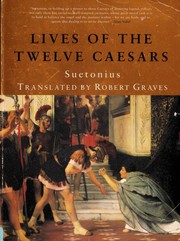
罗马十二帝王传,是一本记述罗马帝国前12位帝王的书籍,由古罗马苏维托尼乌斯所著,共12章,分别是第一章尤利乌斯·凯撒(后来被奉为神)、第二章奥古斯都也就是屋大维(后来被奉为神)、第三章提比略传、第四章盖乌斯·卡利古拉传、第五章克劳迪(后来被奉为神)、第六章尼禄、第七章加尔巴、第八章奥托、第九章维特里乌斯 、第十章维斯帕先(后来被奉为神)、第十一章提图斯(后来被奉为神)、第十二章图密善。记述了罗马共和国末年、朱里亚·克劳狄王朝、四帝之年和弗拉维王朝的诸位统治者。
以上文字摘自维基百科「罗马十二帝王传」(去掉了参考文献等尾部小节),按 CC BY-SA 4.0 使用,作者为维基百科的各位编者。
中文维基百科的条目比较短,下面附上英文维基百科的内容(英文原文):
De vita Caesarum (Latin; lit. "On the Life of the Caesars"), commonly known as The Twelve Caesars or The Lives of the Twelve Caesars, is a set of twelve biographies of Julius Caesar and the first 11 emperors of the Roman Empire during the Principate. The subjects are Julius Caesar, Augustus, Tiberius, Caligula, Claudius, Nero, Galba, Otho, Vitellius, Vespasian, Titus, and Domitian.
The Twelve Caesars was written in 121 AD by Gaius Suetonius Tranquillus (called "Suetonius" by scholars) while he served as a personal secretary to the emperor Hadrian. Suetonius dedicated the work to his friend Gaius Septicius Clarus, a praetorian prefect.
The Twelve Caesars was a large and significant work in its day. It, along with the works of Tacitus, it has become a useful extant primary source for Classics scholars.
Historicity
Historians often criticize the book as racy, sensationalist, overly reliant on gossip, and for forfeiting accuracy for drama or humor. Suetonius appears to rely heavily on hearsay and rumor in his accounts, and at times, he includes subjective opinions within otherwise objective knowledge. He also omits several important events for unknown reasons.
Although he was never a senator himself, Suetonius shared the view of the Senate in most conflicts with the princeps. That resulted in biases, both conscious and unconscious. Suetonius lost access to the official archives shortly after beginning his work. He was forced to rely on secondhand accounts when it came to Claudius (with the exception of the letters of Augustus, which had been gathered earlier) and does not quote the emperor.
Despite those criticisms, scholars agree that the collection does provide some valuable information on the heritage, personal habits, physical appearance, lives, and political careers of the first Roman emperors, largely due to the inclusion of small details not included in other works. Suetonius remains the major source on the lives of certain emperors, including Caligula, Claudius, and Vespasian, especially since other sources, such as the relevant sections of Tacitus' Annals, have been lost to history.
Constituent works
Julius Caesar
Suetonius begins this section with the death of Caesar's father, when Caesar himself was sixteen years old. Suetonius describes Caesar's relationship with a wealthy woman named Cossutia at this time and then recounts his engagement to Cornelia during the civic strife. He also relates Caesar's military conquests, especially those in Gaul, and his Civil War against Pompey the Great. To characterize Caesar during the war, Suetonius quotes him in a battle that he nearly lost: "That man [Pompey] does not know how to win a war". Suetonius also includes one of Caesar's most famous sayings: "Veni, vidi, vici" ('I came, I saw, I conquered').
One memorable incident which Suetonius describes is when a young Caesar was captured by pirates in the Mediterranean Sea. Caesar amusingly insisted that the initial ransom they sought in return for his life was too low, and he ordered the pirates to raise the price to 50 talents. He spent the remainder of his time in captivity addressing them as subordinates, participating in their games and exercises, and forcing them to listen to his speeches and poetry. He also promised that, upon being freed, he would one day find the pirates and crucify them, which was a standard punishment for piracy during this time. He was released after about one month of captivity following the payment of the 50-talent ransom. Caesar, despite holding no command or public office, quickly raised an army entirely on his own, captured the pirates, and crucified them. He also recovered the 50 talents.
Suetonius also tells us that while serving as quaestor in Hispania, Caesar once visited a statue of Alexander the Great. Upon viewing this statue, Suetonius reports that Caesar fell to his knees, weeping. When asked what was wrong, Caesar sighed and said that by the time Alexander was his (Caesar's) age, he had conquered the whole world.
以上文字摘自英文维基百科「The Twelve Caesars」(有删节,去掉了参考文献等尾部小节),按 CC BY-SA 4.0 使用,作者为维基百科的各位编者。
资料卡
- 原题
- Dē vītā Caesarum
- 原作语言
- 拉丁语
- 体裁
- 传记
资料卡来自 Wikidata Q1229963(CC0),众包数据,个别字段可能不全。
改编作品
取材于它的书4
- Monumens de la vie privee des douze cesars
- Caesares
- 《圣人传》De viris illustribus
- Breviarium
名单来自 Wikidata(CC0):只列条目里写明「改编自 / 取材于」这本书的作品,不按名字猜;众包数据,可能不全。
更多资料与书评
在哪读
相似的书
 豆瓣 #13
 豆瓣 #163