 书单
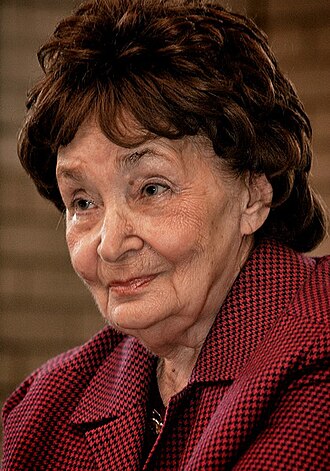
萨博·玛格达
- 生卒
- 1917 – 2007
- 国籍
- 匈牙利
- 外文名
- Magda Szabó
照片:Bahget Iskander http://iskander.hu/,CC BY 4.0,来自维基共享资源「Szabó Magda (Bahget Iskander).jpg」(经缩小)。
生平与创作
萨博·玛格达(Magda Szabó,1917年10月5日—2007年11月19日)是一位匈牙利小说家。
生平
1943年和1944年期间,她霍德梅泽瓦沙海伊一个加尔文主义女子文理中学任教。她的丈夫也是一位作家兼翻译家。
以上文字摘自维基百科「萨博·玛格达」(去掉了参考文献等尾部小节),按 CC BY-SA 4.0 使用,作者为维基百科的各位编者。
中文维基百科的条目比较短,下面附上英文维基百科的内容(英文原文):
Magda Szabó (Hungarian pronunciation: [ˈmɒgdɒ ˈsɒboː] 5 October 1917 – 19 November 2007) was a Hungarian novelist. Doctor of philology, she also wrote dramas, essays, studies, memoirs, poetry and children's literature. She was a founding member of the Digital Literary Academy, an online digital repository of Hungarian literature. She is the most translated Hungarian author, with publications in 42 countries and over 30 languages.
Biography
Early life
Magda Szabó was born in Debrecen, Austria-Hungary in 1917. Her father, Elek Szabó (1879–1959), an academic and public official, taught her to speak Latin fluently from childhood, gave her the foundation of her extensive knowledge of European antiquity and an appreciation of ancient Roman and Greek history and literature. Her mother, Lenke Jablonczay (1884–1967), was herself a writer, although her works were never published. The influence and example of her parents played an important part in Szabó’s life. Storytelling and playing theatre were everyday activities in her childhood, both with her parents and by herself.
Szabó graduated from secondary school in 1935 in the Dóczy Institute for Girls’ Education of Debrecen (today Dóczy Gymnasium of the Reformed College of Debrecen), where she had studied for twelve years. She studied to become a teacher of Hungarian and Latin at the István Tisza Hungarian Royal University of Science (today University of Debrecen), graduating in 1940. She rarely commented on her tertiary education, except for stating that she considered it to have been ‘conservative’ and ‘old-fashioned’, and that she received little support to develop as a writer. She wrote her thesis on cosmetic practices in ancient Rome. She referred to this as a doctoral dissertation, but literary historian Endre Bakó claims not to have found documentation of Szabó pursuing a doctorate.
Adulthood
In 1943 and 1944, she taught in the Reformed (Hungarian Calvinist) girls' gymnasium of Hódmezővásárhely. She wrote a verse novel titled Szüret (‘Harvest’) about her experiences during World War II, which she only published in 1975. After the war, she moved to Budapest. From 1945 until her dismissal in 1949, she worked as an officer on film, then literature at the Ministry of Religious and Public Educational Affairs. She married fellow writer and translator Tibor Szobotka (1913–1982) in 1947.
Multiple books by Szabó are autofictional, including Ókut/‘The Ancient Well’ (1970), Régimódi történet/‘Old-Fashioned Story’ (1977), and Für Elise (2002). Their (unacknowledged) fictional elements, which are incompatible with each other, make details of Szabó’s personal life, childhood, and family relationships difficult to ascertain.
Writing career
Szabó began her writing career as a poet and in 1947 she published her first book of poetry, Bárány ("Lamb"), which was followed by Vissza az emberig ("Back to the Human") in 1949. In 1949 she was awarded the Baumgarten Prize, which was immediately withdrawn when Szabó was labelled an enemy to the Communist Party. She was dismissed from the Ministry in the same year. The Stalinist era from 1949 to 1956 censored any literature, such as Szabó's work, that did not conform to socialist realism. Since her husband was also censored by the communist regime, she was forced to teach in a Calvinist girls' school until 1959.
She wrote her first novel, Freskó ("Fresco") during these years, and it was published in 1958. The novel tells the story of a puritan family coming together for a funeral, and examines questions of hypocrisy and Hungarian history. In the same year, she published another book of poetry, Bárány Boldizsár (" Balthazar the Lamb"), and a novel for younger female readers, Mondják meg Zsófikának (translated into English as "Tell Sophie ...").
以上文字摘自英文维基百科「Magda Szabó」(有删节,去掉了参考文献等尾部小节),按 CC BY-SA 4.0 使用,作者为维基百科的各位编者。
资料卡
- 母语名
- Szabó Magda
- 出生
- 1917 年 10 月 5 日
- 出生地
- 德布勒森
- 逝世
- 2007 年 11 月 19 日
- 逝世地
- 布达佩斯 等 2 项
- 职业
- 译者、编剧、诗人、儿童文学作家、散文家、作家、短篇故事作家
- 使用语言
- 匈牙利语、拉丁语、德语
- 写作语言
- 匈牙利语
- 就读学校
- 德布勒森大学
- 创作体裁
- 随笔
- 领域
- 诗歌
- 所属团体
- 欧洲科学与艺术院;另有 1 项只有外文名
- 配偶
- Tibor Szobotka
- 获奖
- 科苏特奖(1978)、布达佩斯荣誉市民(2006);另有 4 项只有外文名
资料卡来自 Wikidata Q231948(CC0),众包数据,个别字段可能不全。
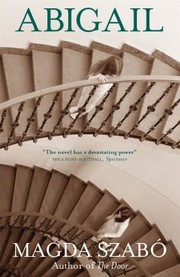
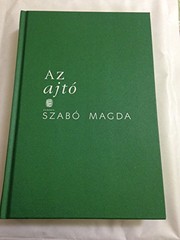
本站收录的作品(2)
同时代的匈牙利作家
Open Library 上的全部作品
正在读取…