 书单
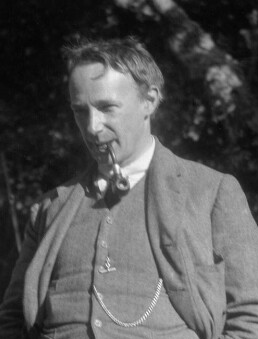
乔治·爱德华·摩尔
- 生卒
- 1873 – 1958
- 国籍
- 英国
- 外文名
- G. E. Moore
照片:Ray Strachey, born Rachel Pearsall Conn Costelloe (4 June 1887 London – 16 July 等,公有领域,来自维基共享资源「1914 George Edward Moore (cropped).jpg」(经缩小)。
生平与创作
乔治·爱德华·摩尔,OM(George Edward Moore或G. E. Moore,1873年11月4日—1958年10月24日),英国哲学家,与伯特兰·罗素一同被认为是分析哲学的主要创始人,主要贡献为后设伦理学,知名作品有《伦理学原理》。
摩尔认为和伦理相关的概念不可能用自然概念(例如:生存,功利,等)来解释。
生平
摩尔于1873年11月4日出生于大伦敦克罗伊登的上诺伍德,是丹尼尔·摩尔博士和亨丽埃塔·斯特奇的七个孩子中的一个。他的祖父是作家乔治·摩尔博士。他的大哥是托马斯·斯特奇·摩尔,诗人、作家和雕刻家。
摩尔中学毕业于德威士学院,1892年在剑桥三一学院学习古典学和人文科学,曾是剑桥使徒中的一员,毕业后亦和布卢姆茨贝里派有交往。1898年成为三一学院研究员,1925年至1939年担任剑桥大学精神哲学和逻辑主席。
摩尔以捍卫道德非自然主义、强调哲学方法的常识以及摩尔悖论而闻名于世。他受到其他哲学家以及布卢姆茨贝里派的钦佩和影响,但与他的同事罗素不同,他在学术哲学之外影响力甚微。摩尔的文章以其清晰、谨慎的写作风格以及他对哲学问题的有条理和耐心的态度而闻名。他批评现代哲学缺乏进步,他认为这与文艺复兴以来自然科学的戏剧性进步形成鲜明对比。穆尔最著名的作品是他的《伦理学原理》一书和他的随笔《理想主义的反驳》、《常识的辩护》和《外部世界的证明》。
1918-1919年,他担任亚里士多德学会主席。
摩尔于1958年10月24日去世,1958年10月28日在剑桥火葬场被火化,骨灰葬在剑桥升天堂区墓地,他的妻子多萝西·伊利(Dorothy Ely,1892年-1977年)也葬在那里。他们有两个儿子,诗人尼古拉斯·摩尔和作曲家蒂莫西·摩尔(Timothy Moore)。
以上文字摘自维基百科「乔治·爱德华·摩尔」(去掉了参考文献等尾部小节),按 CC BY-SA 4.0 使用,作者为维基百科的各位编者。
中文维基百科的条目比较短,下面附上英文维基百科的内容(英文原文):
George Edward Moore (4 November 1873 – 24 October 1958) was an English philosopher who, alongside Bertrand Russell, Ludwig Wittgenstein and earlier Gottlob Frege, was an initiator of analytic philosophy. He and Russell began de-emphasising the idealism which was then prevalent among British philosophers and became known for advocating common-sense concepts and contributing to ethics, epistemology and metaphysics. He was said to have had an "exceptional personality and moral character". Ray Monk dubbed him "the most revered philosopher of his era".
As Professor of Philosophy at the University of Cambridge, he influenced but abstained from the Bloomsbury Group, an informal set of intellectuals. He edited the journal Mind. He was a member of the Cambridge Apostles from 1894 to 1901, a fellow of the British Academy from 1918, and was chairman of the Cambridge University Moral Sciences Club in 1912–1944. A humanist, he presided over the British Ethical Union (now Humanists UK) in 1935–1936.
Biography
Early life and education
George Edward Moore was born in Upper Norwood, in south-east London, on 4 November 1873, the middle child of seven of Daniel Moore, a medical doctor, and Henrietta Sturge. His grandfather was the physician, writer and British Israelite George Moore. His eldest brother was Thomas Sturge Moore, a poet, writer and engraver.
He was educated at Dulwich College and, in 1892, began attending Trinity College, Cambridge, to learn classics and moral sciences. His tripos results were a double first.
Career
He became a Fellow of Trinity in 1898 and was later University of Cambridge Professor of Mental Philosophy and Logic from 1925 to 1939.
Moore is known best now for defending ethical non-naturalism, his emphasis on common sense for philosophical method, and the paradox that bears his name. He was admired by and influenced by other philosophers and some of the Bloomsbury Group. But unlike his colleague and admirer Bertrand Russell, who for some years thought Moore fulfilled his "ideal of genius", he is mostly unknown presently except among academic philosophers. Moore's essays are known for their clarity and circumspection of writing style and methodical and patient treatment of philosophical problems. He was critical of modern philosophy for lack of progress, which he saw as a stark contrast to the dramatic advances in the natural sciences since the Renaissance. Among Moore's most famous works are his Principia Ethica, and his essays, "The Refutation of Idealism", "A Defence of Common Sense", and "A Proof of the External World".
Moore was an important and admired member of the secretive Cambridge Apostles, a discussion group drawn from the British intellectual elite. At the time another member, 22-year-old Bertrand Russell, wrote "I almost worship him as if he were a god. I have never felt such an extravagant admiration for anybody", and would later write that "for some years he fulfilled my ideal of genius. He was in those days beautiful and slim, with a look almost of inspiration as deeply passionate as Spinoza's."
In 1914 Moore traveled to Norway to visit Wittgenstein, here he took a series of notes later published as Notes dictated to G.E. Moore in Norway. From 1918 to 1919, Moore was chairman of the Aristotelian Society, a group committed to the systematic study of philosophy, its historical development and its methods and problems. He was appointed to the Order of Merit in 1951. This was awarded to him at Buckingham Palace by King George VI. After a conversation with the King, he returned to his wife who was awaiting Moore back in the car and told her "Do you know that the King had never heard of Wittgenstein!". The title of Ludwig Wittgenstein's Tractatus Logico-Philosophicus was adopted at the suggestion of Moore, taking the title from Baruch Spinoza's Tractatus Theologico-Politicus (1670).
以上文字摘自英文维基百科「G. E. Moore」(有删节,去掉了参考文献等尾部小节),按 CC BY-SA 4.0 使用,作者为维基百科的各位编者。
资料卡
- 母语名
- George Edward Moore
- 出生
- 1873 年 11 月 4 日
- 出生地
- 上诺伍德
- 逝世
- 1958 年 10 月 24 日
- 逝世地
- 剑桥
- 职业
- 哲学家、大学教师
- 使用语言
- 英语
- 就读学校
- 剑桥大学三一学院(1892)、德威学校(1882)
- 领域
- 哲学
- 所属团体
- 英国科学院(1918)
- 代表作
- Ethics、伦理学原理
- 获奖
- 功绩勋章(1951)、英国科学院院士(1918)
资料卡来自 Wikidata Q295386(CC0),众包数据,个别字段可能不全。
本站收录的作品(1)
受 Ta 影响的作家
同时代的英国作家
Open Library 上的全部作品
正在读取…