 书单
戴维·刘易斯-威廉姆斯
- 生卒
- 1934 –
- 国籍
- 南非
- 外文名
- David Lewis-Williams
生平与创作
这个词条暂时没有中文维基百科条目,下面是英文维基百科的内容(英文原文):
James David Lewis-Williams (born 1934) is a South African archaeologist. He is best known for his research on southern African San (Bushmen) rock art. He is the founder and previous director of the Rock Art Research Institute and is currently professor emeritus of cognitive archaeology at the University of the Witwatersrand (WITS).
Theoretical influences
Lewis-Williams was exposed to social anthropology as an undergraduate at UCT. During this time he received lectures from renowned social anthropologist A. R. Radcliffe-Brown (who started the department of social anthropology at UCT in 1920 but later returned as a visiting lecturer) and Monica Wilson, a student of Bronislaw Malinowski. Malinowski’s ideas specifically concerning the association of ritual with social products meant that Lewis-Williams could eventually challenge the idea that San rock art was merely a narrative of everyday life. Thus, from the start of his career and in contrast to most scholars of the period, Lewis-Williams was looking at San rock art from a social anthropological perspective.
Following proofs of an article by South African scholar Patricia Vinnicombe, shown to him in 1966 by Professor Ray Inskeep (then editor of the South African Archaeological Bulletin), Lewis-Williams used a quantitative method for the analysis of rock art images in the Drakensberg. Overall he recorded some 4000 images for his doctoral thesis research. His PhD, finished in 1977 and later published in 1981 as Believing and Seeing: Symbolic meanings in southern San rock paintings., is regarded as a seminal text in rock art research globally.
The quantitative method now bears little impact on the understanding of meaning behind images in San rock art. There is simply too much ambiguity in what the numerical values can be said to imply.
In the early 1980s Lewis-Williams began to investigate other theoretical approaches. This was because he began to feel a great disjunction between what [he] had learned as a social anthropology student and the then popular conception of San rock art as a childlike record of daily life with, perhaps, a few 'mythical' images thrown into the mix.
At that time in South Africa, during apartheid, Marxism was the 'language of liberation' and the only other social theory available. In The economic and social context of southern San rock art (1982), Lewis-Williams explored the economic position of the shaman in San society. Using Maurice Godelier's ideas of symbolic work, Lewis-Williams investigated the ritual role of shamans in terms of San social structure and the context of rock art.
Concerns for the other members of San society are seen in his research that draws on structuration theory in an attempt to show how San individuals and groups of individuals manipulated social symbols in the creation and consolidation of personal power.
Key research concepts
Ethnography
A foundation to Lewis-Williams's work has been the use of ethnography. As an undergraduate he was exposed to Isaac Schapera's The Khoisan Peoples of South Africa (1930) From the start of his professional career he drew on ethnography to address the meaning of San rock art. In 1968, he read philologist Wilhelm Bleek and his sister-in-law Lucy Lloyd's Specimens of Bushman Folklore, and later engaged with the manuscripts the archive of transcriptions of conversations with ǀXam-speaking San people from the 1870s. Although he never met her, Bleek's daughter, Dorothea Bleek, held a position in social anthropology at UCT where the archival collection is housed .
Other available ethnographic sources have been central in Lewis-Williams's work, particularly the accounts provided by Colonial administrator Joseph Orpen in an article published in 1874 about his conversations with a San guide named Qing, the words spoken to Marion Walsham How by the southern Sotho man called Mapote, and the Kalahari San ethnographies that developed from the work of the Marshall family and others during the 1950s and 1960s.
The 'trance dance, as practised by the Juǀʼhoansi in Botswana and Namibia in the twentieth century, has been at the centre of Lewis-Williams' arguments about shamanism and altered states of consciousness as the source of the images seen in southern African rock art. However, several researchers (including the artist Pippa Skotnes, the literary scholar Michael Wessels and the archaeologist Anne Solomon) dispute Lewis-Williams's interpretation of the important ǀXam San ethnographic texts that describe dances and healing
Shamanism
Shamanism, which derives from the Siberian Tungus word shaman, was used by Lewis-Williams to explain the metaphor of death that he alleges is common to both ethnography and San rock art. The shamanic world often has tiered realms inhabited by spirits that can be accessed through altered states of consciousness (ASC). The world inhabited by people is supplemented by other realms that are usually conceptualised as existing above or below the inhabited world. Shamans have the ability to mediate between these other worlds. For the San, other realms were accessed during altered states of consciousness, and at rock faces where rock art can be found: everything created on it was in some way itself associated with the spirit realm.
More significantly, Lewis-Williams claims that the collection of San ethnography demonstrates the trance or healing dance, see San healing practices, is at the core of San belief, Metaphors for death are supposedly contained in the trance dance. As San shamans dance, their supernatural power, or ‘potency’, builds up until it reaches a breaking point and flies out of the body. At this point, they ‘die’, a metaphor for travelling to another realm where spirits dwell in the same way as the soul travels after leaving after physical death. However, there are methodological issues concerning the use of 20th century ethnographies, from peoples who did not make rock art, as analogous to interpret art elsewhere that is hundreds or even thousands of years older.
以上文字摘自英文维基百科「David Lewis-Williams」(有删节,去掉了参考文献等尾部小节),按 CC BY-SA 4.0 使用,作者为维基百科的各位编者。
资料卡
- 出生
- 1934 年 8 月 5 日
- 出生地
- 开普敦
- 职业
- 人类学家、考古学家、民族学家
- 使用语言
- 英语
- 写作语言
- 英语
- 就读学校
- 开普敦大学、纳塔尔大学
- 领域
- 萨恩人
- 获奖
- 南非皇家学会院士;另有 2 项只有外文名
资料卡来自 Wikidata Q5236554(CC0),众包数据,个别字段可能不全。
本站收录的作品(1)
作品年表(1 本)
本站书库里署名戴维·刘易斯-威廉姆斯的书(Open Library 上至少 10 人加过书架的才收),按首版年份排(有本站书页的用 Wikidata 记的首版年,其余用 Open Library 的);年份偶尔记成后来的版本或译本,以原书为准。全部作品见 Open Library。
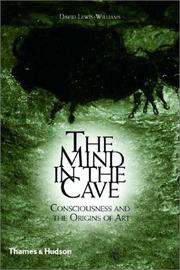
- 2002The Mind in the Cave书架 18